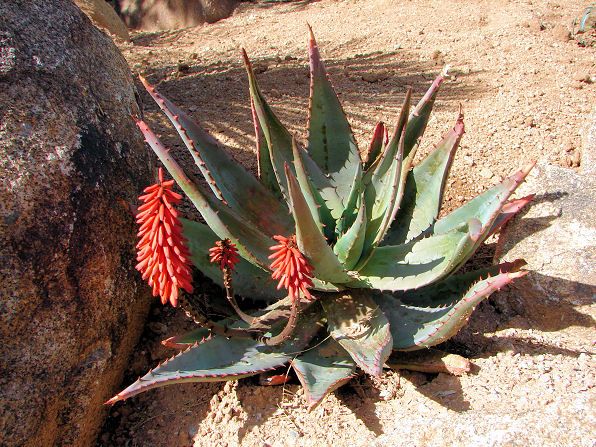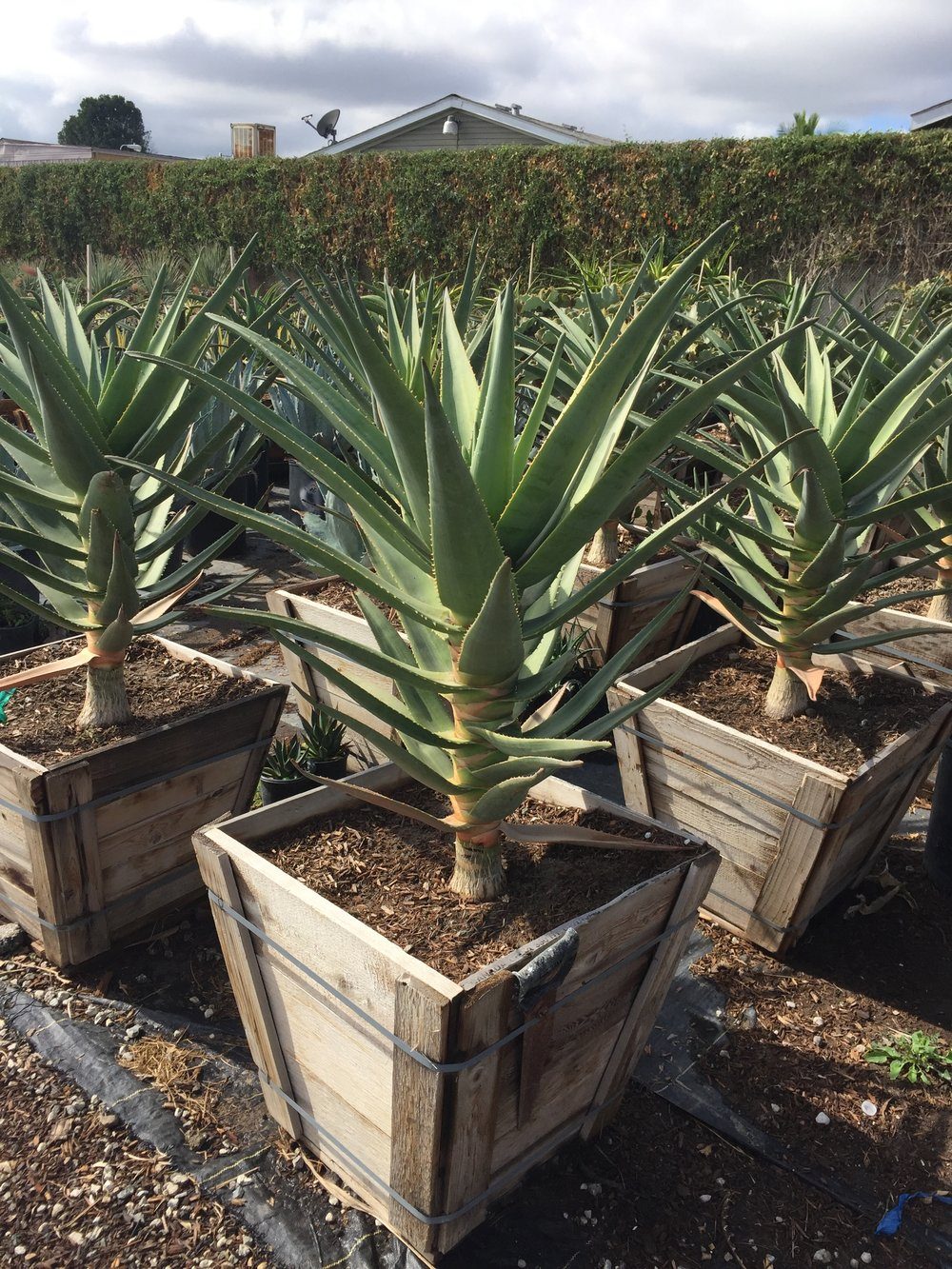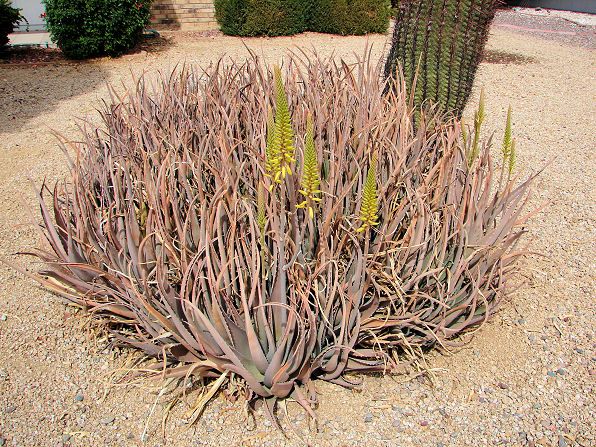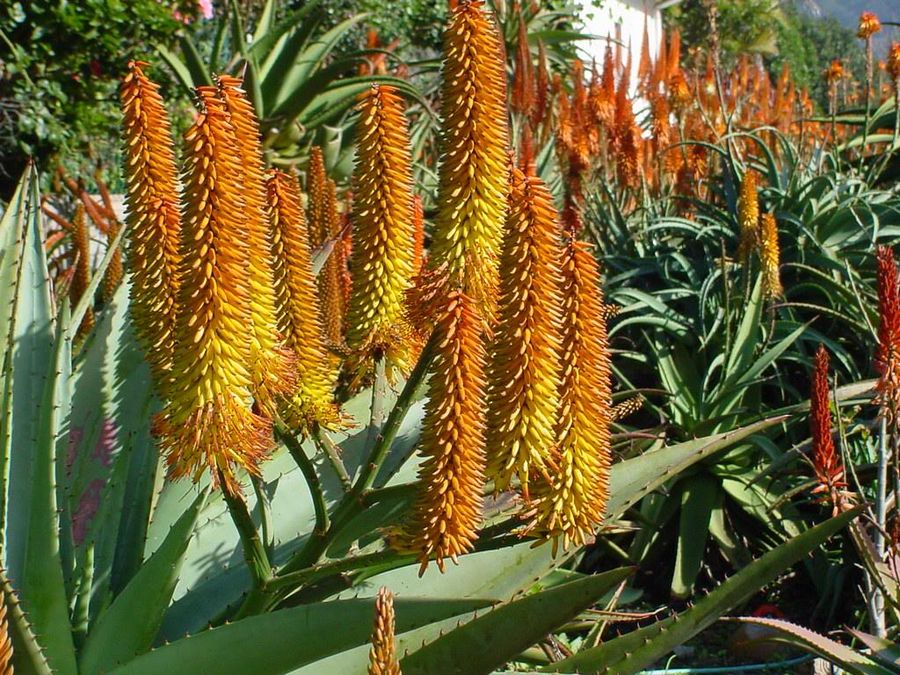
A tall South African aloe that slowly builds a single upright trunk crowned by a rosette of blue-green, toothed leaves. In winter it sends up candelabra-shaped spikes of orange buds that open yellow, a strong focal point when the rest of the garden is quiet.
Living with it in the Phoenix Valley
Watering
Follow the shrub, groundcover and succulent schedule in our Landscape Care guide. Give occasional deep water in summer and let the soil dry between waterings. It is far more likely to suffer from wet, poorly drained soil than from drought.
Pruning
Remove spent flower stalks after bloom, and pull dried leaves from the trunk if you prefer a cleaner look.
Cold
It is less frost-tolerant than most aloes grown here. Leaves may redden in chilly weather, and a freeze below about 30°F can cause damage, so cover it on cold nights.
Heat/sunburn
It needs more afternoon shade than most aloes planted in central Arizona. An east exposure or the filtered shade of a desert tree works best.
How our designers use it
Winter focal point
Placed where it can be seen from inside the house, its winter candelabras of flowers become the centerpiece of the season and bring hummingbirds.
Vertical accent
Its upright trunk adds height to a succulent bed without the bulk of a shrub.
Large containers
It does well in a big pot on a covered patio, where it can be sheltered on frosty nights.
Good to know
Around the pool
The leaf teeth are sharp enough to snag clothing and skin. Set it back from pool decks and walkways, and expect hummingbirds around the winter blooms.