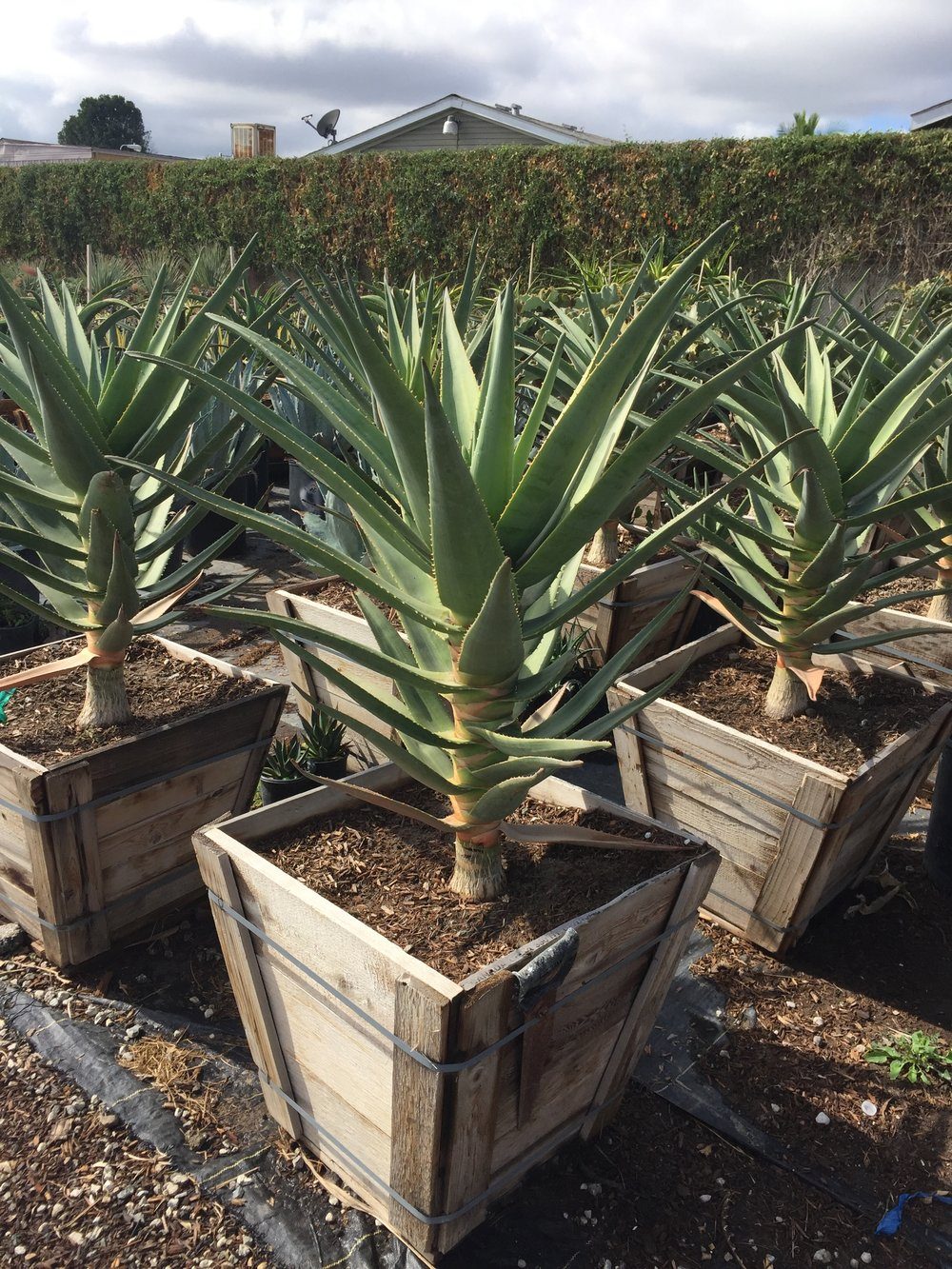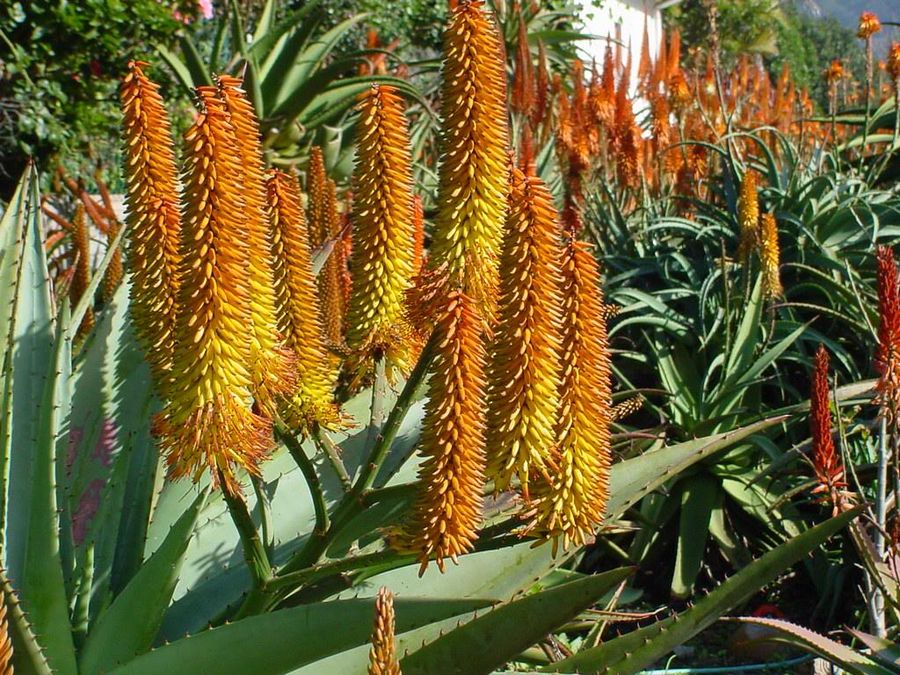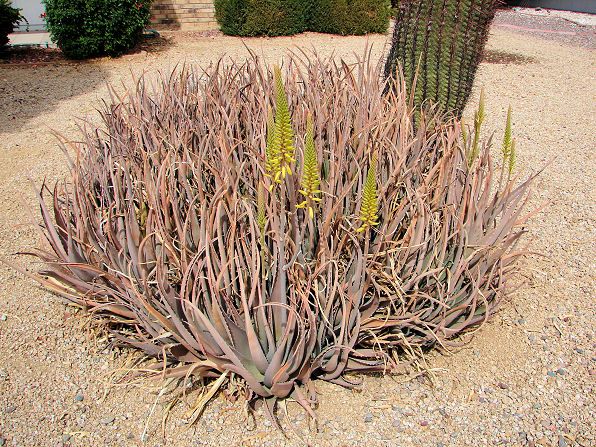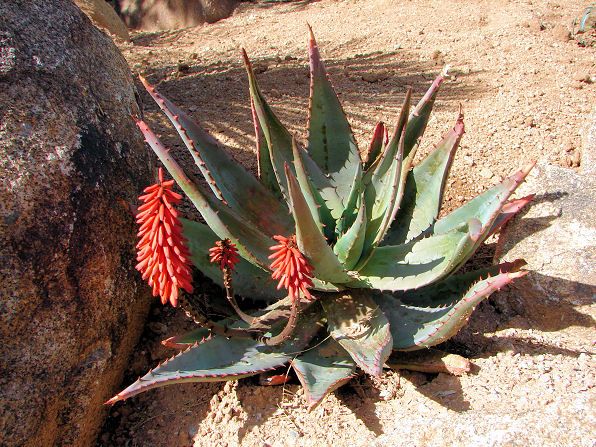
A bold, single-trunked aloe with large blue-green leaves edged in stout teeth and tall winter candelabras of orange to red flowers. Slow and sculptural, it brings real presence to a desert garden and draws hummingbirds through the cool months.
Living with it in the Phoenix Valley
Watering
Follow the shrub, groundcover and succulent schedule in our Landscape Care guide. Water infrequently in summer and let the soil dry between waterings. It tolerates many soils, but not ones that stay wet.
Pruning
Remove dead flower stalks after bloom. Dry leaves along the trunk form a natural skirt; leave them for a wild look or trim them for a cleaner trunk.
Heat/sunburn
It struggles in the hottest stretches of a Phoenix summer, above about 115°F. Shade from the western afternoon sun helps it through.
Cold
Hard freezes can damage leaves and winter flower stalks. Cover young plants on nights forecast near freezing.
How our designers use it
Sculptural focal point
A single cape aloe can anchor a courtyard or front-yard bed, especially against a plain wall where its silhouette reads clearly.
Winter color
Its winter bloom fills a quiet stretch of the year and brings hummingbirds to the garden.
Layered desert plantings
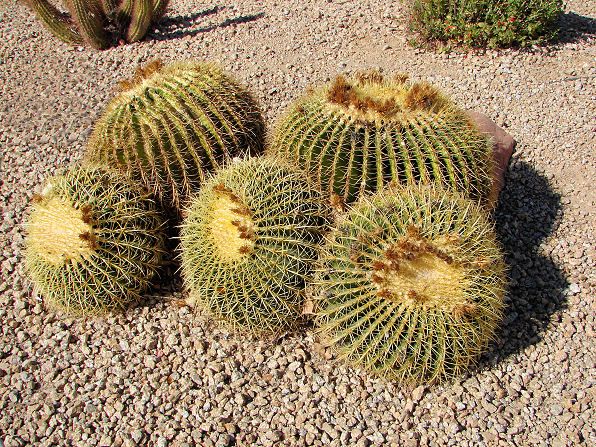
Our designers group it with barrels, boulders and desert shrubs for a bold, layered look.
Good to know
Around the pool
The leaves are large and armed with sharp teeth. Keep it well back from pool decks, paths and play areas, and leave room so it does not crowd a walkway as it grows.