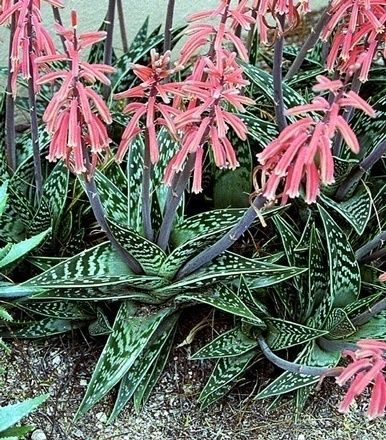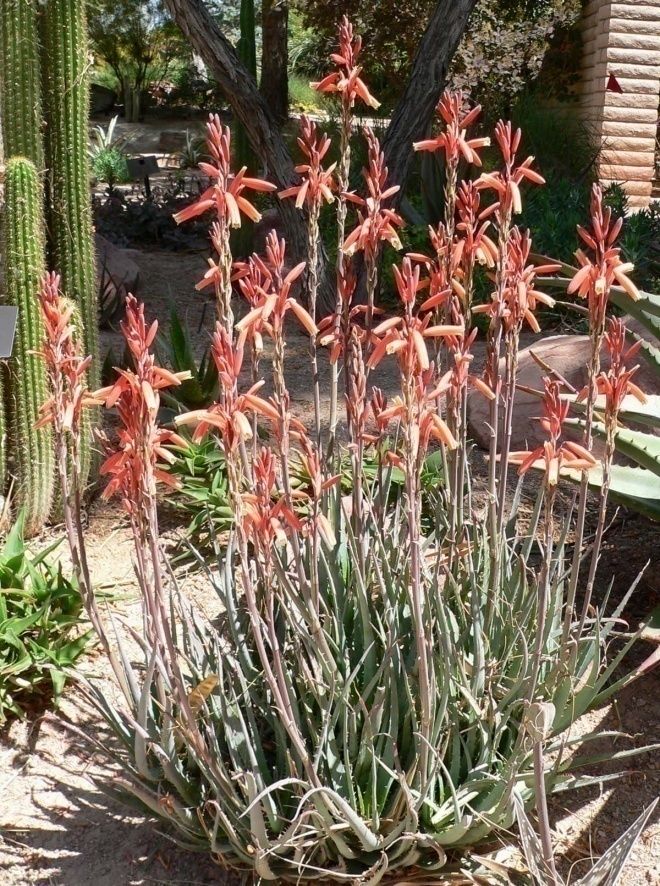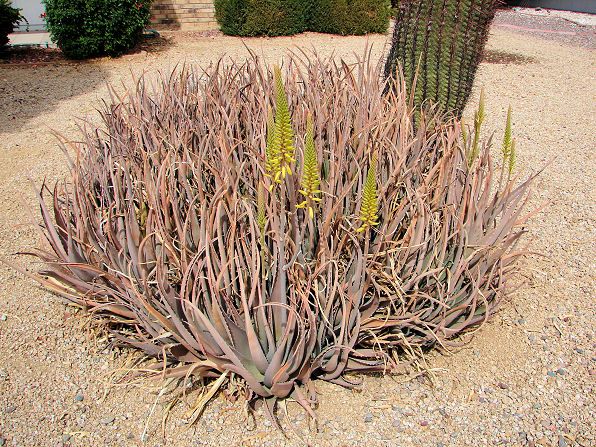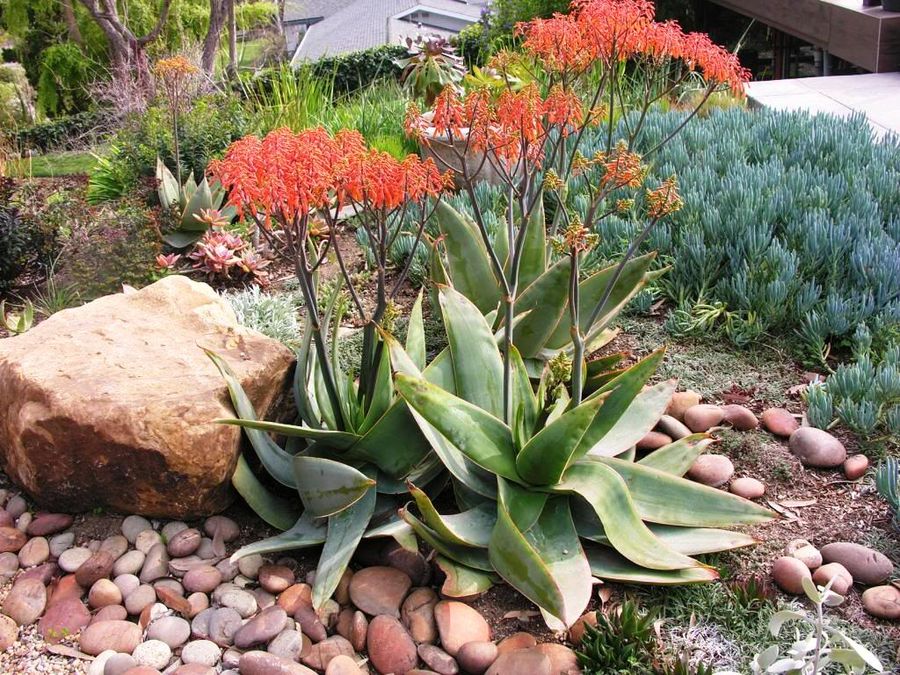
A compact South African aloe with smooth, gray-green leaves rimmed in a thin red line and branched coral-orange flowers in late winter. With no teeth on its leaves, it is one of the easiest aloes to place near walkways, patios and the pool.
Living with it in the Phoenix Valley
Watering
Follow the shrub, groundcover and succulent schedule in our Landscape Care guide. It wants occasional deep water during the hottest months and very little in winter. Overwatering, especially in heavy soil, is the most common way to lose it.
Pruning
Cut spent flower stalks at the base once the spring bloom fades. Every three to five years, divide crowded clumps to keep them vigorous and in bounds.
Cold
It does not tolerate a hard freeze. Cover plants with frost cloth on nights forecast near freezing, and keep potted plants under a patio roof.
Heat/sunburn
Western afternoon sun stresses it in summer. A spot with morning sun, or the light shade of a desert tree, keeps the leaves gray-green rather than bleached.
How our designers use it
Close-up spaces
Its fine red leaf edges are best seen up close, so our designers use it along walks, at entries and in courtyard beds.
Edging and small-scale groundcover
Planted in drifts, it forms a low, tidy edge for succulent and rock gardens.
Containers
It does well in patio pots, where it can be moved to shelter on a cold night.
Good to know
Around the pool
With smooth leaves and no spines, it is one of the aloes we are most comfortable placing beside pool decks and seating. Hummingbirds and bees visit the late-winter flowers, so keep blooming clumps a step back from the water’s edge.