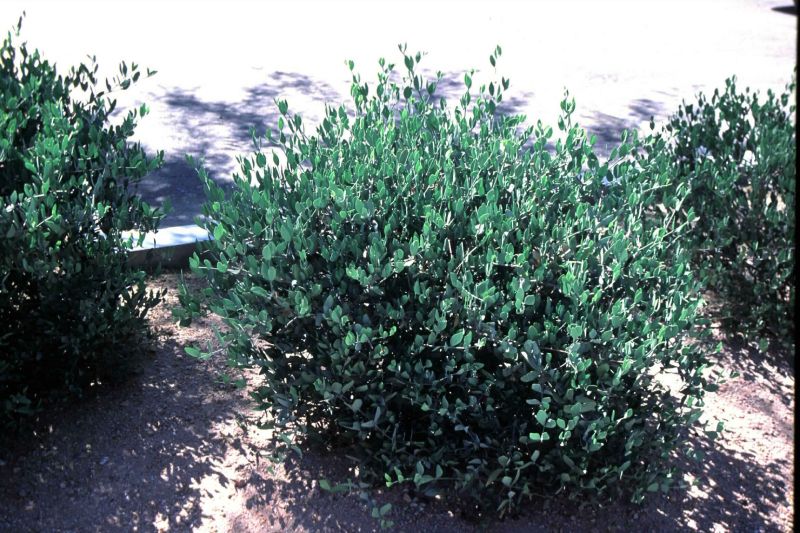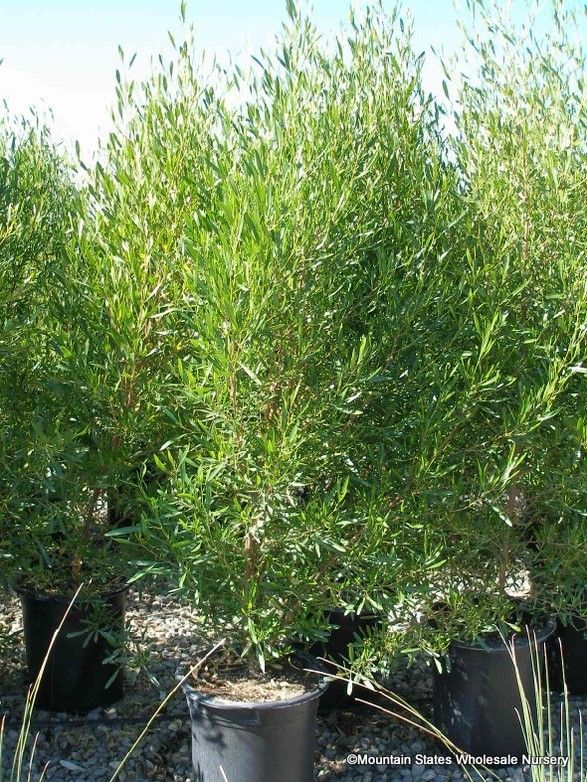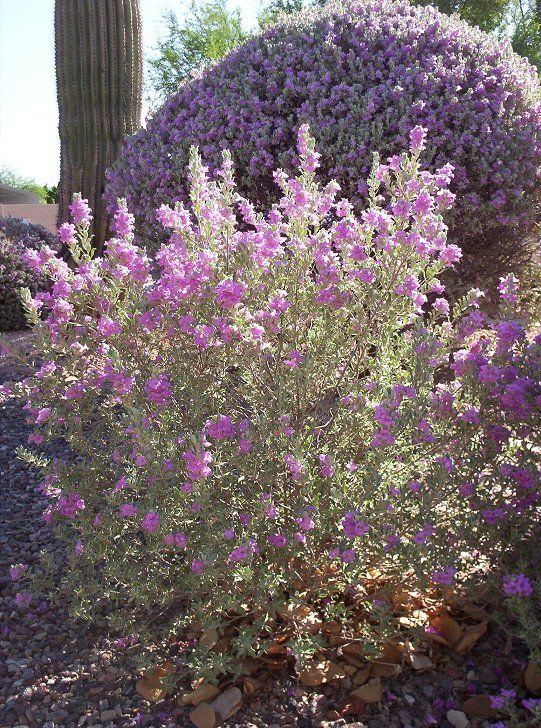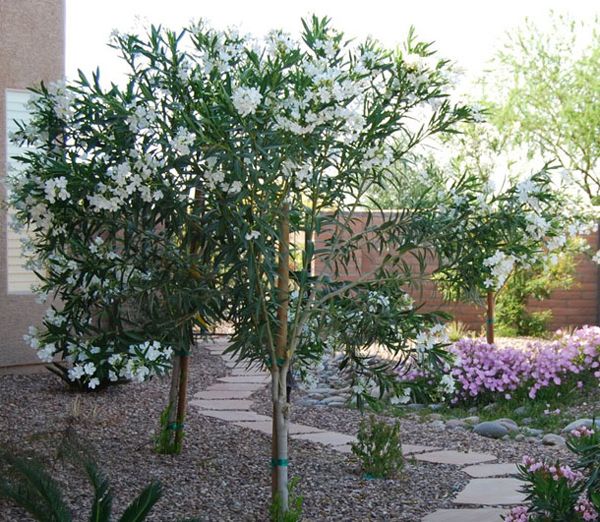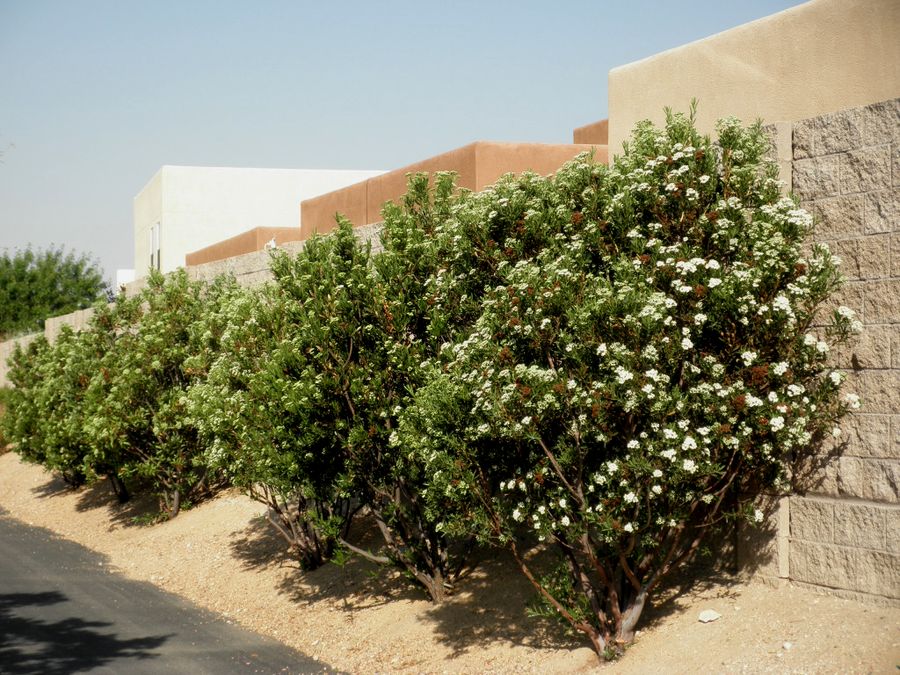
A slow-growing Sonoran Desert native with dark green, leathery leaves and flat clusters of creamy white flowers. It stays dense and evergreen all year, which makes it one of the best native shrubs for screening in the Valley and a low-water alternative to oleander.
Living with it in the Phoenix Valley
Watering
Follow the shrub schedule in our Landscape Care guide while it establishes. As a desert native, it should be kept lean once mature. An occasional deep soak in the hottest months keeps the foliage dark green; frequent light watering is not what it wants.
Pruning
Prune lightly, and only to shape. Don’t shear it into a box. Over time it can be limbed up into a small multi-trunk tree. Small brown seed clusters hang on after bloom; trim them off if you prefer a cleaner look.
Heat
It handles Phoenix summers, though the leaves can yellow a little during stretches above 110°F, especially against a hot west wall. Good drainage helps it look its best.
Pests
Generally trouble-free. Texas root rot can affect it in some soils, and it is sensitive to certain pre-emergent weed controls spread over its roots, which turn the leaves yellow.
How our designers use it
Native screening
Dense, evergreen growth down to the ground makes it a natural screen along walls and property lines, on far less water than most hedging shrubs.
An oleander alternative
It gives a similar tall green backdrop without oleander’s toxicity, and it fits a native or desert-modern palette.
A small patio tree
Trained up on a few trunks, an older plant becomes a compact evergreen tree for courtyards and narrow side yards.
Good to know
Around the pool
Litter is light and it has no thorns, so it makes an easy evergreen backdrop near a pool deck.
Patience
It grows slowly. If you need a screen soon, start with larger plants rather than counting on fast growth.