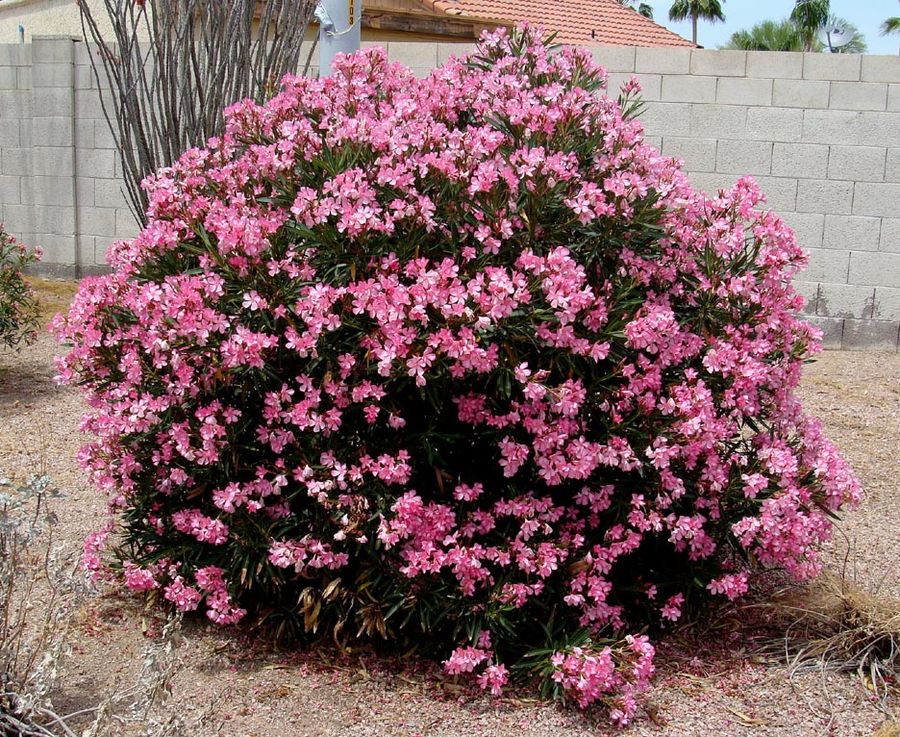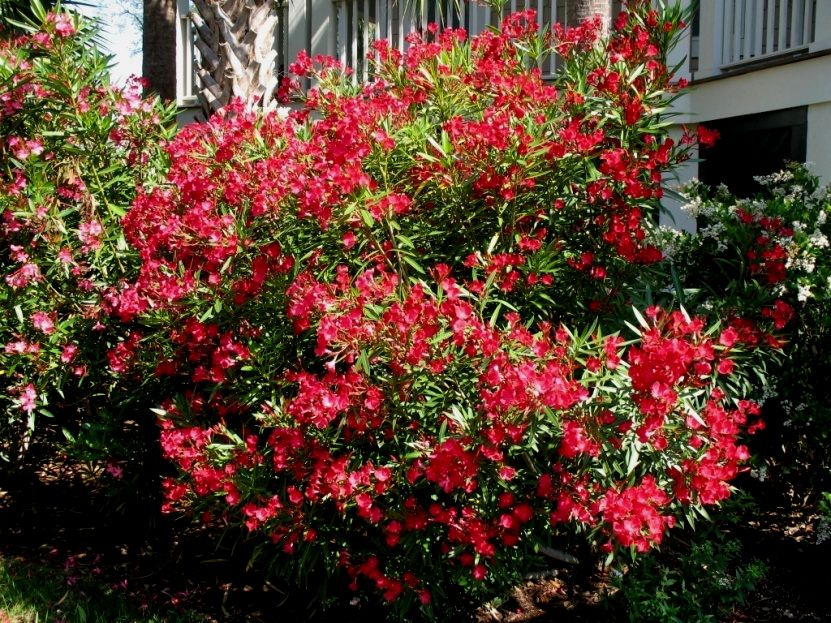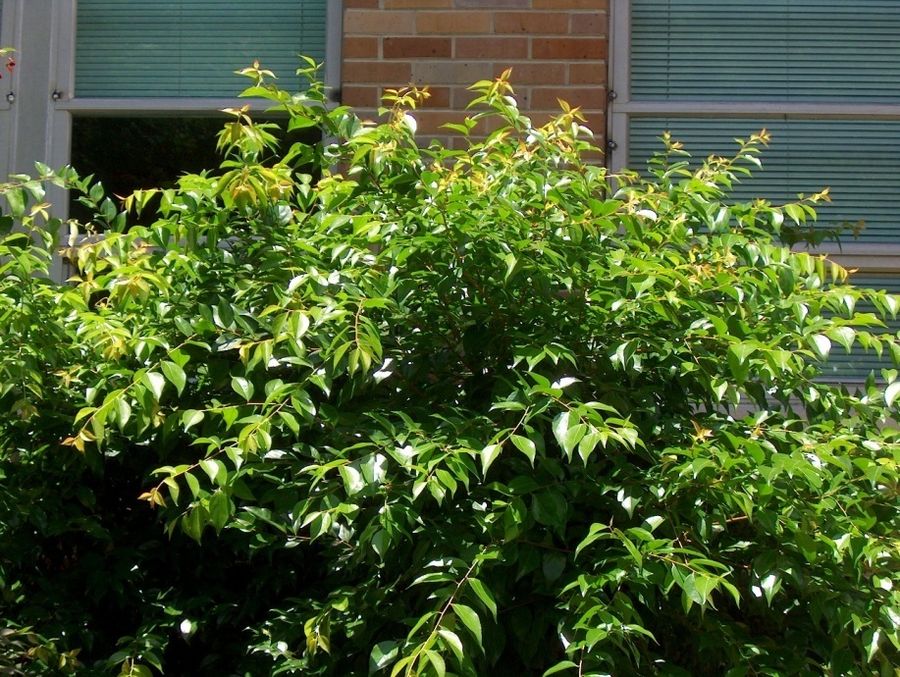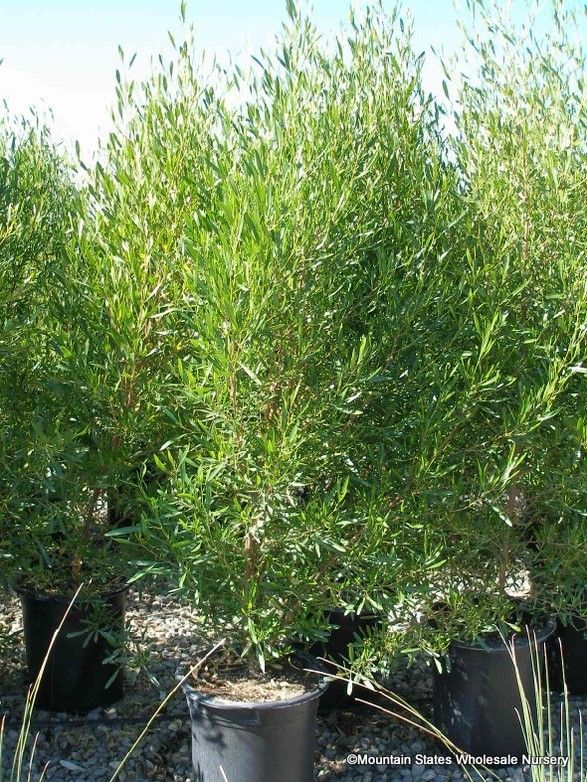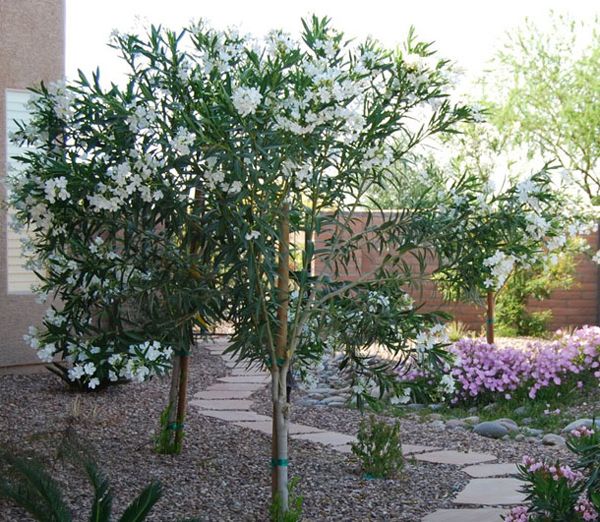
A tough, fast evergreen shrub with long bloom in white, pink, salmon or red. For decades it has been the Phoenix Valley’s go-to tall screen, thriving in heat and poor soil with modest water. It is also highly poisonous and now faces a fatal disease here, which shapes how we use it.
Living with it in the Phoenix Valley
Watering
Follow the shrub schedule in our Landscape Care guide. It is surprisingly drought tolerant but stays fuller with supplemental water in the warm months, and needs little in winter.
Pruning
Prune in late winter or August; it regrows quickly. Renewal pruning every few years keeps old plants dense. Frequent shearing weakens oleander over time.
Leaf scorch
Oleander leaf scorch, a bacterial disease spread by sap-feeding insects, is present in the Phoenix area. Leaves yellow, then brown at the tips and edges, often on one branch first. There is no cure, and infected plants decline and should be removed.
Pests
Aphids in spring and soft scale are the common pests; both are usually minor.
How our designers use it
Tall screens
It forms a fast, dense evergreen screen along property lines and walls where there is room for its full size.
Tree form
Trained as a small standard tree, it adds summer color to sunny spaces, though suckers from the base need regular removal.
Where we hold back
With leaf scorch now in the Valley and its toxicity, we often suggest other screening shrubs near play areas or where a long-lived hedge matters.
Good to know
Around the pool
Flowers and leaves drop into the water, and the plant is poisonous. We generally avoid it right at the pool edge, especially where children play.
Toxicity
All parts of oleander are highly poisonous if eaten. Keep it away from play areas, wear gloves when pruning, and never burn the clippings, since the smoke is toxic.
Pets
Oleander is toxic to dogs, cats and horses. Avoid it in yards where pets chew on plants.