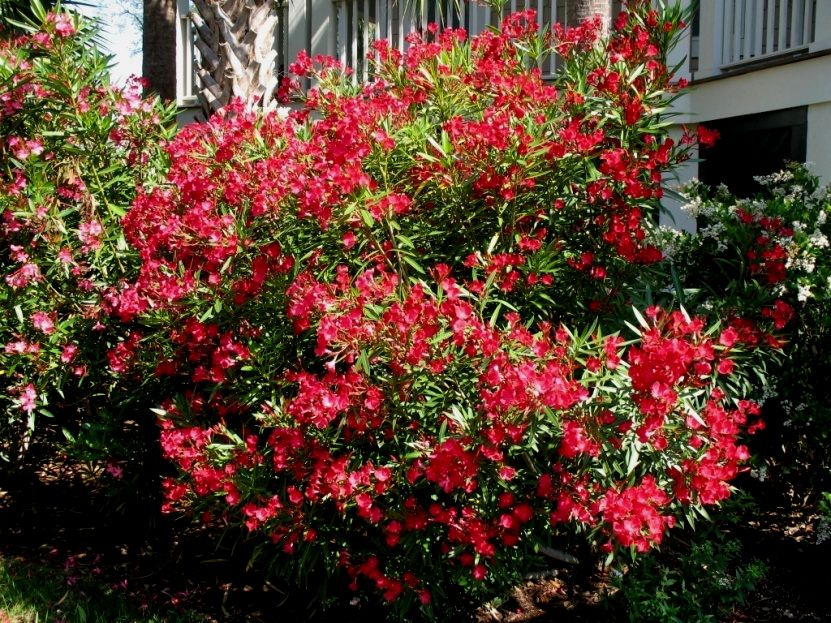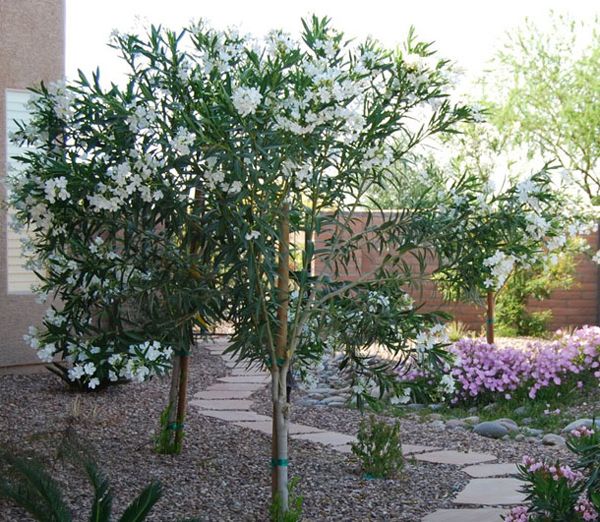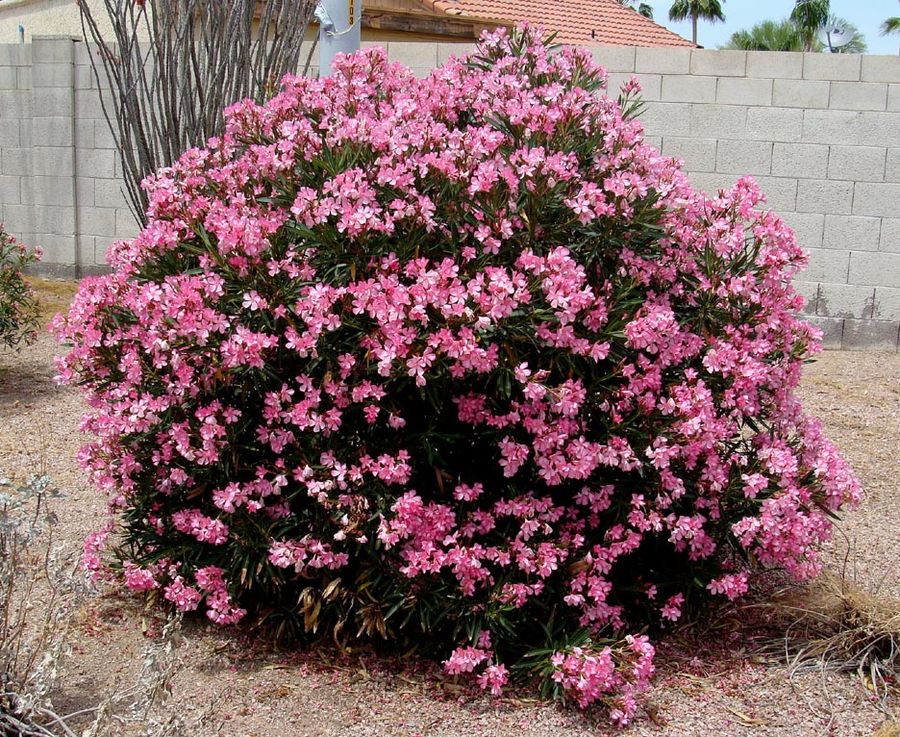
A dwarf oleander with soft pink flowers over a long season. It has all the heat and drought toughness of standard oleander in a size that fits beds, foundations and medians.
Living with it in the Phoenix Valley
Watering
Follow the shrub schedule in our Landscape Care guide. Once established it gets by on little water. Moderate summer water speeds growth and flowering.
Pruning
If it needs it, prune in late February or early March; dwarf forms can be cut back to any height. Avoid frequent shearing, which weakens the plant over time.
Leaf scorch
Oleander leaf scorch, a bacterial disease spread by sap-feeding insects, is present in the Phoenix area. Leaves yellow, then brown at the tips and edges, often on one branch first. There is no cure, and infected plants decline and should be removed.
How our designers use it
Low screens and foundations
Our designers use it for a medium evergreen mass along walls and the sunny sides of a house.
Hot, tough spots
It holds up in reflected heat along driveways, parking areas and west walls.
Good to know
Around the pool
Flowers and leaves drop into the water, and the plant is poisonous. We generally keep it away from the pool edge and play areas.
Toxicity
All parts of oleander are highly poisonous if eaten. Keep it away from play areas, wear gloves when pruning, and never burn the clippings, since the smoke is toxic.
Pets
Oleander is toxic to dogs, cats and horses. Avoid it in yards where pets chew on plants.