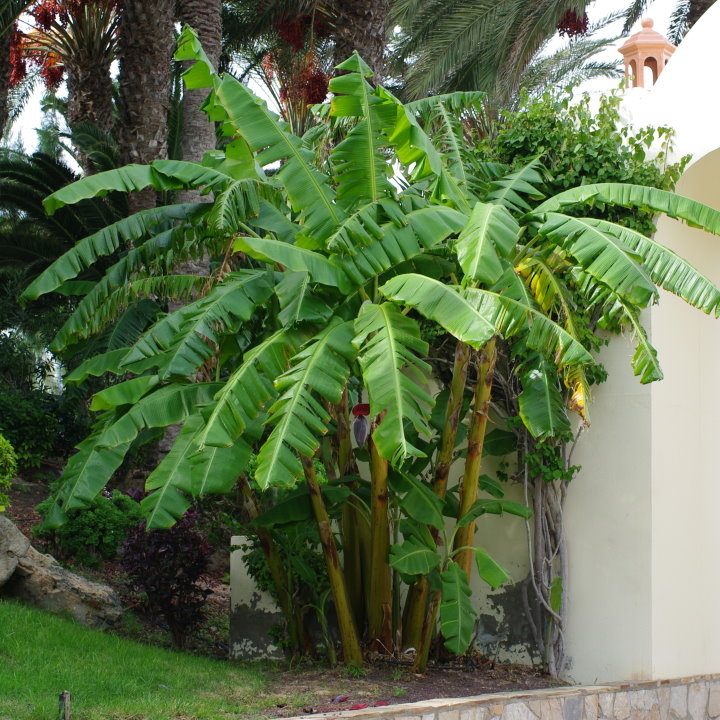
Not a palm or a tree at all, but a giant fast-growing herb with huge paddle leaves. In the Phoenix Valley it brings a true tropical look to sheltered courtyards and pool yards, and with steady water and feeding many varieties will fruit.
Living with it in the Phoenix Valley
Watering
Follow the tree schedule in our Landscape Care guide, then expect to give it more than most trees through the warm months. Bananas want plenty of water while growing but rot quickly in soggy soil, so good drainage matters. Growth slows to a crawl in winter, and that is when to cut back.
Pruning
Cut each stalk down after its fruit is harvested; it will not fruit again. Thin extra shoots so each clump holds just a few stems of different ages. Remove frost-burned leaves once the weather warms.
Feeding
A heavy feeder. Fertilize regularly through the warm season, and stop when the soil is cold and wet in winter. Underfed plants tend to bloom but set small, bland fruit.
Heat and frost
Midsummer sun can scorch leaves and blacken exposed fruit, so a spot with afternoon shade and shelter from wind works best. Covering or lighting the plant on frost nights protects the leaves, which saves months of regrowth.
How our designers use it
A tropical courtyard
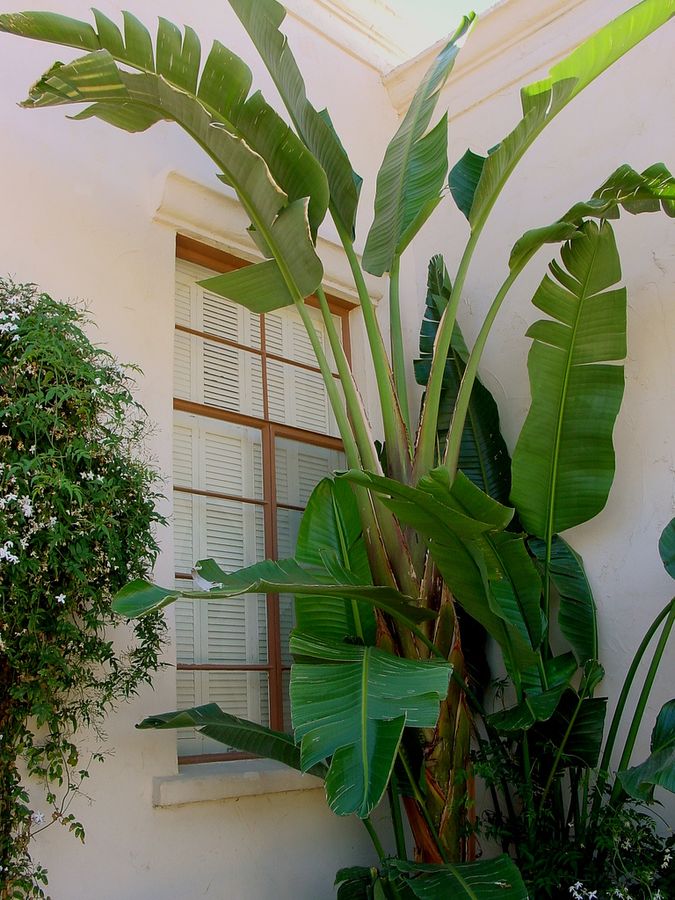
Tucked against a wall or into a protected corner, it gives an enclosed space a lush, resort feel that few desert plants can match.
Layering a lush pool yard
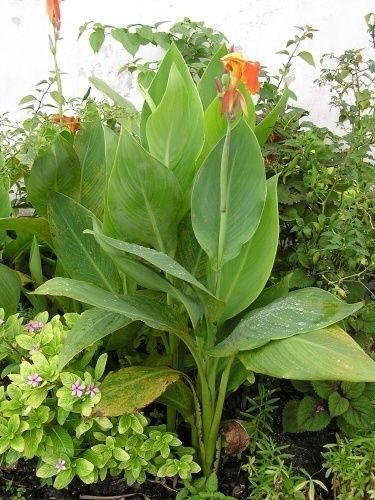
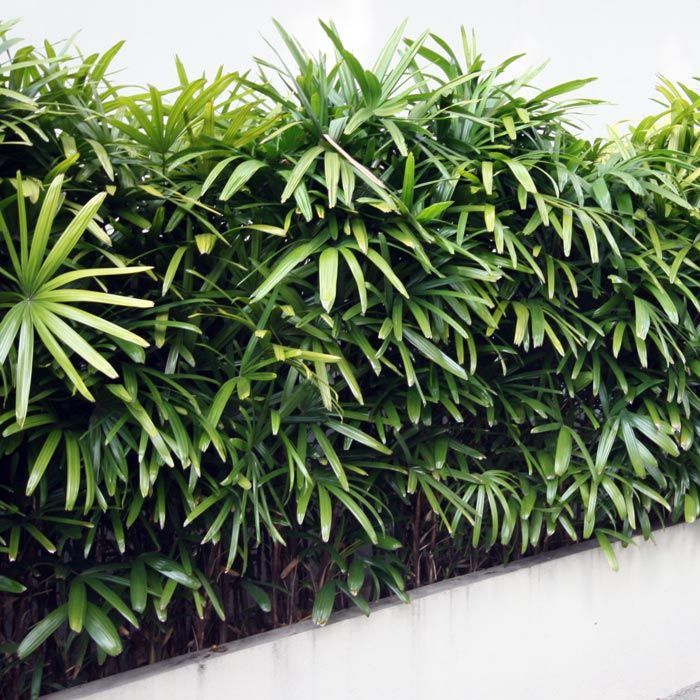
Its big leaves pair well with bird of paradise, cannas and palms to build a green backdrop away from the water’s edge.
Edible garden accent
For homeowners who want to try fruit, we place it where it gets morning sun, good soil and easy access for harvest.
Good to know
Around the pool
Torn leaves, spent flower bracts and fruit stalks add up. We keep it back from the water and out of open, windy spots, where the leaves shred quickly.
Commitment
This is a high-water, high-feeding plant that needs regular attention. It suits homeowners who enjoy hands-on gardening.