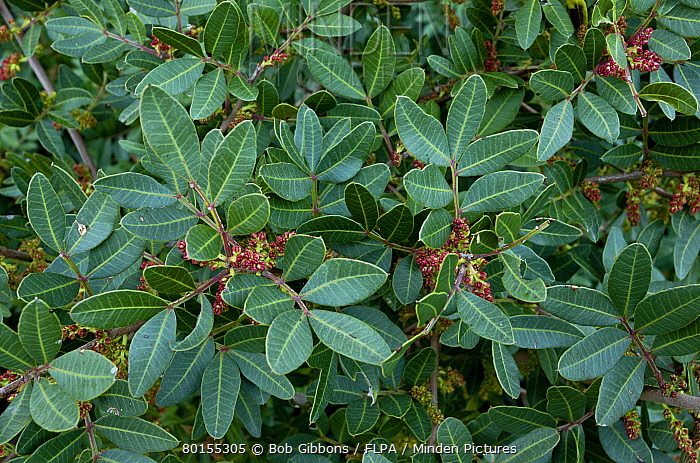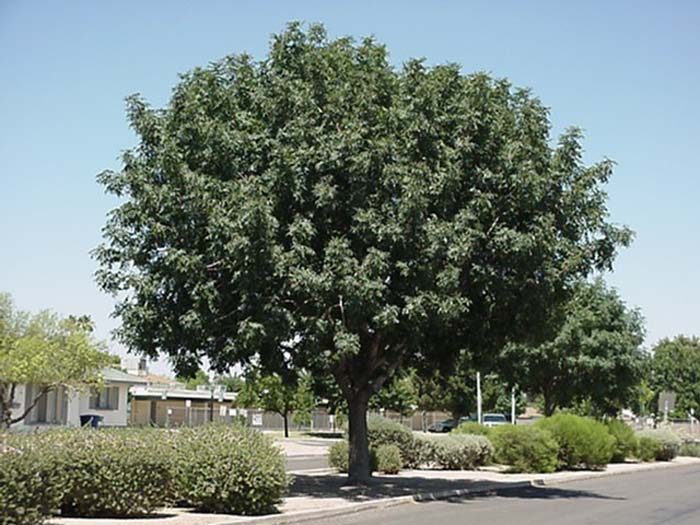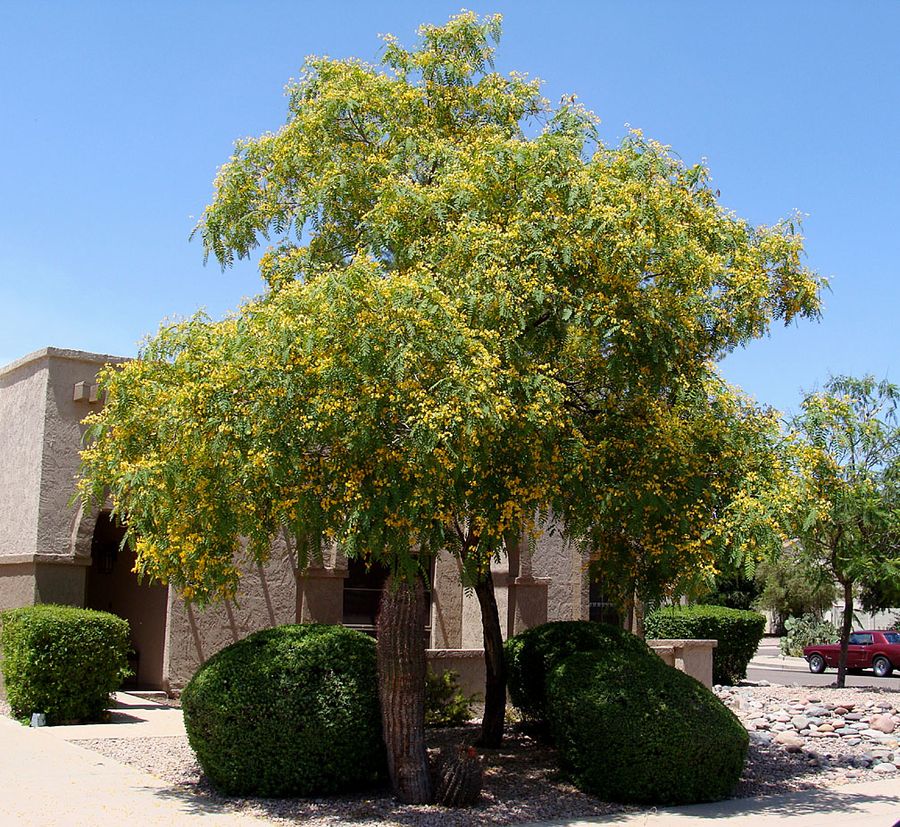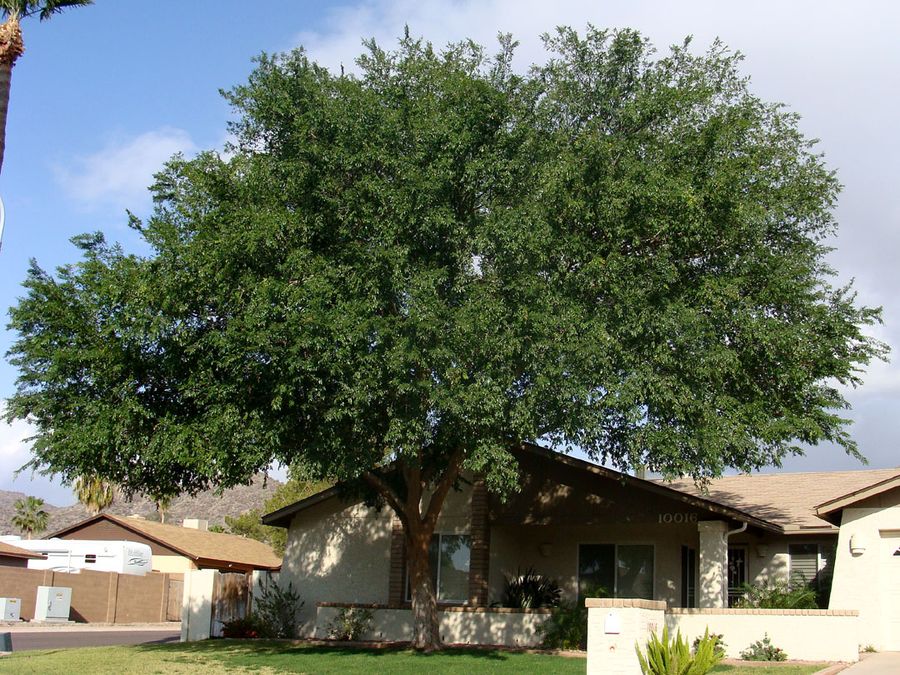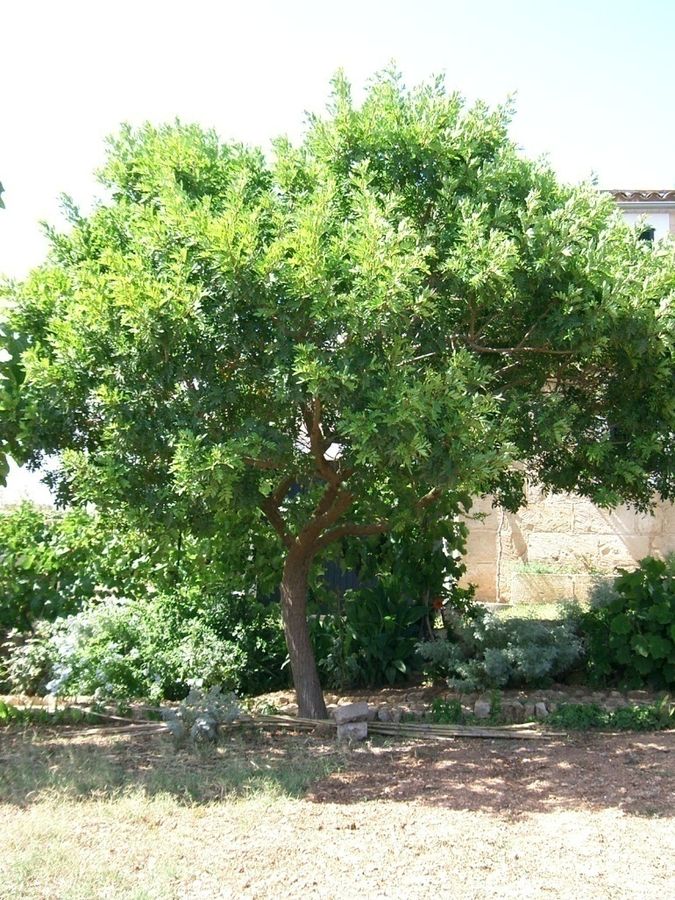
A broad, evergreen shade tree from South America with glossy, aromatic leaves and bright red berries on female trees in winter. It handles heat and dry spells and gives a lush look, but it is frost tender, invasive in several states and related to poison ivy, so it needs careful placement.
Living with it in the Phoenix Valley
Watering
Follow the tree schedule in our Landscape Care guide while it establishes. It tolerates dry spells once mature but looks best with deep, infrequent watering. Good drainage matters; soggy soil leads to root rot. It can struggle when surrounded by hot rock or pavers.
Pruning
Branches are brittle and the canopy grows wide and uneven. Train young trees to a few strong main limbs, raise the canopy gradually, and expect more pruning than most desert trees. Wear gloves; the sap can irritate skin.
Cold
Protect young trees on freezing nights. A hard freeze can burn the foliage and kill back tender growth.
How our designers use it
Lush evergreen shade
It gives dense, dark-green shade and a tropical feel on less water than many lush trees.
Moderate height
Its height suits yards that cannot take a very tall shade tree, as long as there is room for its spread.
Alternatives
Because of its seeding and weak wood, our designers often suggest Chinese pistache or mastic where a homeowner wants similar shade.
Good to know
Around the pool
Berries and leaflets drop through fall and winter, and birds spread the seeds. Keep it away from the water.
Invasive status
It is a serious invader in Florida, Texas, Hawaii and Southern California, and it has been reported reseeding in moist spots in central Arizona. Pull seedlings promptly.
Skin irritation
It is in the same family as poison ivy. The sap can cause a rash in sensitive people.