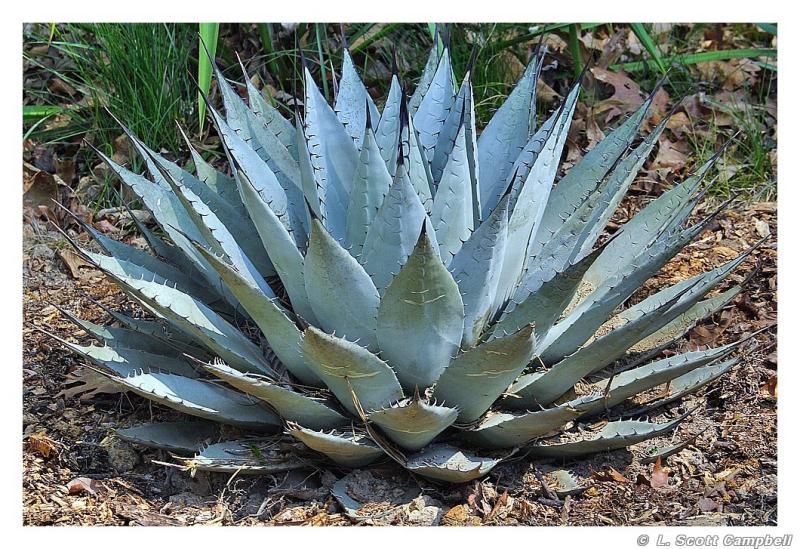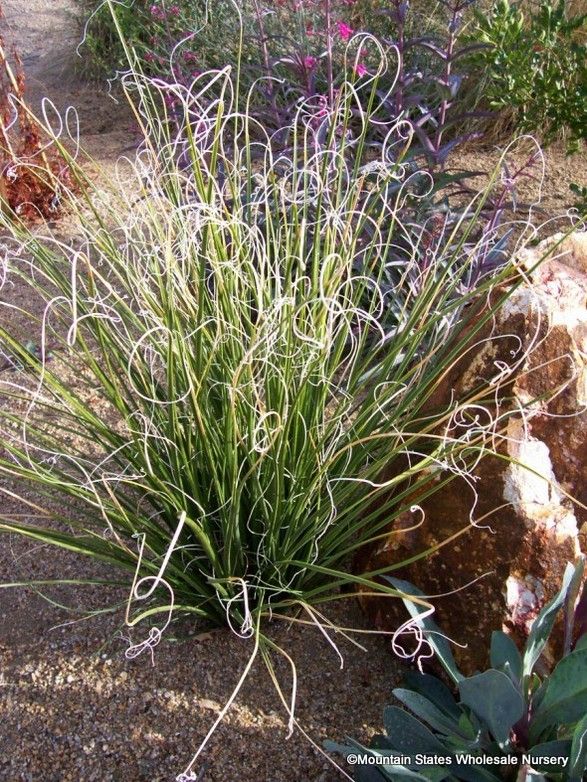
An Arizona native that forms a fountain of long, narrow leaves with curly, threadlike tips. It looks like a large ornamental grass but is actually a tough relative of the agaves, asking for little water and almost no care.
Living with it in the Phoenix Valley
Watering
Follow the shrub schedule in our Landscape Care guide while it establishes. As an Arizona native, it should be kept lean once mature. In the hottest exposures, an occasional deep soak in summer eases stress.
Pruning
Do not shear it like a grass. Remove flower stalks any time, or leave them until the seeds drop for the birds. Every so often, thin dead leaves from the base of older clumps. Wear gloves and cut rather than pull, since the leaf edges can cut skin.
Sun
It takes full sun, but in hot, reflected spots a little afternoon shade keeps the foliage looking its best.
How our designers use it
Softening hard edges
Its fountain shape relaxes walls, boulders and paving, and it moves nicely in a breeze.
With agaves and yuccas
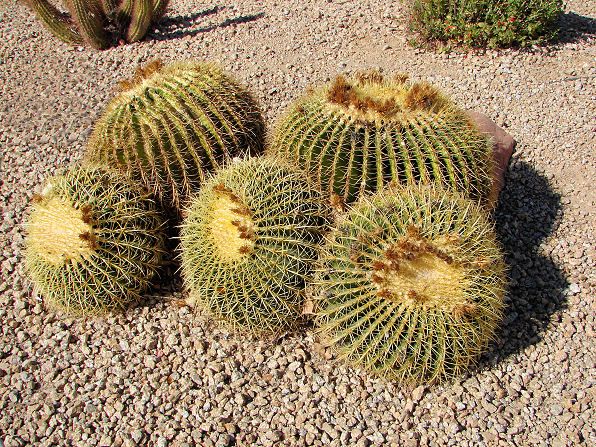
The fine, arching leaves contrast with broad, rigid succulents, which is why our designers often pair it with agaves, yuccas and barrel cactus.
Slopes and raised planters
Planted in groups it helps hold rocky slopes, and in a raised planter or large pot its arching habit shows off.
Good to know
Around the pool
Very little litter and no spines, so it works near pools and patios. The toothed leaf edges are rough on bare skin, so keep it a step back from where people sit or walk barefoot.