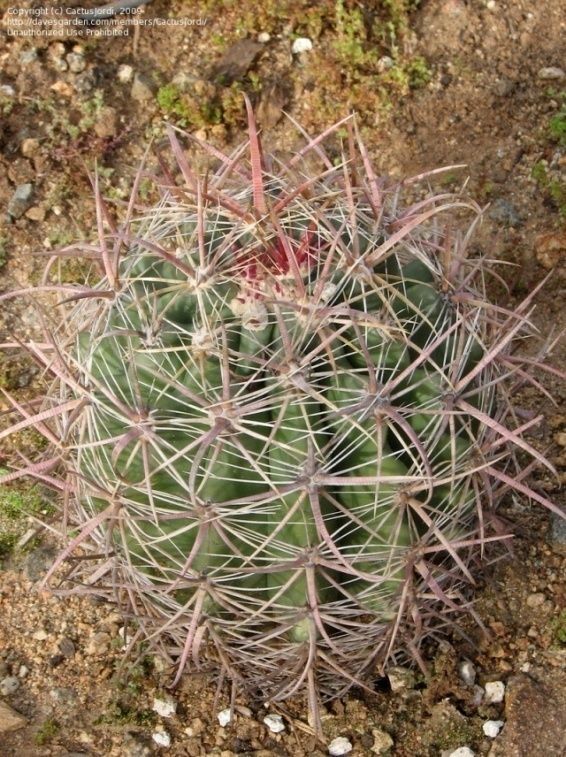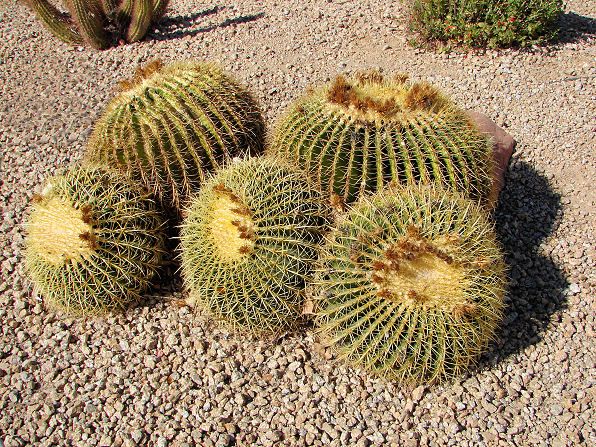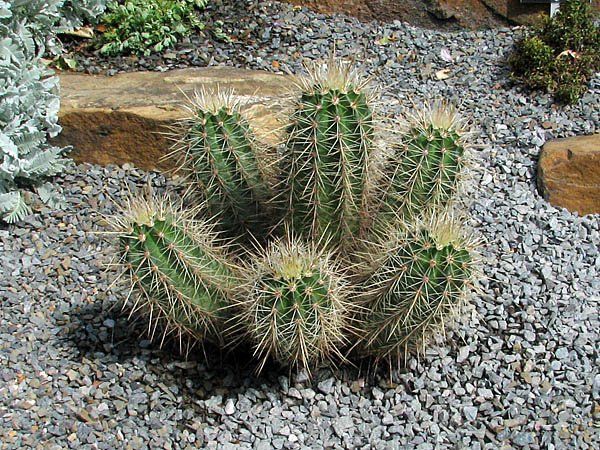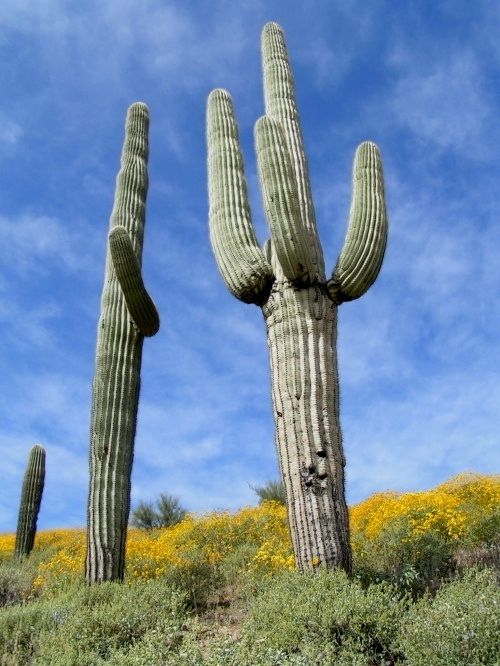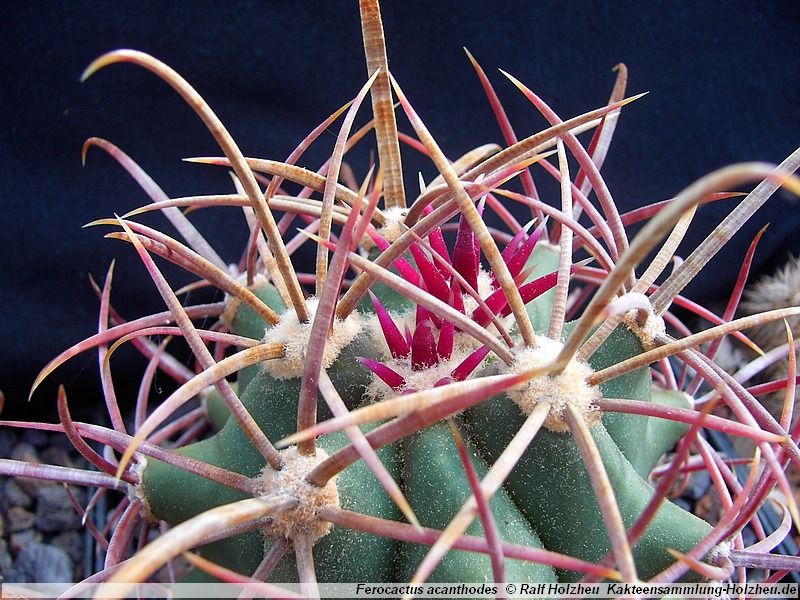
A native barrel cactus of the Sonoran and Mojave deserts, covered in long red spines that fade to gray with age. It grows slowly into a stout column and often leans toward the south or southwest, which gives it its name. It asks for almost no water and no pruning.
Living with it in the Phoenix Valley
Watering
Follow the cactus guidance in our Landscape Care guide, which calls for hand-watering only when needed. Once rooted, it gets by on rainfall. Regular irrigation does harm: overwatered barrels swell, grow top-heavy and can topple, and wet soil leads to root rot.
Pruning
None needed. If it ever has to be moved, handle it only with thick leather gloves.
Planting
Plant in fast-draining, rocky soil. When transplanting, keep the side that faced south still facing south, since the shaded side can sunburn if suddenly exposed.
Fruit
Yellow fruits form a cap on the crown through fall and winter and can stay for months. They are part of the look, so there is no need to remove them.
How our designers use it
Natural desert gardens
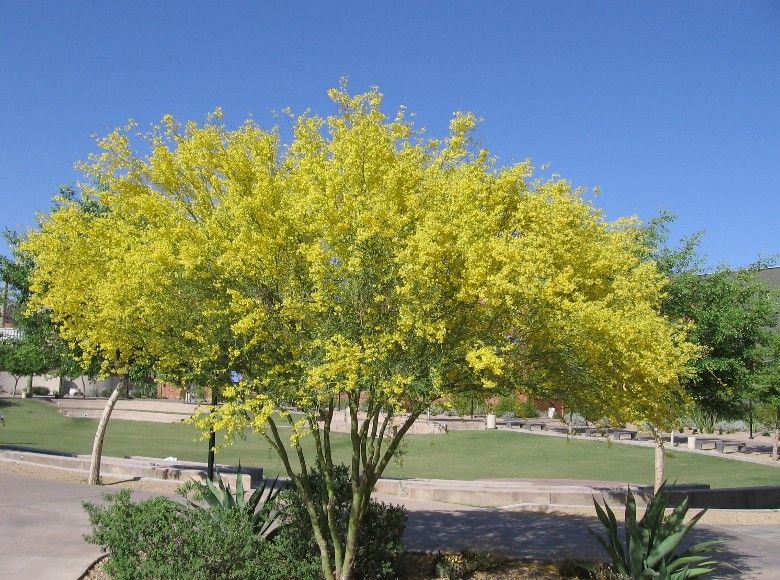
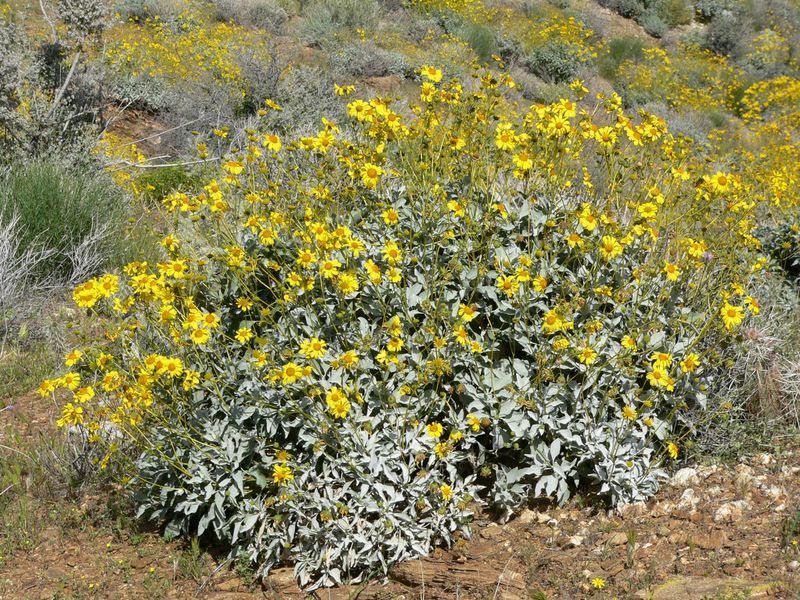
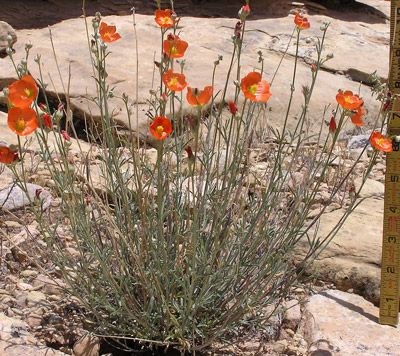
It belongs in naturalistic plantings with palo verdes, brittlebush and globe mallow, where its red spines catch the low morning and evening light.
Groups of barrels
Our designers like it in odd-numbered groups with other barrels on mounds and around boulders for a native, found-in-the-desert look.
Single specimen
One tall, leaning column makes a quiet sculptural focal point in a gravel courtyard.
Good to know
Around the pool
The spines are long, stiff and partly hooked. Keep it several feet back from pool decks, walkways and play areas.
The lean
Older plants lean toward the south or southwest, and very tall ones can eventually tip over, especially if overwatered. Give it open space where a fall would not cause damage.