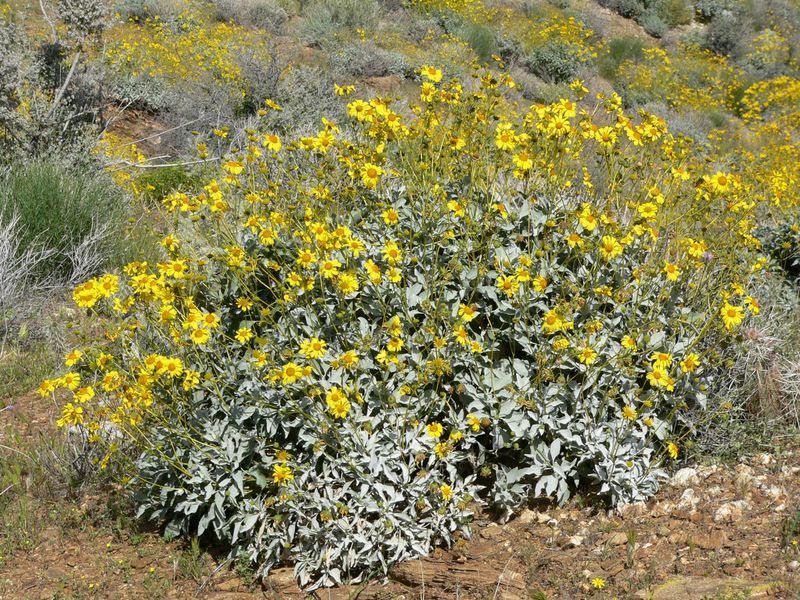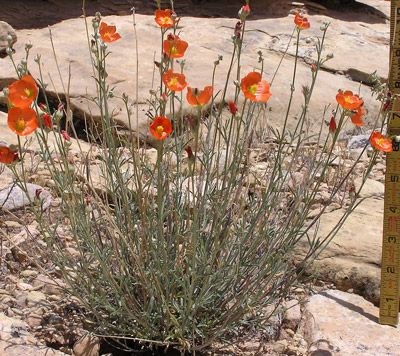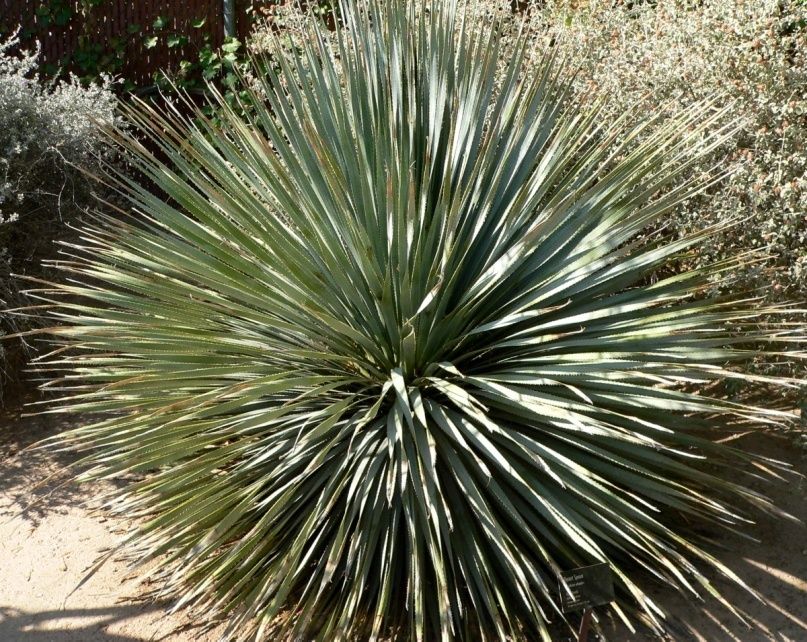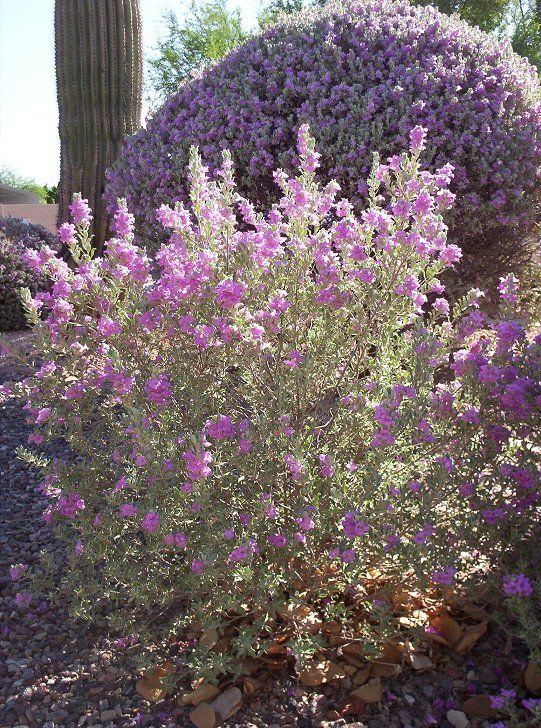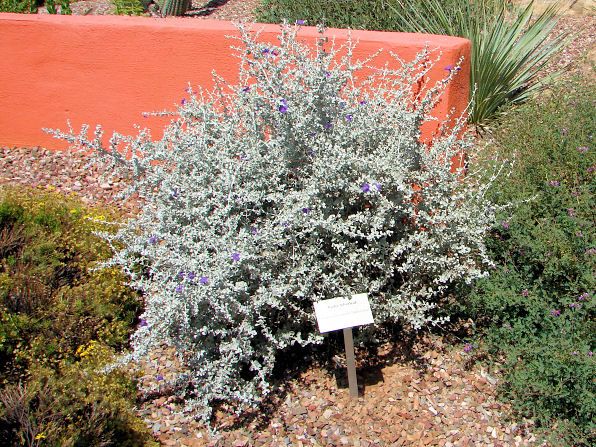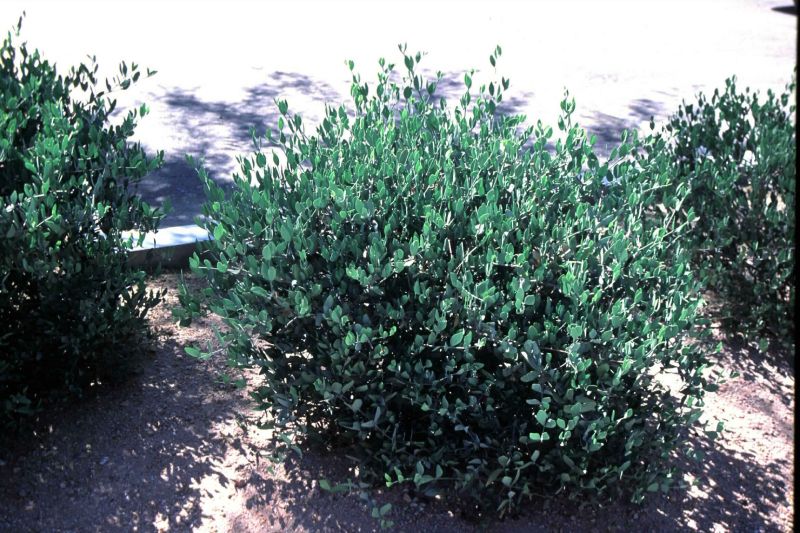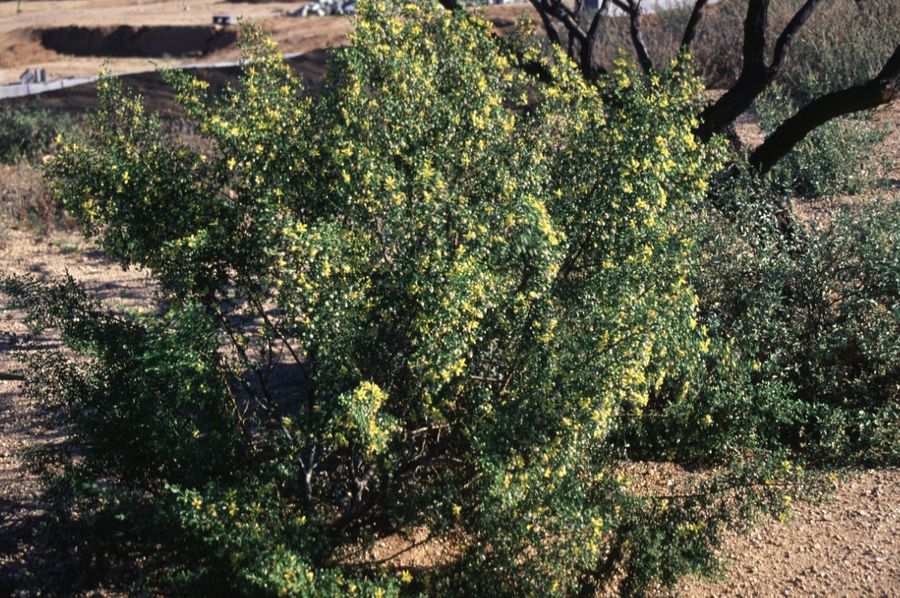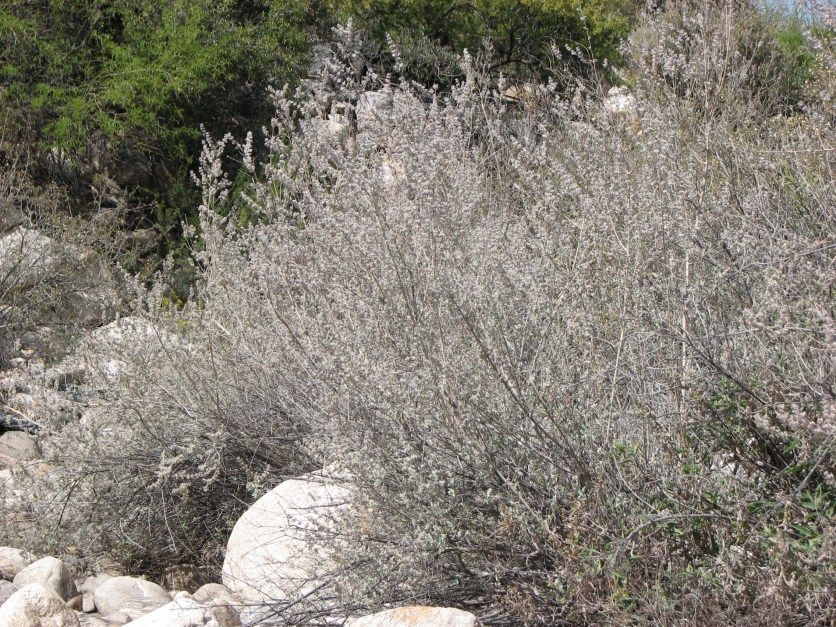
A large Sonoran Desert native with soft, woolly gray leaves and small lavender-blue flowers that bees love. It handles full sun, reflected heat and very little water, and its aromatic foliage gives a natural garden a quiet, silvery backdrop.
Living with it in the Phoenix Valley
Watering
Follow the shrub schedule in our Landscape Care guide while it establishes. After that, this is a true desert native and should be kept lean. Extra water makes it grow tall and floppy rather than full.
Pruning
It takes shearing or a natural shape equally well. For a tidy look, trim lightly after the spring bloom. To renew an old, leggy plant, cut it back harder in late spring once frost danger has passed.
Cold
Tips can be nipped in a hard freeze. Wait until spring to trim out damaged growth; the plant usually leafs out again from the stems.
How our designers use it
Native screening
Its size and dense gray foliage make it a soft, water-thrifty screen along walls and property lines.
Gray-green contrast
The silvery leaves set off agaves, cactus and darker green shrubs, and read well against desert-toned walls.
Pollinator gardens
It is one of the better native shrubs for bees and hummingbirds, especially in a habitat-focused or naturalized area.
Good to know
Around the pool
Leaf litter is light and it has no thorns, but the flowers draw a lot of bees in spring. We generally place it a little back from seating and the water’s edge.