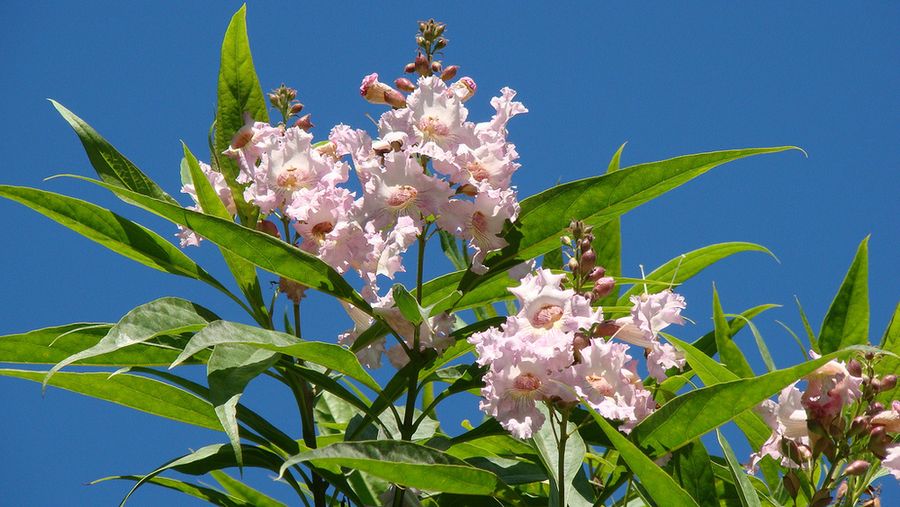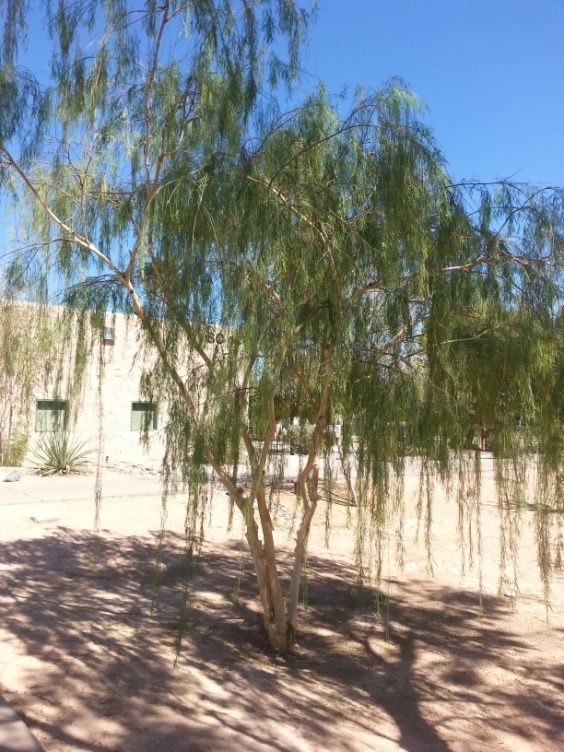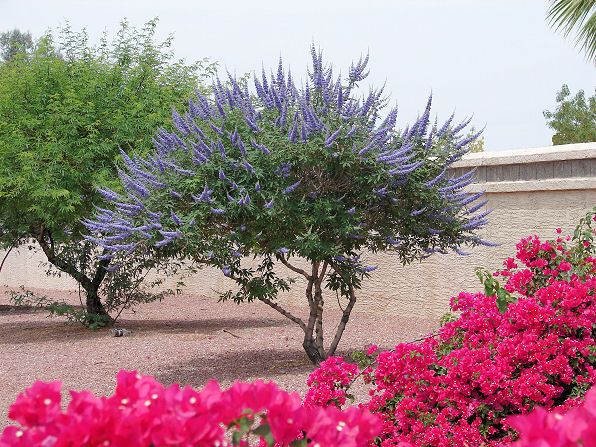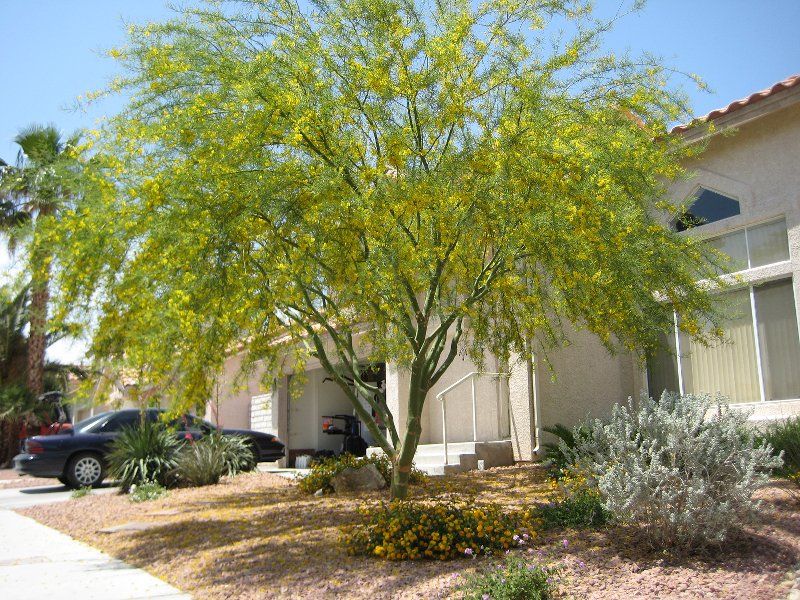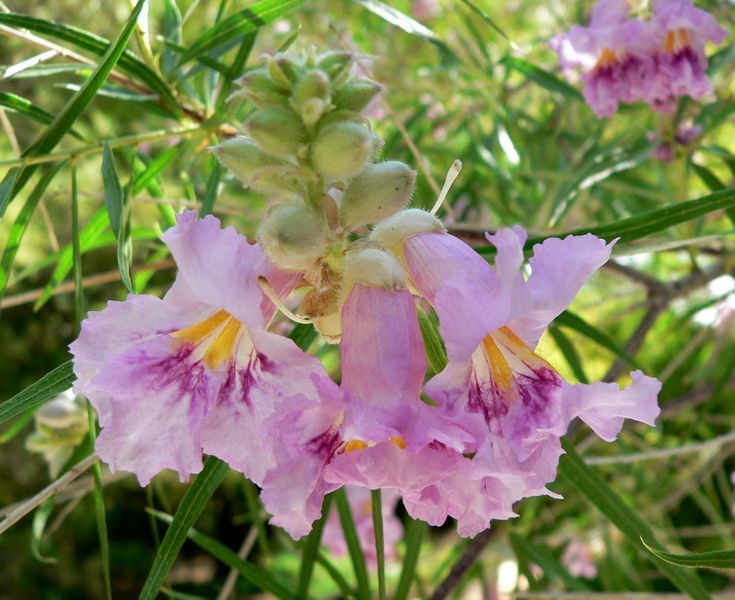
Not a true willow, but a native desert tree named for its long, narrow leaves. It blooms in orchid-like pink, purple or white trumpets from spring into fall, draws hummingbirds, and needs little water once established.
Living with it in the Phoenix Valley
Watering
Follow the tree schedule in our Landscape Care guide. It handles drought well, but occasional deep summer water keeps the canopy fuller and the bloom going. Avoid constant moisture and poorly drained soil.
Pruning
Young trees need training to one or a few trunks; left alone they turn shaggy, with branches to the ground. Thin rather than shear or head back, which triggers a mass of twiggy shoots. Winter, while it is bare, is a good time to clip off old seed pods.
Winter look
It can be bare for several months, from late fall into spring. A seedless variety and a few evergreen shrubs nearby soften the winter view.
Pests
Aphids can appear on new spring growth. Bacterial leaf scorch occasionally browns the foliage.
How our designers use it
Hummingbird gardens
Its trumpet flowers are a reliable draw for hummingbirds and native bees.
Summer color
It is one of the few desert trees still in bloom through the heat of summer.
Patio-scale shade
With no thorns and a modest size, it suits patios, side yards and small courtyards.
Good to know
Around the pool
Flowers drop through the warm season and seed pods add litter, but there are no thorns. A seedless variety is the better choice near water.
Wind
The wood is somewhat brittle. Good early structure helps it hold up in monsoon storms.