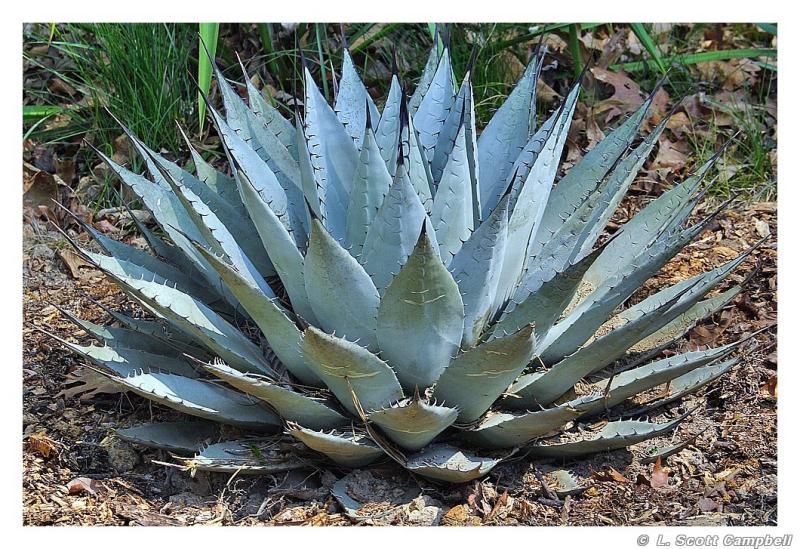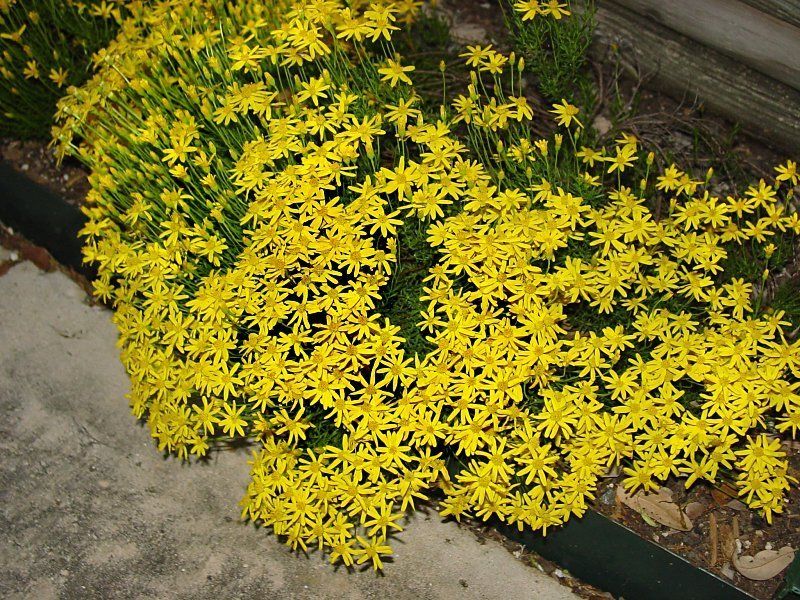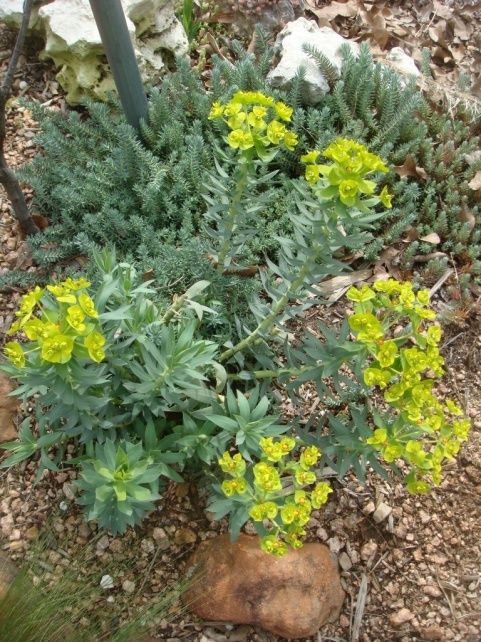
A low, mounding succulent perennial with blue-gray leaves spiraling up stiff stems, topped by chartreuse-yellow flower heads in late winter and spring. It brings cool color and strong texture to dry gardens and needs little water.
Living with it in the Phoenix Valley
Watering
Follow the shrub schedule in our Landscape Care guide, then keep it lean. It needs only occasional water in summer and little or none in winter. Poor drainage or soggy soil leads to root rot.
Pruning
Once a stem has flowered and set seed, it yellows and declines. Cut those stems to the base, either as they fade or in one pass in early fall, and fresh stems fill in. Wear gloves and eye protection.
Rabbits
Rabbits generally leave it alone, which makes it useful where other low plants get chewed.
How our designers use it
Winter color
It blooms when most of the garden is resting, so our designers place it where it can be seen from the house in late winter.
Blue-gray foil
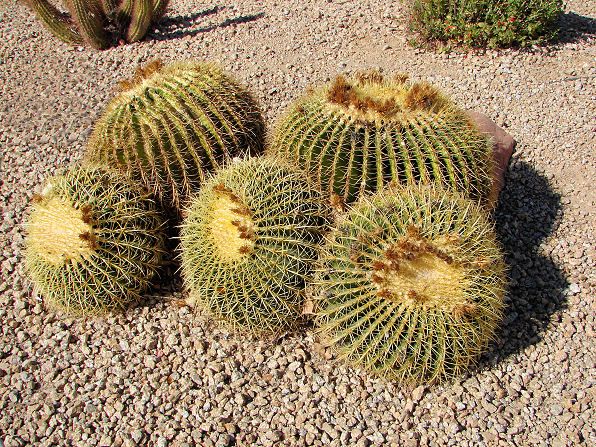
The cool foliage contrasts well with golden barrels, green agaves and warm-colored gravel.
Rock gardens and pots
Its tidy mound and spiral leaves suit gravel beds, boulder edges and containers.
Good to know
Sap
The milky sap can irritate skin and eyes and is toxic if eaten. Wear gloves when cutting it and keep it out of spots where small children play.
Around the pool
No thorns and little litter, but the sap makes it better suited a step back from the water and busy walkways.