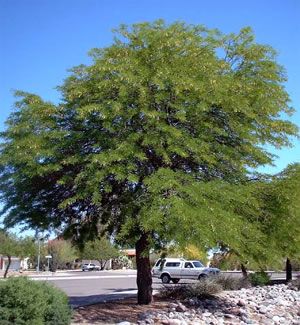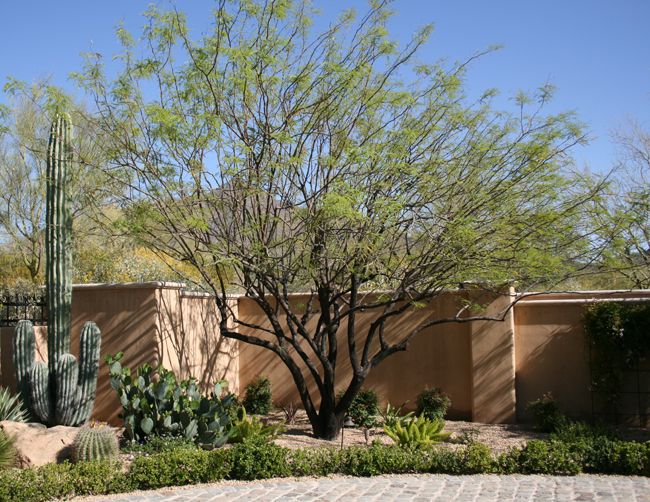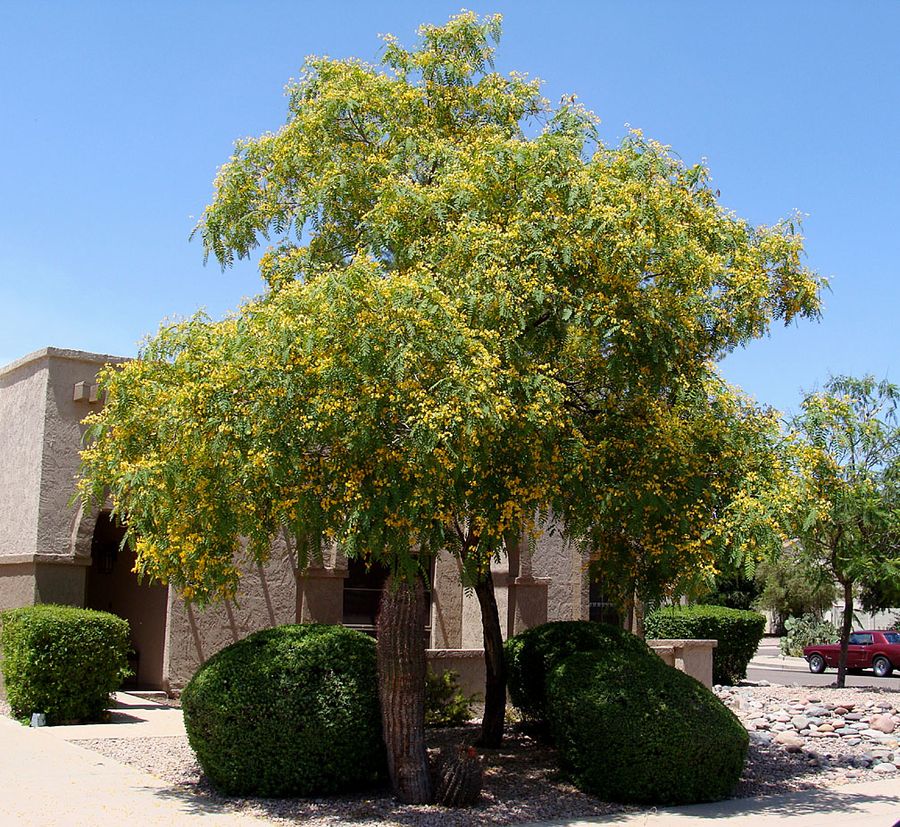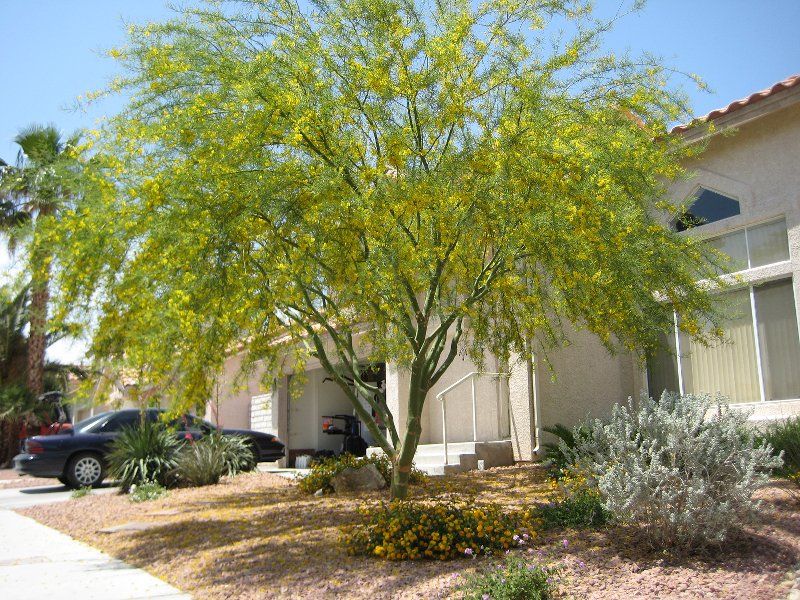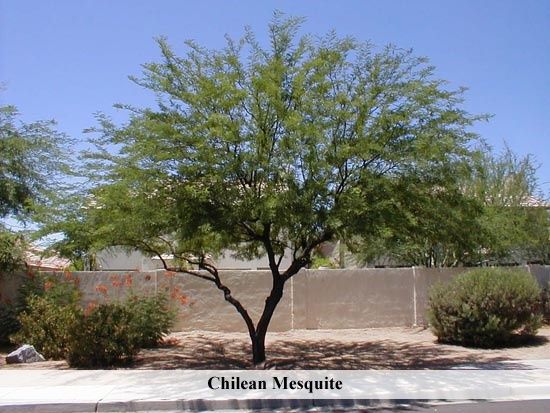
A fast-growing South American mesquite with a wide umbrella canopy and fine, bright green leaves. Most trees sold under this name in the Valley are thornless or nearly thornless hybrids. People choose it when they want real shade quickly on very little water.
Living with it in the Phoenix Valley
Watering
Follow the tree schedule in our Landscape Care guide while it establishes. After that, less is better. Frequent water pushes fast, soft growth and a heavy canopy on a small root system, which is how mesquites end up on their side after a monsoon storm.
Pruning
Train it early to one strong trunk or a few well-spaced ones, with sturdy scaffold limbs. After that, thin the canopy lightly so wind can pass through. Avoid heading back or topping, and don’t remove large amounts of foliage in summer, which can sunburn exposed bark.
Wind
Its broad, dense crown catches monsoon gusts. Deep, infrequent watering spread out past the trunk builds anchoring roots, and regular thinning keeps the canopy from acting like a sail.
Cold
Established trees handle a typical Phoenix winter. In a cold year they may drop most of their leaves for several weeks and leaf out again in spring.
How our designers use it
Big shade, fast
When a new yard needs a shade canopy over a patio or play lawn edge within a few seasons, few low-water trees cover ground as quickly.
A canopy for desert plantings
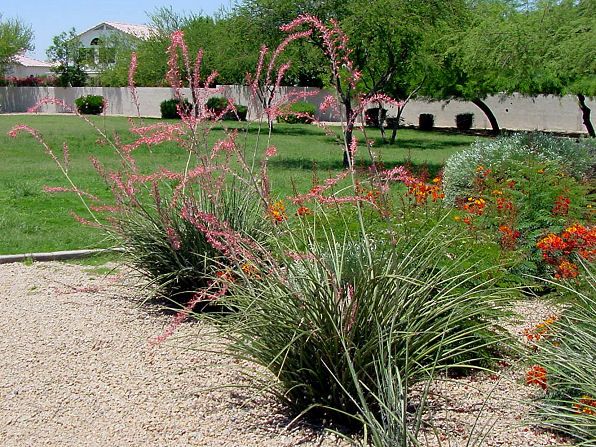
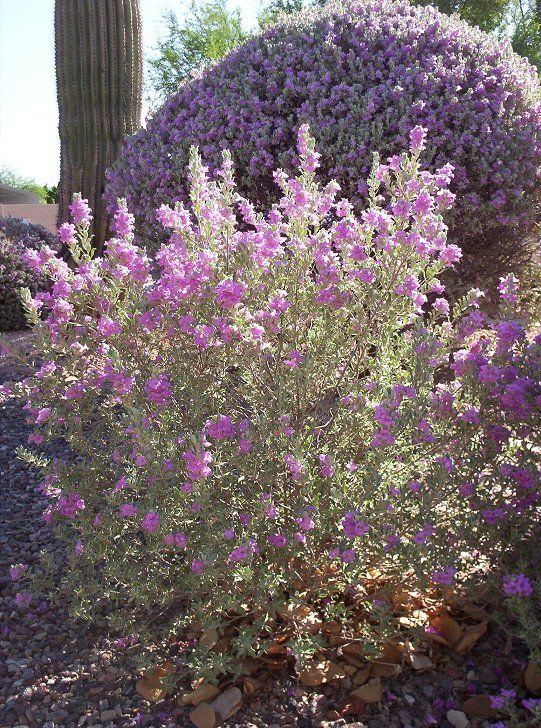
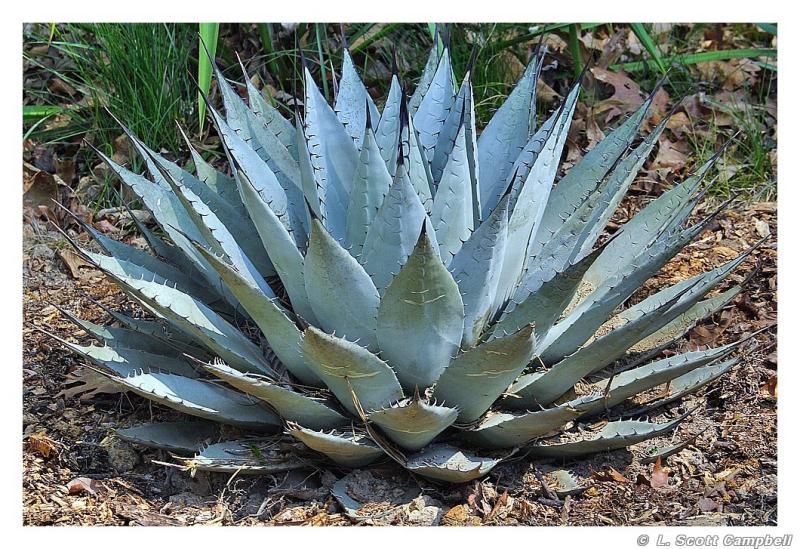
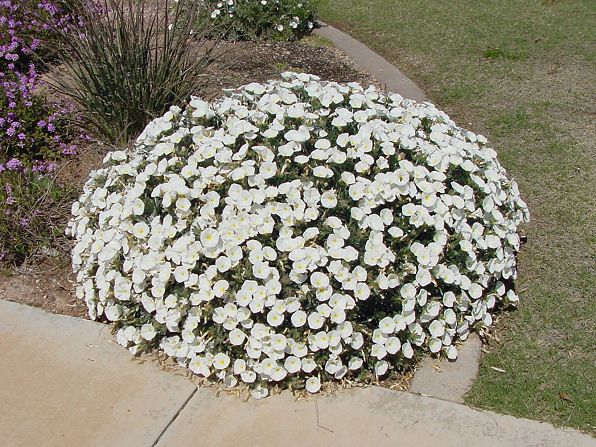
Its filtered shade suits a layer of sages, agaves and groundcovers below, as long as they get some direct sun.
Large open lots
It needs room. We place it where its 30′ spread can develop without crowding the house, walls or other trees.
Good to know
Around the pool
It sheds small leaflets in late winter and drops seed pods in early summer, and both end up in the water. We generally keep it back from the pool edge and downwind of it.
Thorns
Seedling trees can carry sharp spines up to a couple of inches long. Ask for a thornless selection when it will sit near paths, seating or play areas.