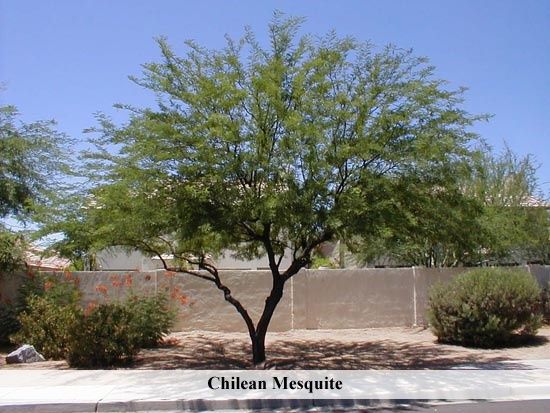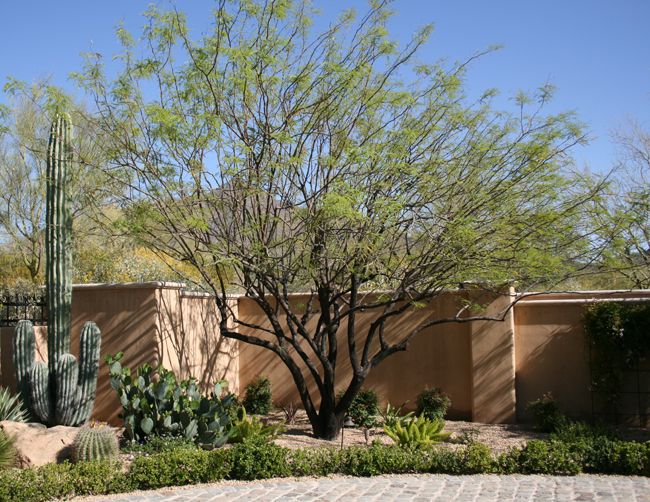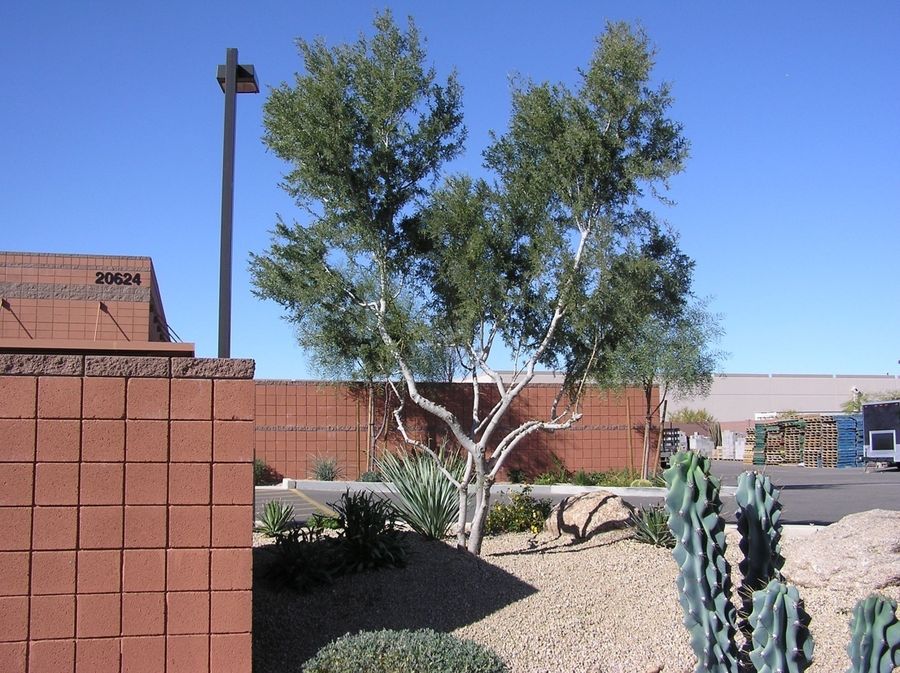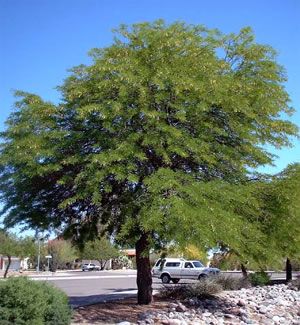
A thornless selection of the South American hybrid mesquite, grown for a sturdy trunk and a broad, shady canopy. It offers the look and shade of a mesquite without the spines. It suits yards where people will walk, sit and play under the tree.
Living with it in the Phoenix Valley
Watering
Follow the tree schedule in our Landscape Care guide while it establishes. Spread water out past the trunk so the roots reach wide. Once mature it needs far less, and too much water or fertilizer grows a big canopy on a small root system.
Pruning
Thin lightly rather than shearing or heading back. Take no more than about a fifth of the canopy in a season, and avoid heavy summer cuts that expose bark to sunburn. Early training to a strong trunk and well-spaced limbs pays off for decades.
Winter look
Like other South American hybrids, it holds most of its leaves through a mild winter, then drops them quickly just before new growth in spring. Expect a short, bare stretch, not a long leafless season.
Pests
Generally trouble-free. Aphids or psyllids can show up on young growth, and spider mites in the dry weeks of May and June; a strong rinse of water usually handles them.
How our designers use it
Shade where people gather
With no spines, it is a comfortable choice over a patio, outdoor kitchen or lawn edge.
A desert-modern specimen
A single tree with a clean trunk and broad crown anchors a gravel courtyard or front yard without competing with the architecture.
Transition to native plantings
It blends easily with Sonoran natives, so it bridges a more finished patio area and a natural desert edge.
Good to know
Around the pool
Thornless is a plus near water, but it still drops leaflets in late winter and seed pods in early summer. We generally keep the canopy from hanging directly over the pool.
Wind
Most mesquites that blow over were overwatered, staked too long or pruned poorly. Deep, spread-out watering and good early structure are the best protection in monsoon season.