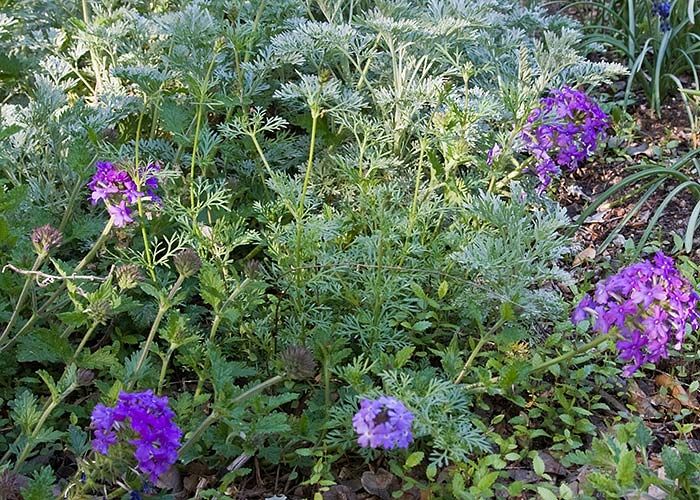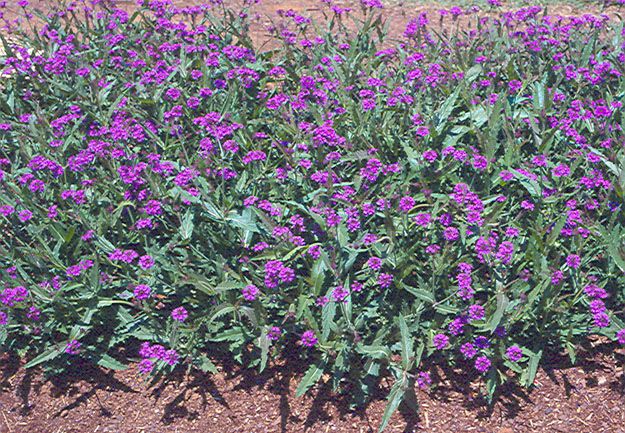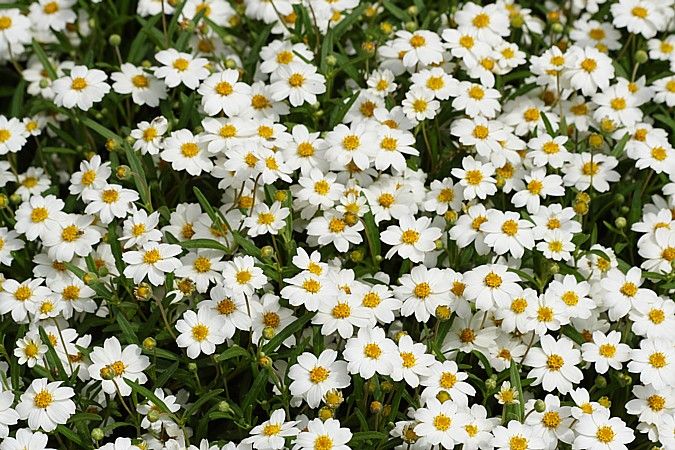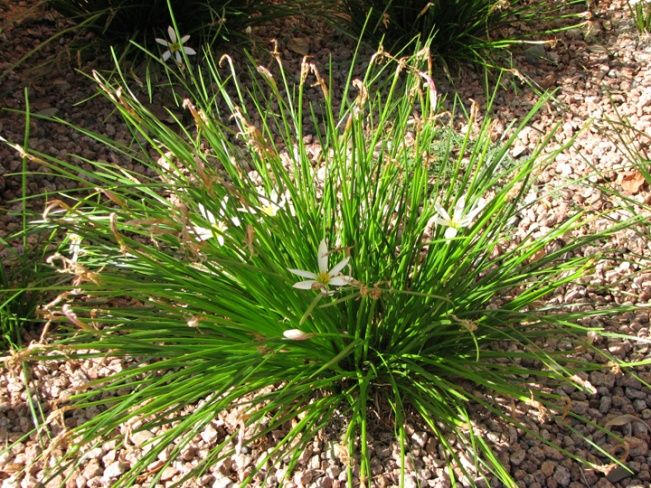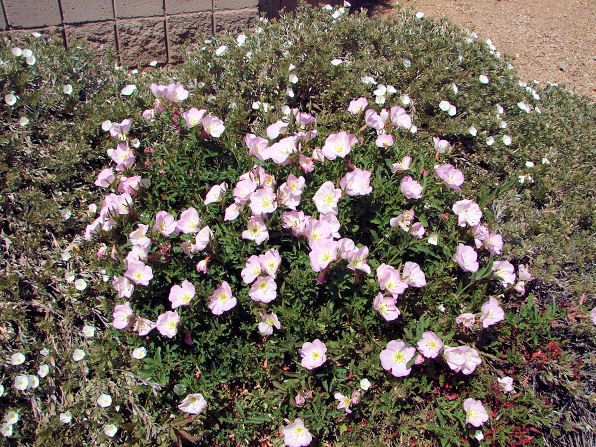
A low wildflower that covers the ground in soft pink, cup-shaped blooms in spring, with a smaller show in fall. It is tough and asks for little water, but it spreads readily by runners and seed, so where it goes matters.
Living with it in the Phoenix Valley
Watering
Follow the shrub, groundcover and succulent schedule in our Landscape Care guide. It gets by on very little. In summer it slows down in the heat and may go dormant without occasional water. Overhead watering can lead to leaf spotting, so drip is better.
Pruning
Shear or mow it to the ground in late summer or early fall. It returns with fresh growth and fall flowers.
Pests
Flea beetles can strip the leaves in early spring. Plants usually recover later in the season.
How our designers use it
Contained beds
Our designers use it only where hardscape holds it in: a bed bordered by concrete, a courtyard planter or a parkway strip.
Wildflower areas
On dry slopes and natural areas at the edge of a property, its spread can be an asset rather than a problem.
Good to know
Spreading
It travels by runners and seed into lawns, neighboring beds and cracks in paving, and it is hard to remove once established. We generally avoid it in mixed beds of slower plants.
Around the pool
Soft, thornless and low-litter, so it is comfortable near decks, as long as it is contained.