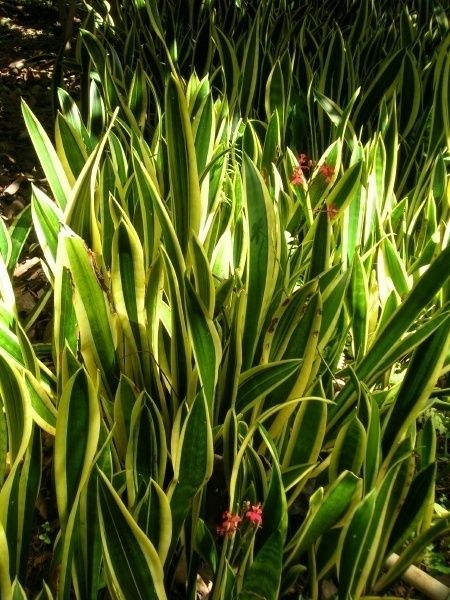
A stiff, upright succulent with sword-shaped leaves, often banded or edged in yellow. Outdoors in the Phoenix Valley it is a shade plant, best in pots and protected beds where its strong vertical lines stand out against a wall.
Living with it in the Phoenix Valley
Watering
Follow the shrub, groundcover and succulent schedule in our Landscape Care guide. In a shaded bed it does best with steady but modest water in summer. Let the soil dry between waterings and cut back in winter, when cool, wet soil quickly rots the roots. Pots need good drainage holes.
Pruning
Little is needed. Cut damaged or yellowed leaves at the base. Every three to five years, divide crowded clumps to refresh the planting and get new plants for other spots.
Cold
It does not tolerate freezing. On frost nights, cover in-ground plants or move pots under a patio roof. Freeze-damaged leaves turn soft and should be removed once warm weather returns.
Heat/sunburn
Direct summer sun, especially from the west, bleaches and scorches the leaves. Variegated forms are the most sensitive and want little more than morning sun.
How our designers use it
Shaded entries
Its upright form gives a covered entry or north-facing courtyard a clean, architectural accent where most succulents would struggle.
Containers
Our designers like it in tall pots by a door or on a covered patio, where it can be moved to shelter on a frosty night.
Texture under a canopy
Planted in groups beneath dense shade, it adds a bold vertical contrast to softer groundcovers and ferns.
Good to know
Around the pool
The leaves have smooth edges and no spines, and it drops almost no litter. Because it needs shade, it fits a covered cabana or the shaded side of a pool better than the open deck.
Pets
Mother-in-law’s tongue is considered toxic to dogs and cats. Chewing the leaves can cause nausea, vomiting and diarrhea.