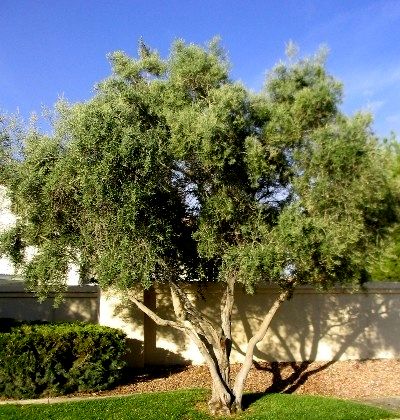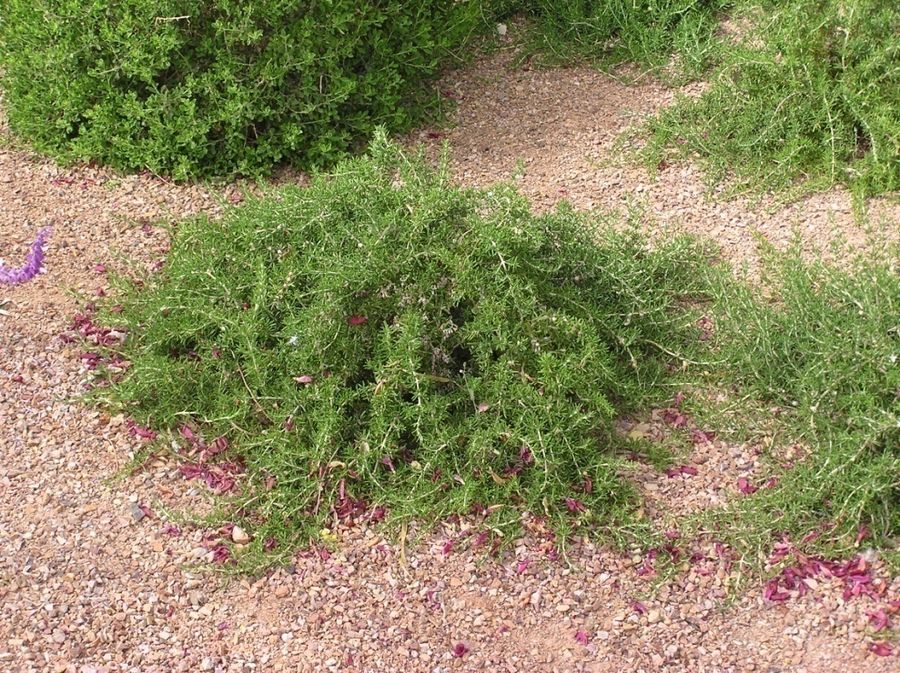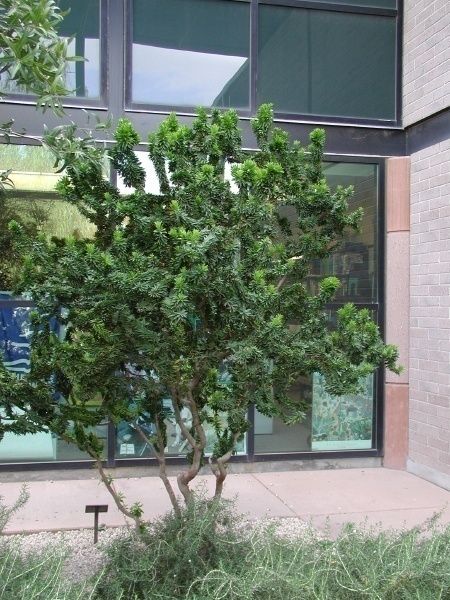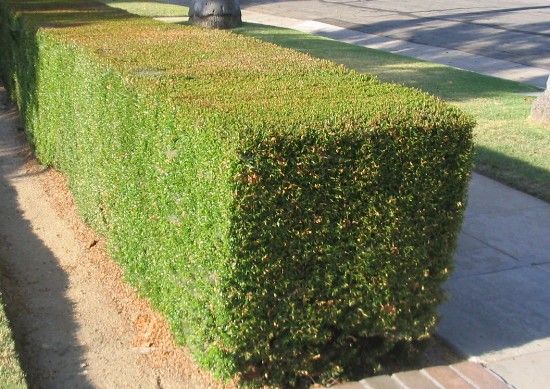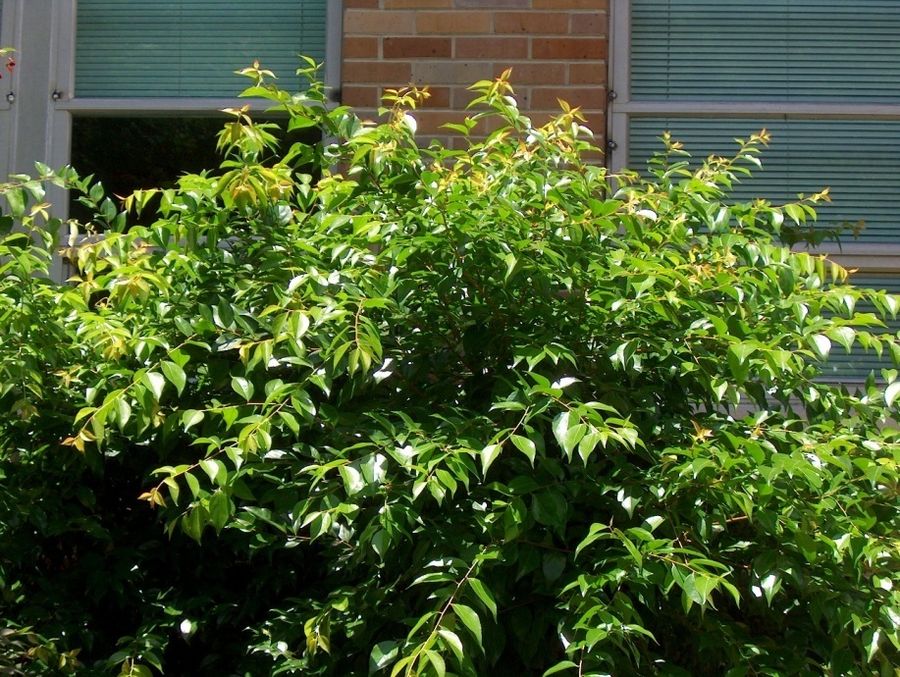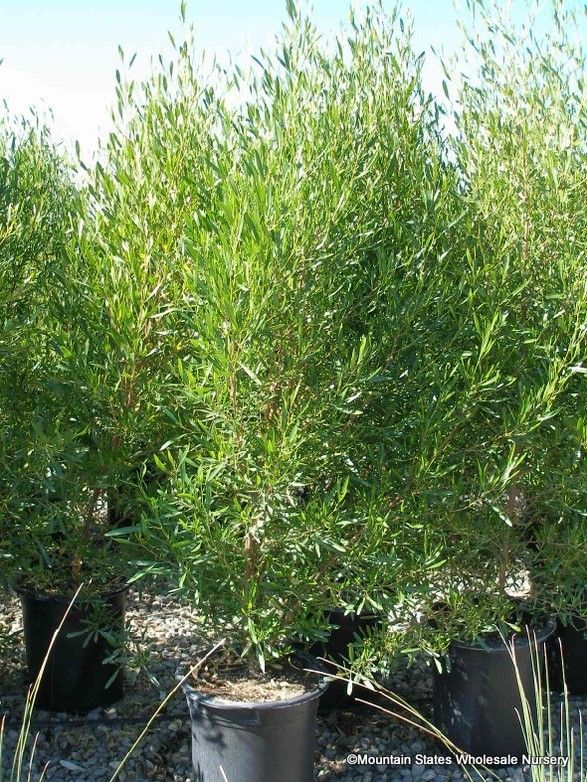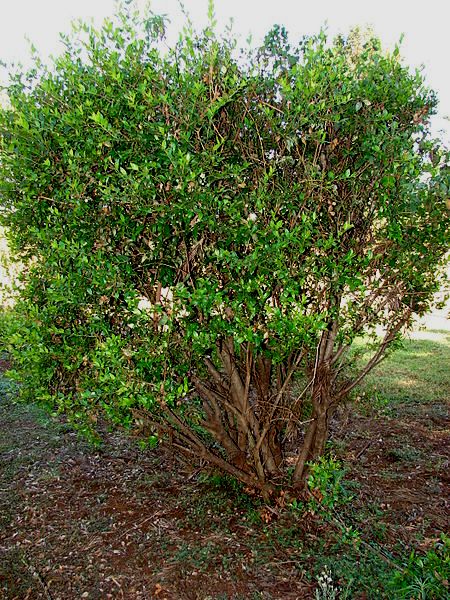
A classic Mediterranean evergreen with small, aromatic leaves, white spring flowers and dark berries in fall. It handles Phoenix heat well, uses modest water once established and can be grown as a full shrub, a clipped hedge or a small multi-trunk tree.
Living with it in the Phoenix Valley
Watering
Follow the shrub schedule in our Landscape Care guide. It is surprisingly drought tolerant once established and prefers deep, infrequent watering. Constantly wet soil leads to yellowing leaves.
Pruning
It takes any kind of pruning well. Shear for a formal hedge, or remove lower limbs over time to train a multi-trunk small tree and show off the peeling cinnamon-brown bark.
Chlorosis
Yellow leaves with green veins usually mean iron chlorosis from wet, alkaline soil. Good drainage and less frequent watering are the best prevention.
Pests
Generally trouble-free. Spider mites can show up in summer; a strong rinse of water usually handles them.
How our designers use it
Evergreen screens
Our designers use it for a dense, fine-textured screen or tall hedge that stays green all year.
Small multi-trunk tree
Trained up, it makes a compact patio tree with attractive bark for courtyards and narrow side yards.
Mediterranean-style gardens
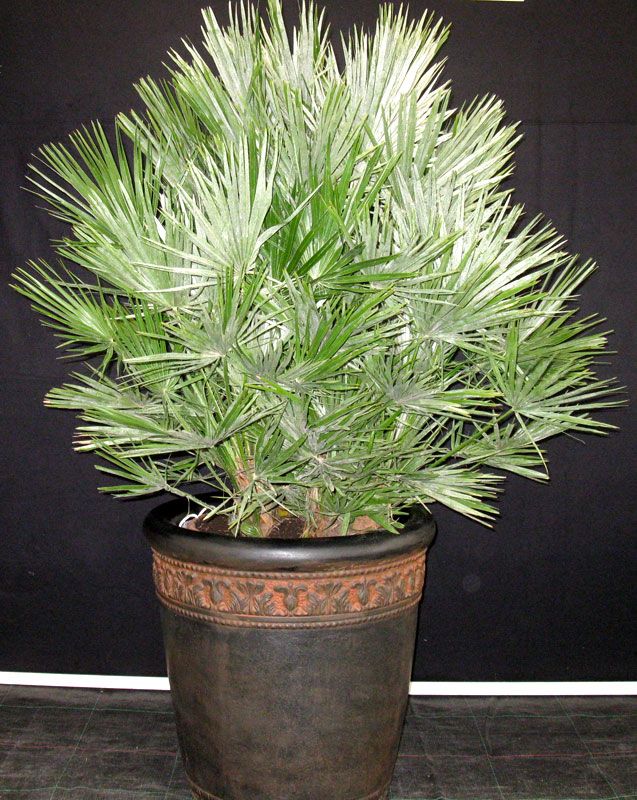
It pairs naturally with olives, rosemary and fan palms.
Good to know
Around the pool
Flower and berry drop is light but steady in season, and fallen berries can mark light-colored paving. Keep it a few feet back from the water and pale decking.