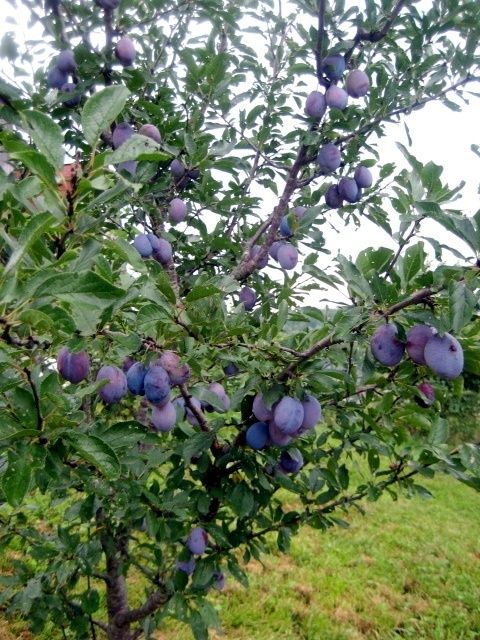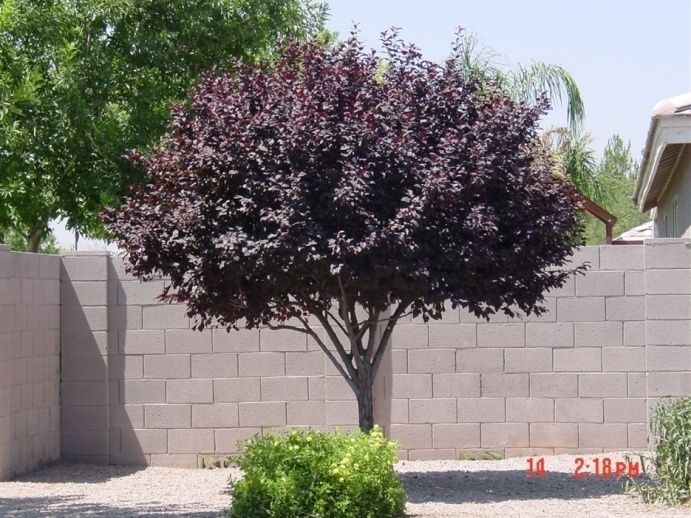
A small ornamental tree grown for its deep purple leaves and a cloud of pale pink blossoms before it leafs out in late winter. It adds color contrast that few Phoenix trees can, provided it gets regular water and is kept away from heat-radiating surfaces.
Living with it in the Phoenix Valley
Watering
Follow the tree schedule in our Landscape Care guide. This is not a desert tree, and it needs regular deep water for life to get through Phoenix summers. Drought stress shows up as scorched leaves and invites borers.
Pruning
Prune lightly right after bloom to shape and thin. Remove crossing branches and any suckers from the base.
Feeding
Alkaline soil often causes small, pale or yellowing leaves from zinc and iron deficiency. A micronutrient treatment in spring helps keep the leaves full and dark.
Pests
Peach tree borers, aphids and fireblight can all appear. A well-watered tree out of reflected heat resists them best.
How our designers use it
Color contrast
Its purple canopy stands out against green shrubs, silver foliage and pale walls, and it brings a seasonal moment in late winter.
A small accent tree
Its modest size fits front-yard beds, entries and courtyards that call for a single ornamental tree.
In greener landscapes
It belongs with lawn, roses and other regularly watered plants, not in a low-water desert planting.
Good to know
Around the pool
It drops petals in late winter, leaves in fall and, on fruiting varieties, small plums. Keep it back from the water and light-colored decking.
Pets
Plum and cherry trees are on the ASPCA’s list of plants toxic to dogs, cats and horses. The stems, leaves and seeds are the concern.