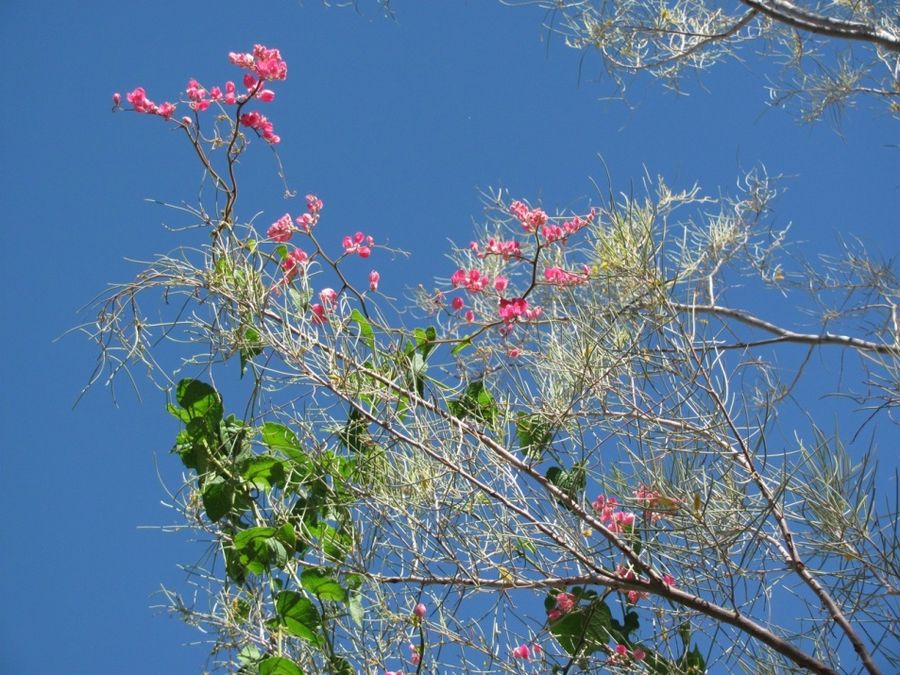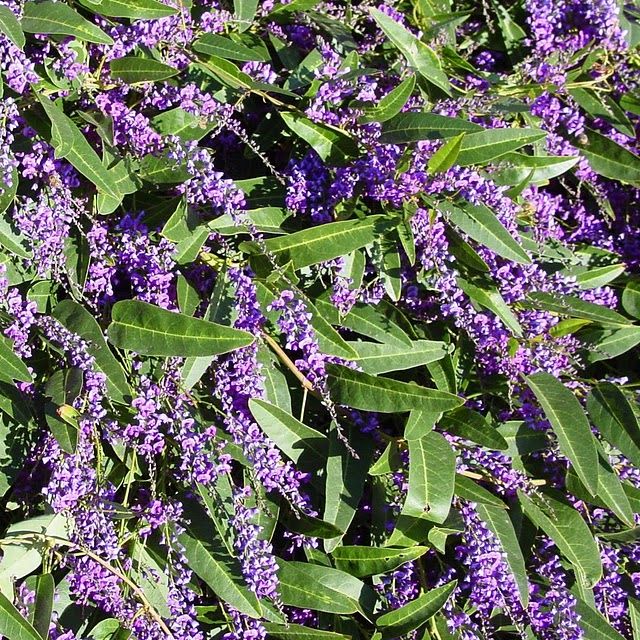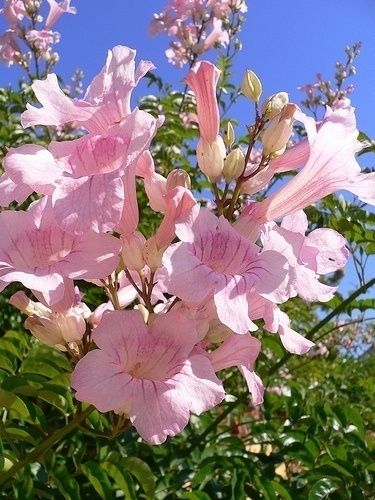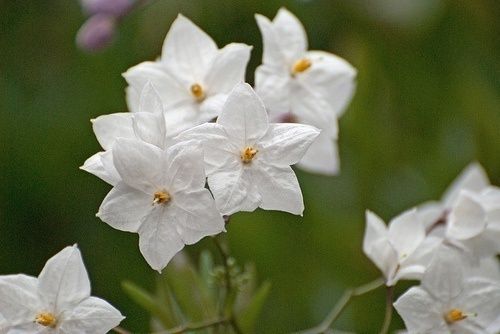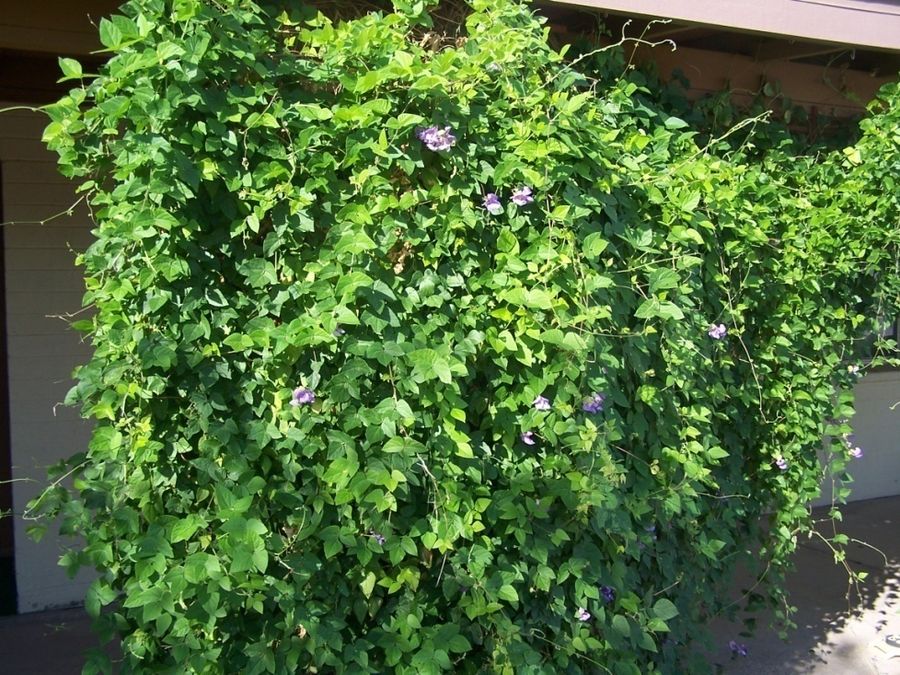
A fast tropical vine grown for its unusual curled flowers in lavender and cream, shaped like a snail shell. In Phoenix it often freezes to the ground in winter, then races back over a trellis or fence once the weather warms.
Living with it in the Phoenix Valley
Watering
Follow the shrub schedule in our Landscape Care guide. Unlike desert vines, it wants regular water year-round and declines quickly when it dries out.
Pruning
Cut it back as needed through the growing season to keep it on its support. After frost kills the top, cut it to the ground in late winter and let it regrow.
Cold
Expect winter dieback in most Phoenix yards. A warm, sheltered spot near a wall helps it hold leaves longer.
Heat
Strong western afternoon sun reduces its vigor and dulls the leaves. Morning sun with some afternoon relief works best.
How our designers use it
A conversation piece
Its unusual, often fragrant flowers are best placed where people can see them up close, beside a patio or entry.
Seasonal screening
It covers an arbor or fence quickly in the warm months, making it a good choice where winter cover is not critical.
Tropical plantings
It suits lush, tropical-style areas alongside other plants that share its water needs.
Good to know
Around the pool
No thorns, but it drops leaves and spent flowers, and the bare stems after a freeze are untidy. We keep it on structures set back from the water.
Spreads readily
It is vigorous enough to climb over neighboring shrubs. Give it its own support and keep stray stems trimmed.