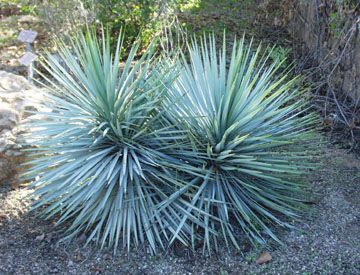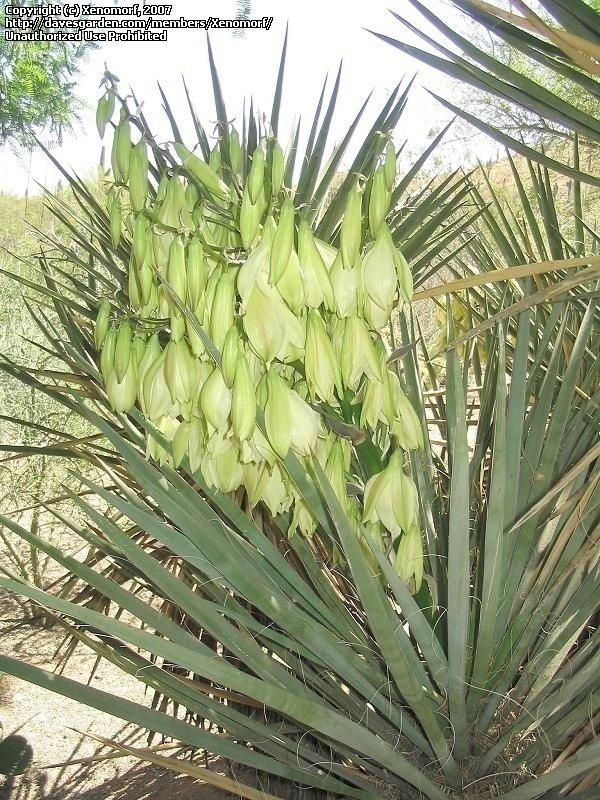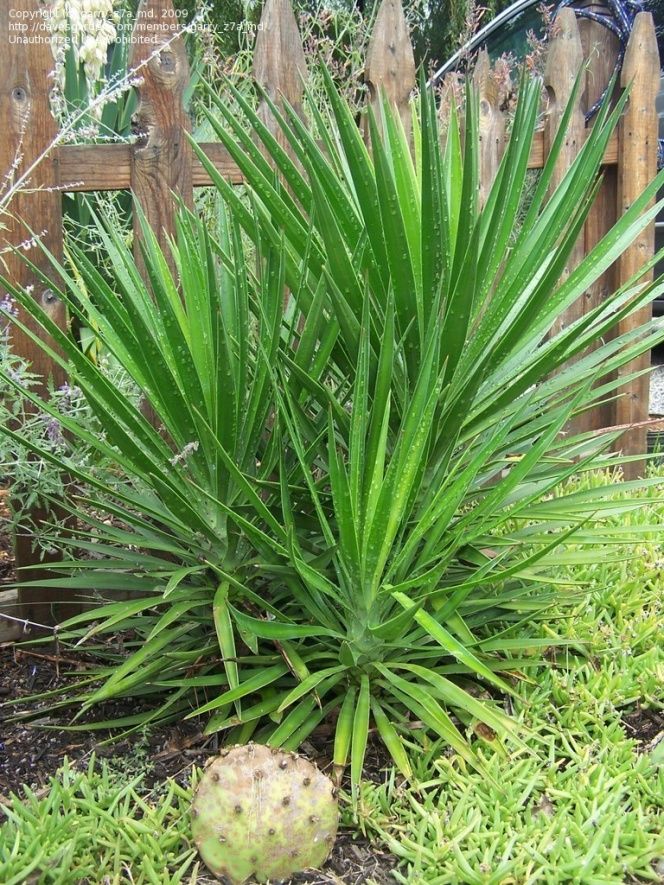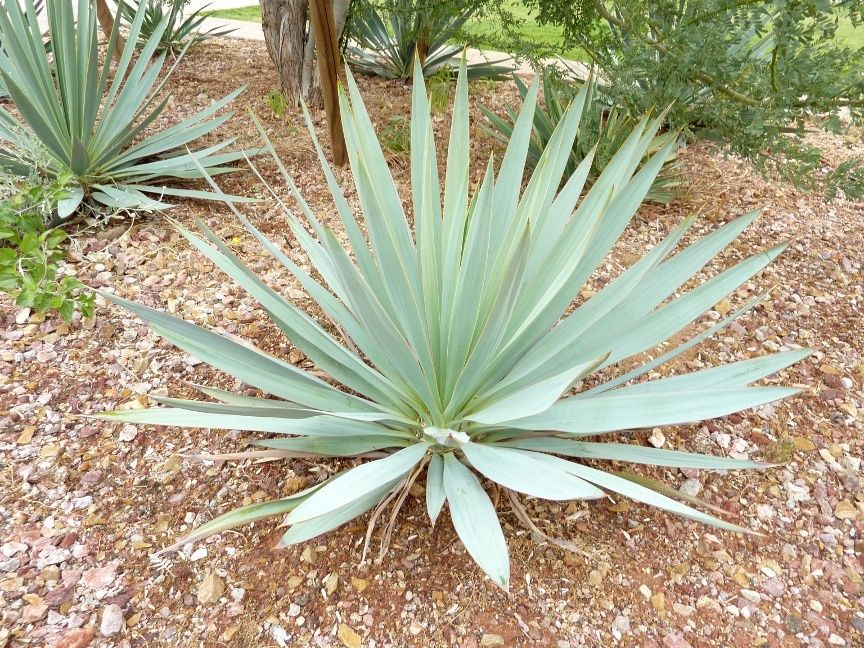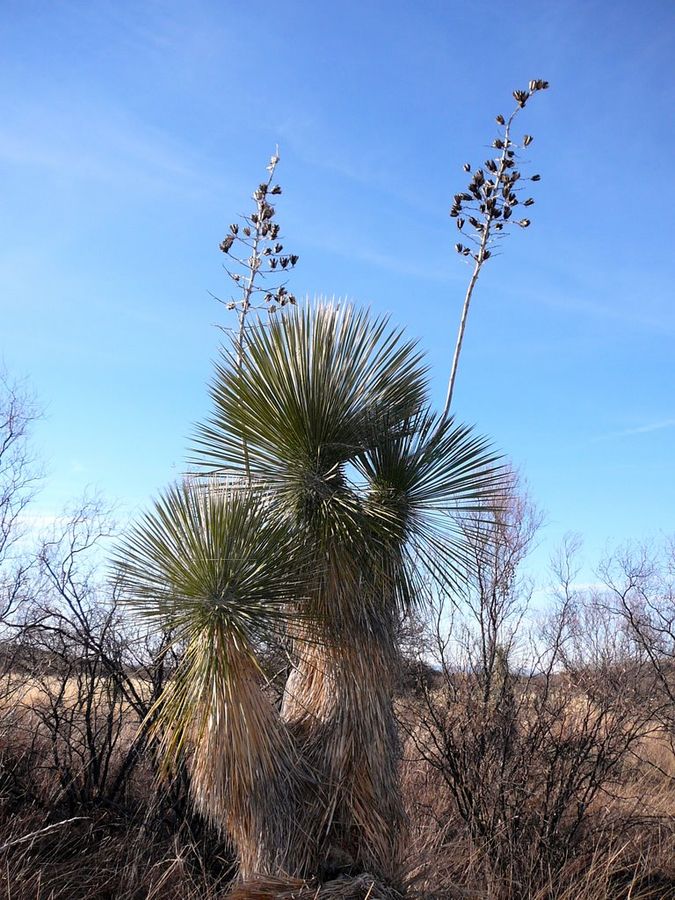
A native of the Southwest’s deserts and grasslands that slowly rises on a shaggy trunk, often branching, with fountains of narrow, pale green leaves at each tip. In late spring it sends up tall stalks of white, bell-shaped flowers, giving a strong native silhouette with very little care.
Living with it in the Phoenix Valley
Watering
Follow the shrub, groundcover and succulent schedule in our Landscape Care guide while it establishes. Once settled it can get by on rainfall alone, and too much water does more harm than good.
Pruning
Leave the skirt of dead leaves on the trunk; it shields the trunk from sunburn. Old flower stalks can come off, though native bees use them if they are left standing.
Wildlife
Its flowers are pollinated by the yucca moth, a partnership the plant depends on to set seed.
How our designers use it
Native silhouette
Its tall, branching form gives a landscape an unmistakably Southwestern skyline without the litter of a tree.
Vertical accent
Rising above low shrubs and groundcovers, it adds height and structure to an open desert bed.
Uplighting
At night, light from below picks out the shaggy trunk and spiky crowns for a dramatic effect.
Good to know
Around the pool
Litter is low, but the leaf tips are sharp. Keep it back from walkways and the pool edge so the leaves don’t reach into foot traffic.
Pets
Yucca is on the ASPCA’s list of plants toxic to dogs, cats and horses. Discourage pets from chewing on it.