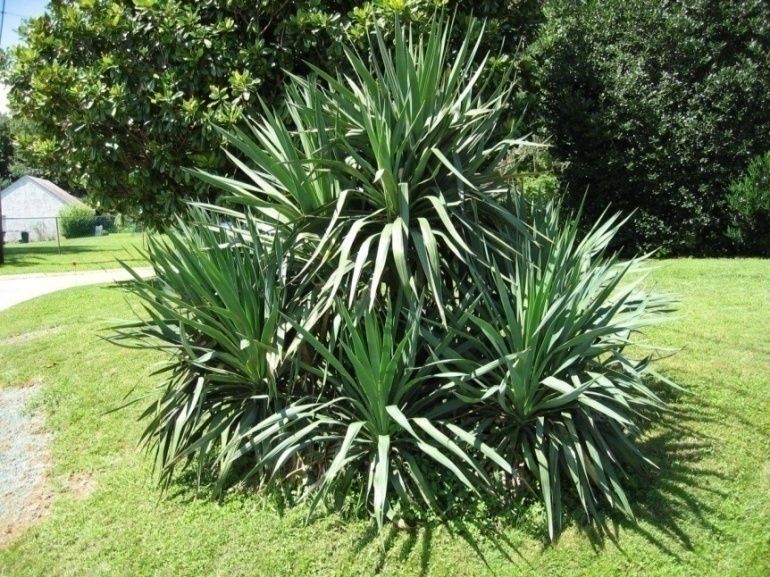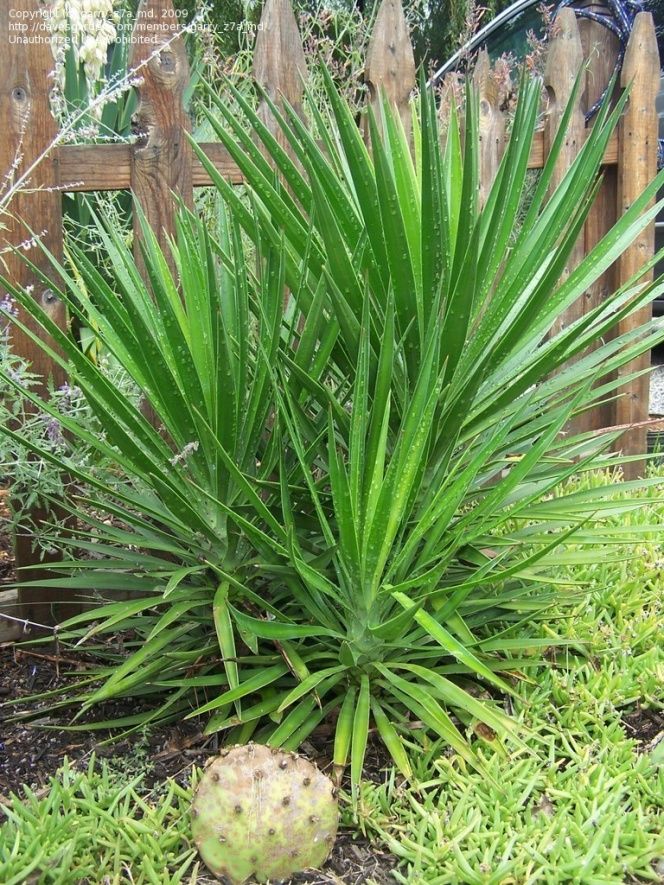
A yucca from the coastal Southeast with bendable, medium-green leaves on multiple trunks, giving a fuller, more tropical look than desert yuccas. It needs more water and more shade than most yuccas in Phoenix, but in the right spot it makes a lush specimen.
Living with it in the Phoenix Valley
Watering
Follow the shrub, groundcover and succulent schedule in our Landscape Care guide. It needs more water than desert yuccas, but wet soil causes black spots on the leaves, so good drainage matters.
Pruning
Remove old lower leaves as they brown. The trunks can be cleaned up occasionally, much like a clumping palm.
Sun
Full sun and lean water often turn it yellow. Morning sun with afternoon shade keeps it green.
Pests
Spider mites are a real problem in Phoenix. A strong spray of water knocks them off.
How our designers use it
Tropical accent
Its softer, greener look fits resort-style and tropical plantings around patios and pools.
Courtyard specimen
In a sheltered courtyard with afternoon shade, a multi-trunked plant becomes a strong focal point.
With lush plantings
Our designers use it among other moderate-water plants, where its watering needs match its neighbors.
Good to know
Around the pool
Despite the name, the leaf tips are sharp. Keep it back from walkways and pool edges, or choose curve leaf yucca where people pass close by.
Pets
Yucca is on the ASPCA’s list of plants toxic to dogs, cats and horses. Discourage pets from chewing on it.