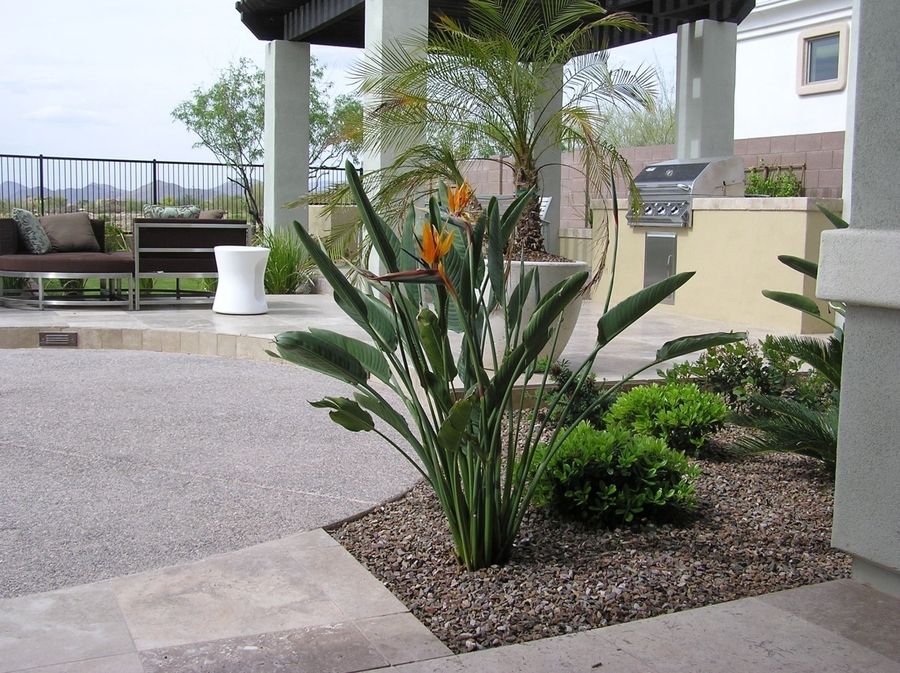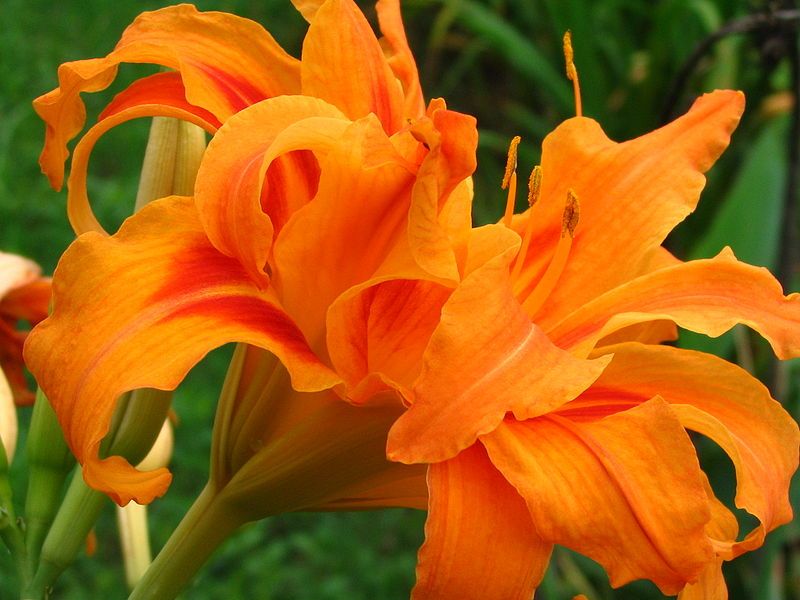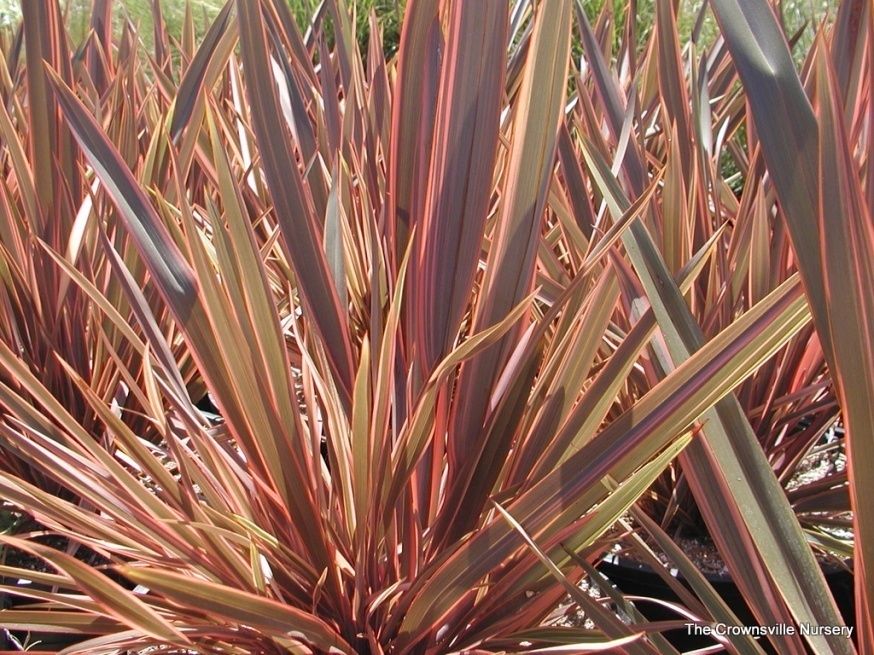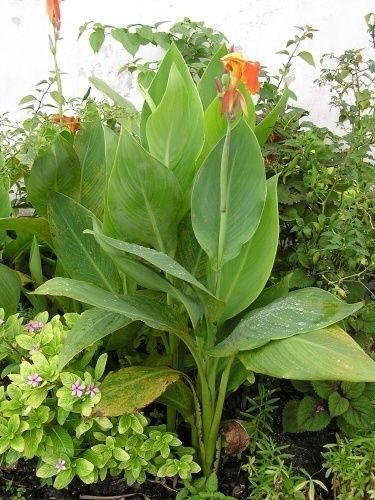
A bold, tropical perennial with big paddle-shaped leaves in green, bronze or striped forms, topped by spikes of red, orange, yellow or pink flowers. It brings a lush, resort feel to pools and patios, in exchange for more water and attention than most Phoenix plantings.
Living with it in the Phoenix Valley
Watering
Follow the shrub schedule in our Landscape Care guide. Cannas need far more water than desert shrubs and can wilt quickly in summer heat. Deep, regular soaks and a layer of mulch keep the leaves full.
Pruning
Remove spent flower stalks to keep new ones coming. When frost blackens the leaves, cut the stalks down close to the ground; new shoots return in spring.
Feeding
They are heavy feeders. A balanced fertilizer through the growing season keeps them blooming, and chelated iron helps if leaves yellow between green veins in alkaline soil.
Heat and wind
Full western sun and reflected heat scorch the leaves, and wind shreds them. Morning sun with afternoon shade or filtered light suits them best; dark-leaved varieties handle more sun.
How our designers use it
Resort-style poolside planting
Their big leaves and bright flowers make a tropical backdrop around pools and water features.
Seasonal accent beds
Our designers group them in protected beds near patios for spring-through-fall color, knowing they will rest in winter.
Containers
Dwarf varieties work in large pots and planters, where water and feeding are easier to manage.
Good to know
Around the pool
No thorns, but spent flowers and tattered leaves drop, and the plants are cut down each winter. Place them where a little cleanup near the water is acceptable.
Winter gap
Expect a bare spot for part of the winter after a frost. Pairing them with evergreen plants keeps the bed from looking empty.