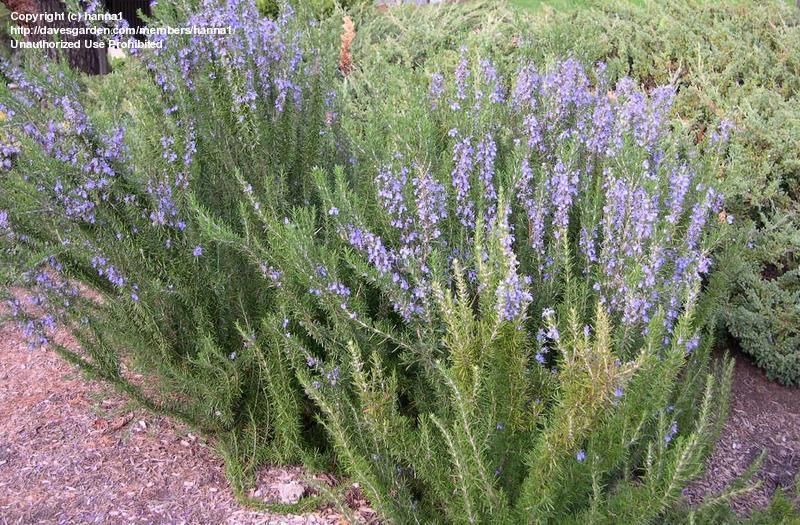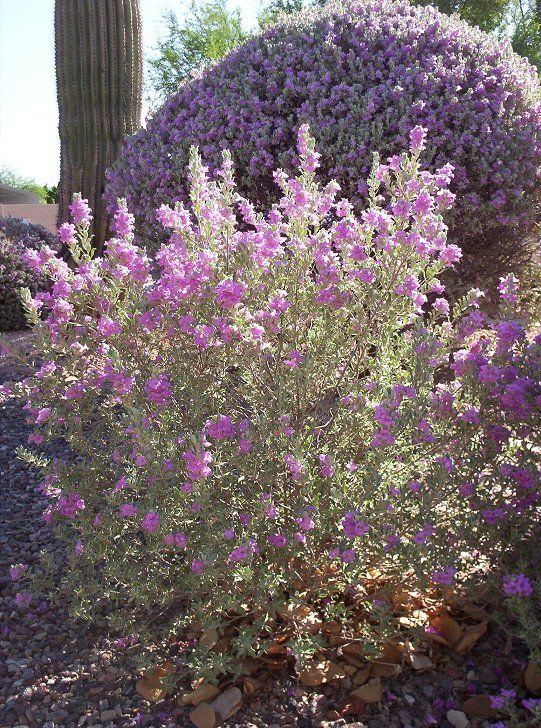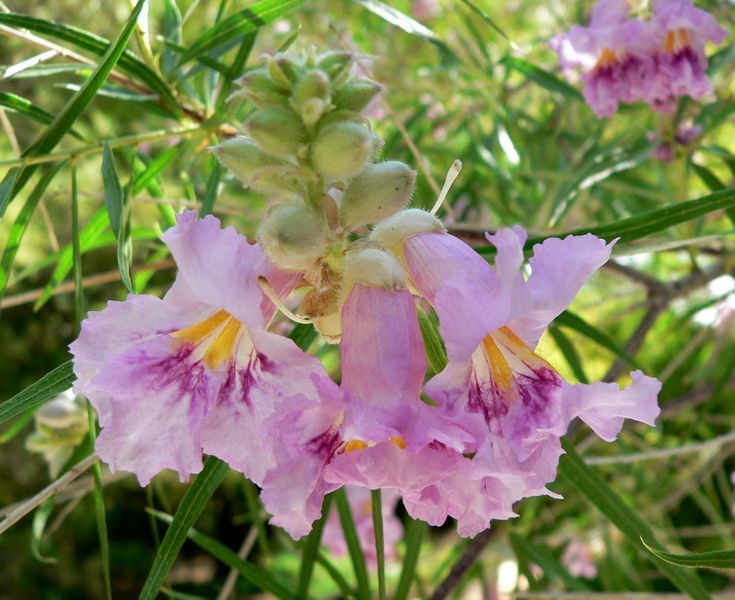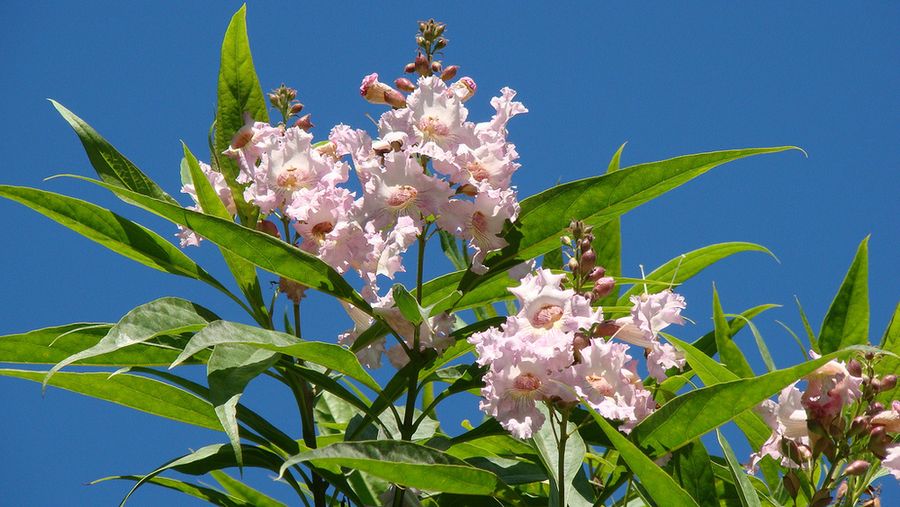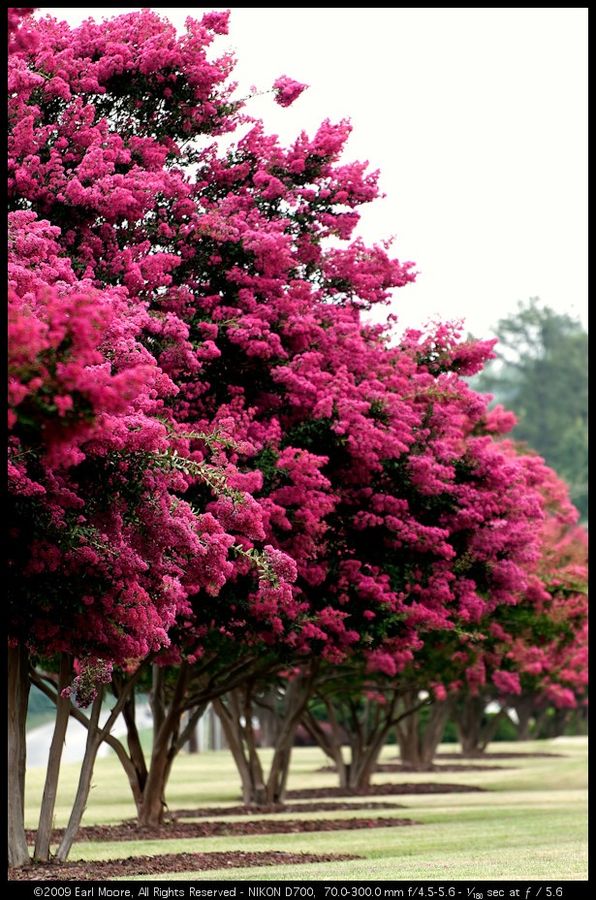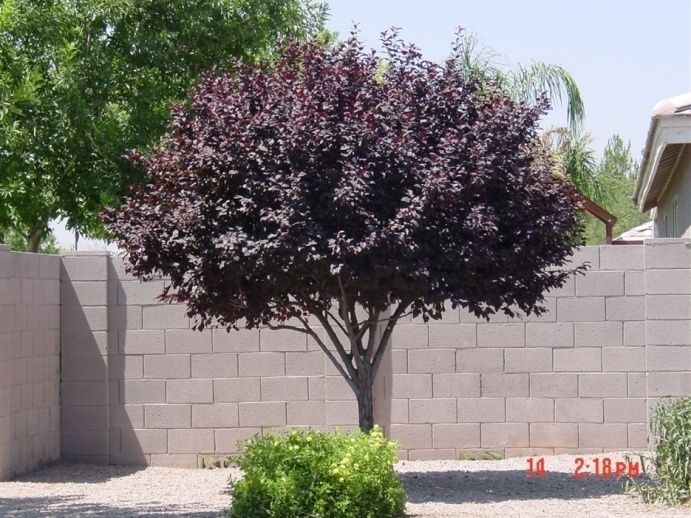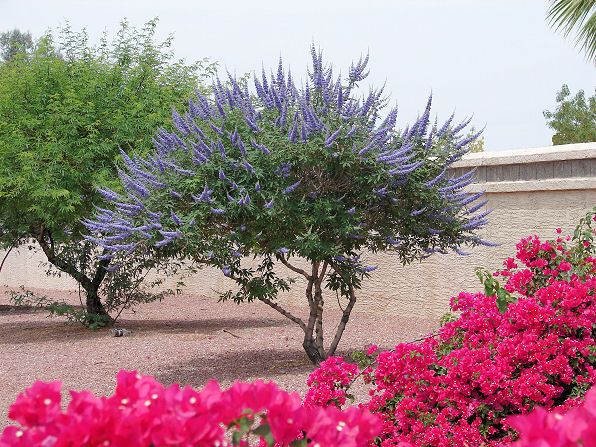
A small deciduous tree from the Mediterranean with aromatic, hand-shaped leaves and spikes of lavender-blue flowers in early summer. It handles Phoenix heat well and gives a soft, garden feel in summer, then drops its leaves for winter.
Living with it in the Phoenix Valley
Watering
Follow the tree schedule in our Landscape Care guide while it establishes. Water deeply through the warm season and very little in winter. More water means faster growth but fewer flowers, so don’t overdo it.
Pruning
Prune while dormant, December to early March. It can be trained as a small multi-trunk tree with a raised canopy, or cut back harder to keep it shrub-sized.
Pests
Aphids, scale and whiteflies can appear; most outbreaks are minor.
How our designers use it
Early summer flowers
It blooms as many trees finish, adding cool color to a patio or entry at the start of the hot season.
Small multi-trunk accent
Trained to a few trunks, it makes a graceful focal point in a courtyard or garden bed.
Lush, seasonal gardens
Our designers use it in oasis and Mediterranean-style plantings where a bare winter look is acceptable.
Good to know
Around the pool
Leaves drop in fall, and spent flowers and seed capsules fall over a long season. The seeds can be slippery on hard surfaces, so keep it back from the water and decking.
Seedlings
Seeds sprout readily in irrigated beds. Pull volunteers while small.