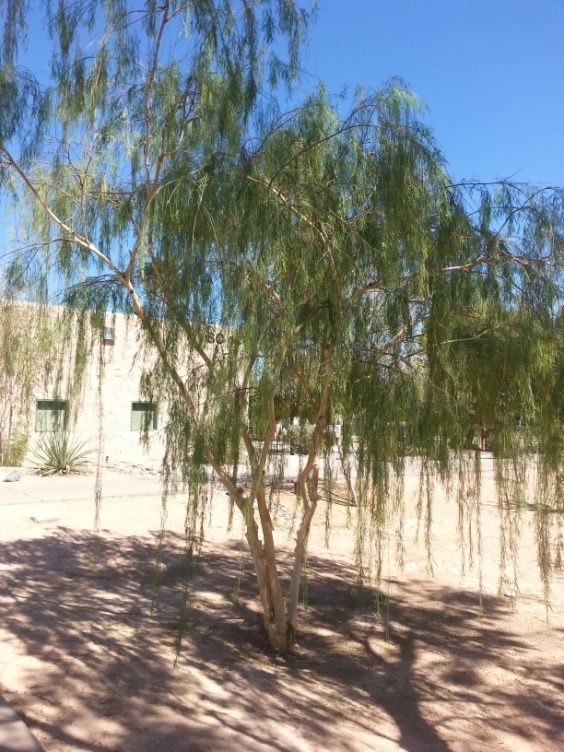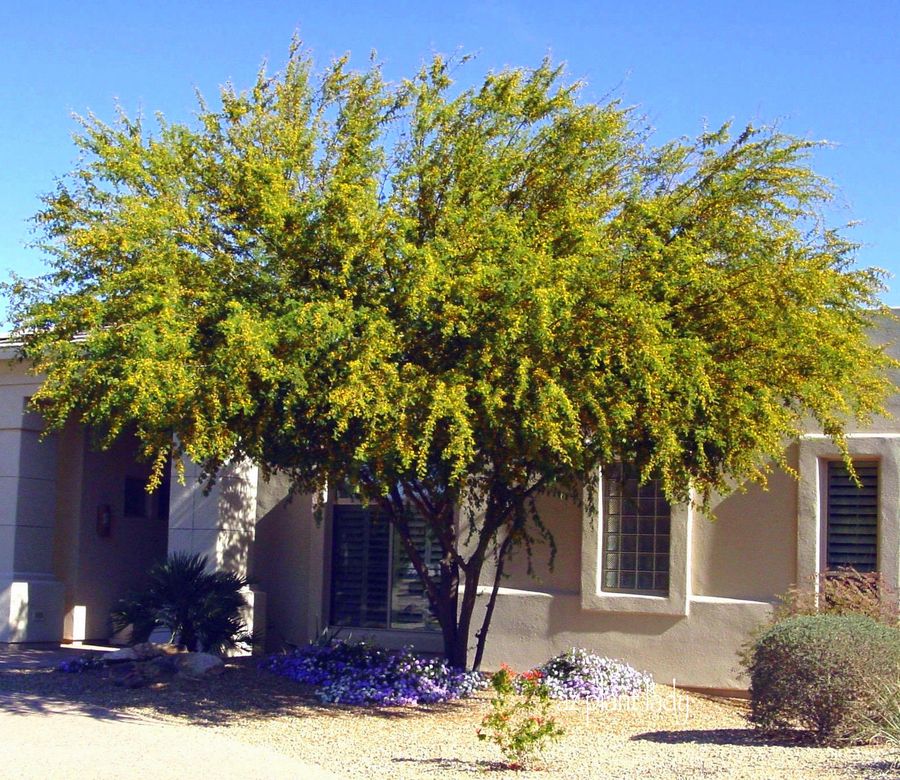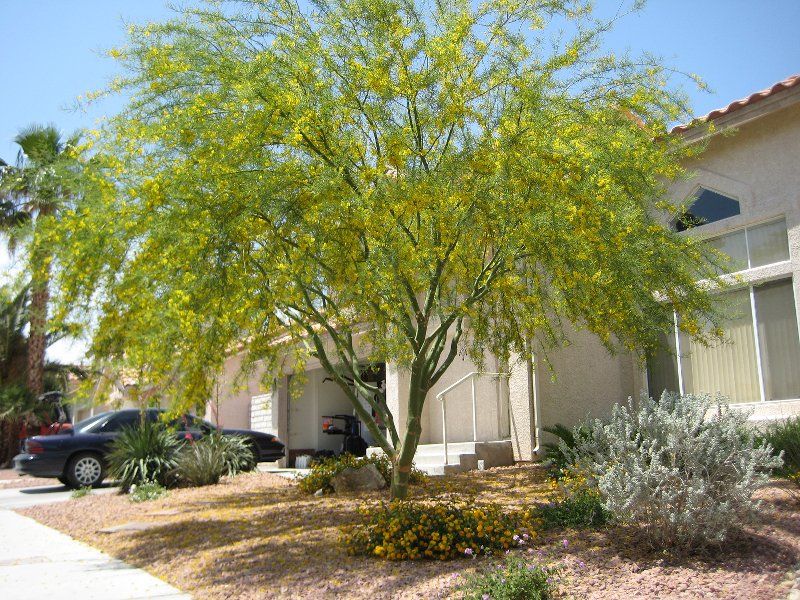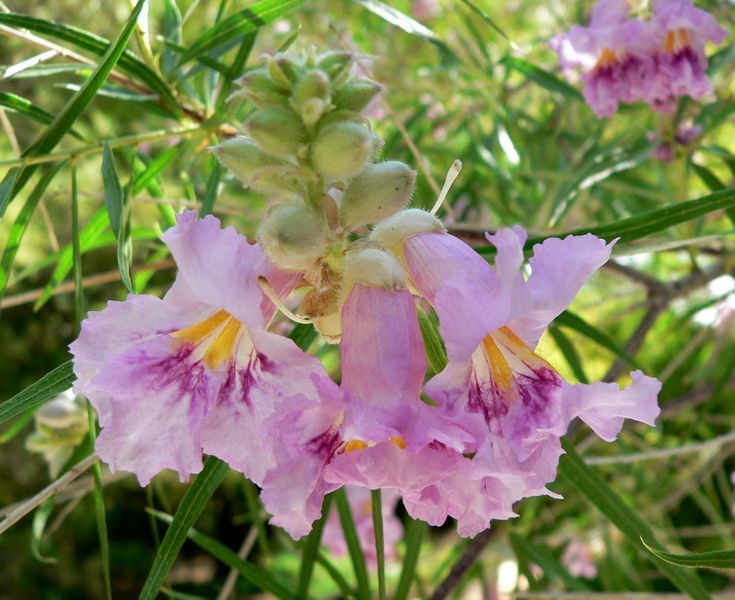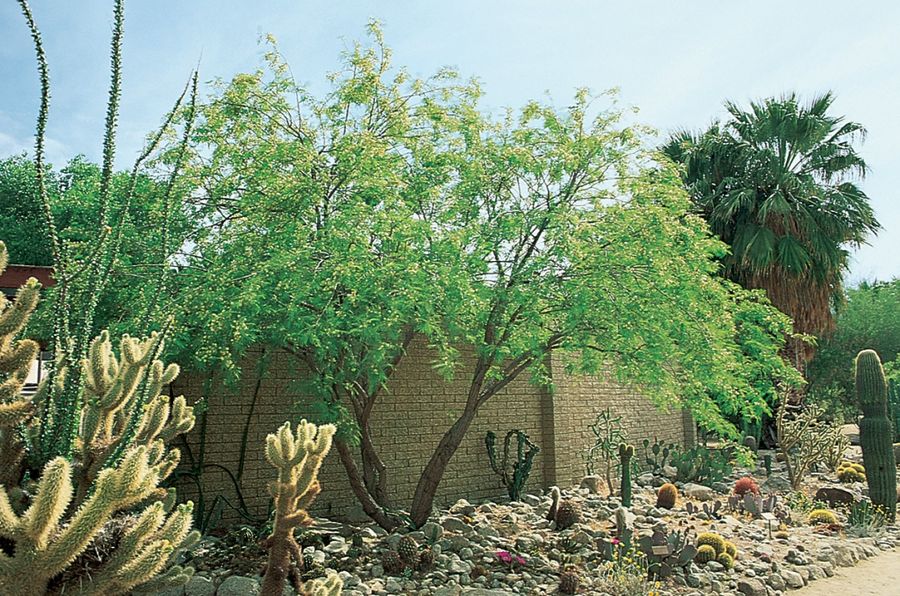
A thornless Arizona native with fine, fern-like leaves and creamy white puffball flowers in late spring. It is native to the Rincon Mountains near Tucson, and it gives a soft, feathery look to a low-water yard where most desert trees are spiny.
Living with it in the Phoenix Valley
Watering
Follow the tree schedule in our Landscape Care guide while it establishes. Once mature, it gets by on little water, but a modest amount keeps it growing and full. Very dry soil in spring can trigger an early, heavier leaf drop.
Pruning
It is naturally shrubby. To grow it as a small multi-trunk tree, choose three to five trunks while young and remove the rest. Cut root and trunk suckers as they appear.
Seasonal leaf drop
Leaves turn golden and fall for a short time in spring, just before bloom, and are quickly replaced. This is normal and not a sign of trouble.
How our designers use it
A soft-textured shade tree
Its feathery canopy gives light, filtered shade over a small patio or courtyard, with no thorns to snag people.
Native and habitat gardens
It fits naturally with other Sonoran natives, and its flowers draw bees and butterflies.
A background screen
Left multi-trunked and full, it softens a wall or view with fine green texture.
Good to know
Around the pool
It drops flowers in late spring, leaves in spring and papery seed pods from late summer into winter. We avoid placing it beside pools and spas.
Suckers and seedlings
It sends up root and trunk suckers and can reseed where water collects. Plan to pull them a few times a year.