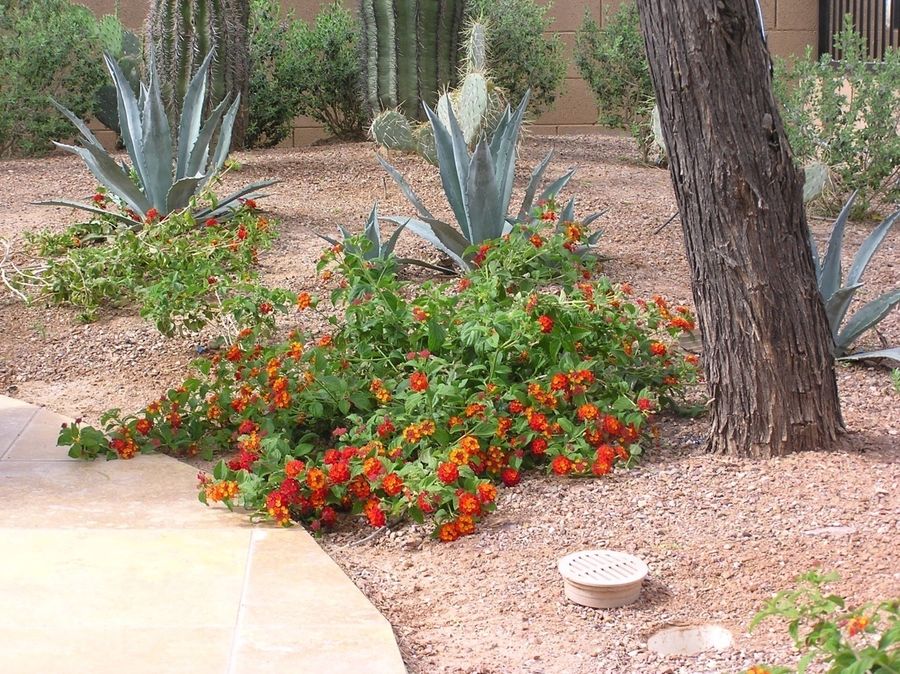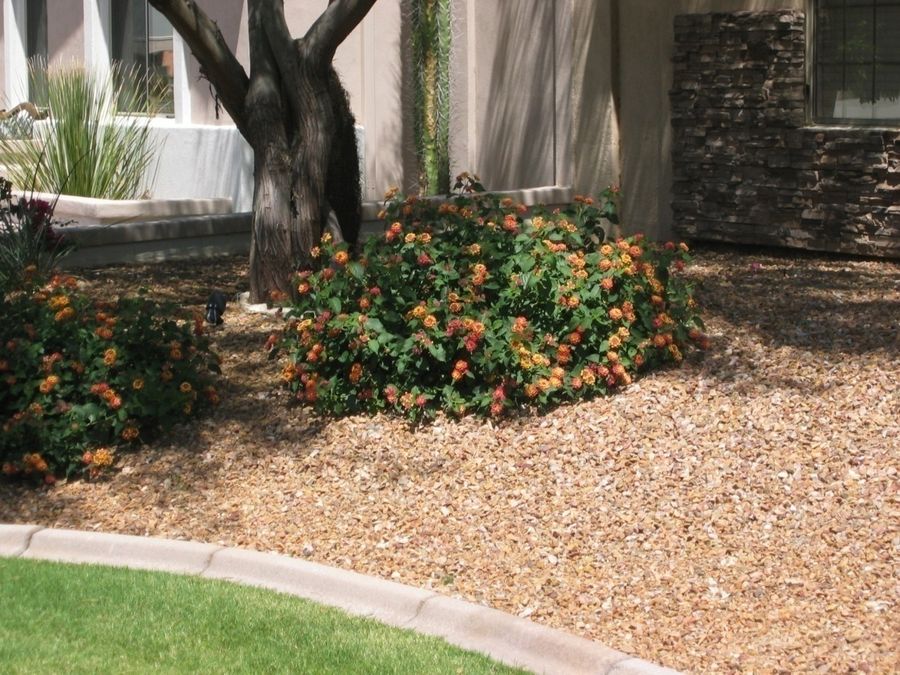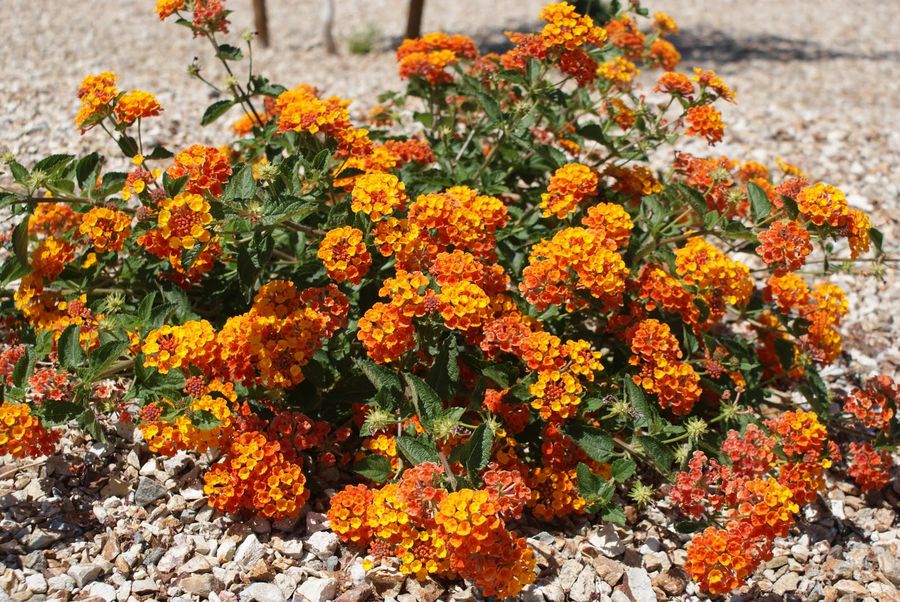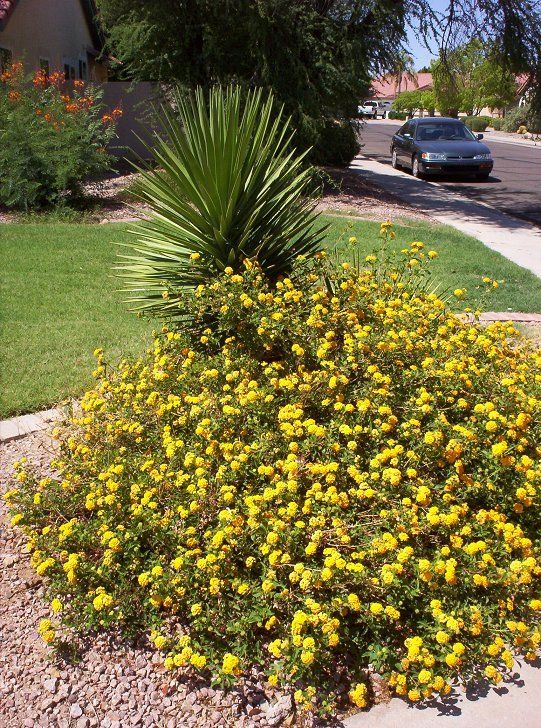
A low, spreading lantana covered in golden-yellow flower clusters from spring until the first frost. It thrives in full sun and reflected heat, and because it is sterile it keeps blooming without setting berries.
Living with it in the Phoenix Valley
Watering
Follow the shrub schedule in our Landscape Care guide. Lantana is less drought tolerant in Phoenix than its reputation suggests, and it blooms best with regular water through summer. It needs much less in winter while it rests.
Pruning
Leave frost-damaged stems in place through winter; they shelter the living growth below. Once the danger of frost has passed in early spring, cut the plant back hard to a few inches above the ground for a fresh flush of growth.
Cold
Expect it to look thin or bare after a cold winter, especially in exposed spots. Plants near warm walls often keep their leaves.
Pests
Whiteflies can appear in late summer and early fall. A strong spray of water helps keep them down.
How our designers use it
Low color under desert trees
It fills the ground plane beneath palo verdes and mesquites with months of yellow color.
Hot, reflected spots
Along driveways, sidewalks and west-facing beds, it handles the heat that burns many flowering shrubs.
Mixed with purple
Planted with trailing purple lantana, it creates a classic Phoenix yellow-and-purple combination.
Good to know
Around the pool
No thorns and no berries, so litter is minimal. Bees and butterflies visit the flowers, so we generally keep it a few feet back from the water and seating.
Pets
The ASPCA lists lantana as toxic to dogs, cats and horses. Eating the leaves can cause vomiting, diarrhea and weakness.