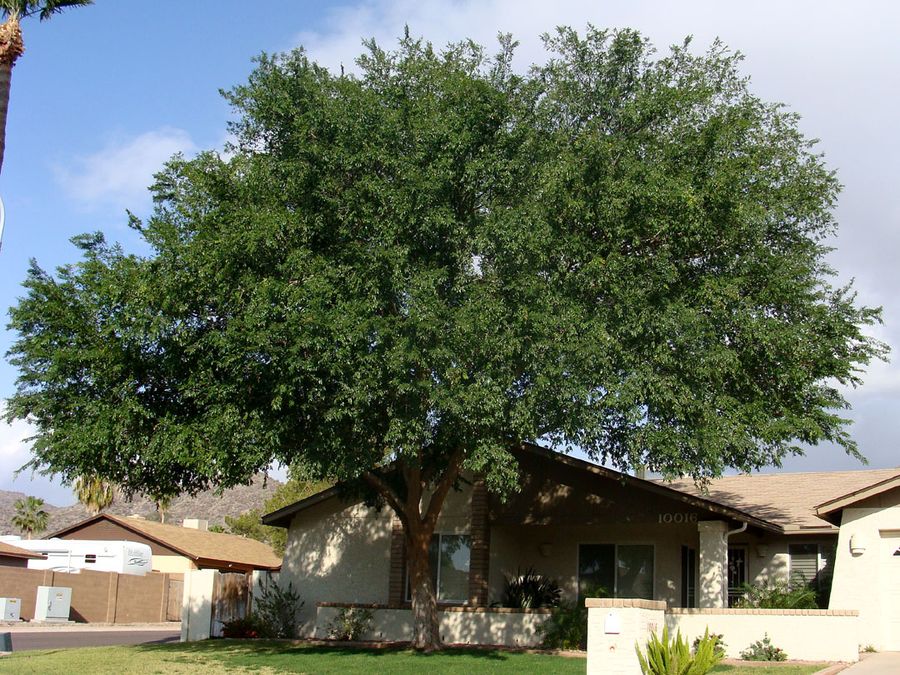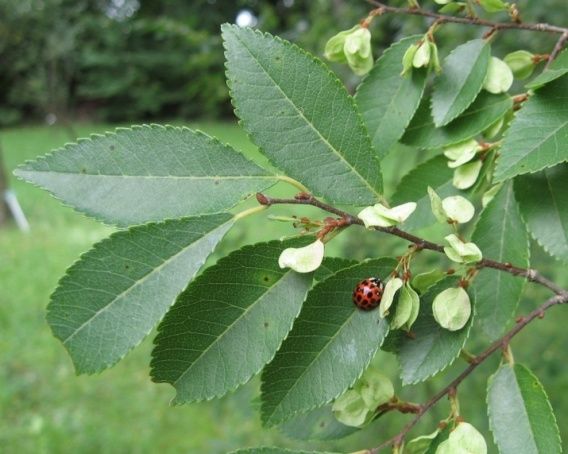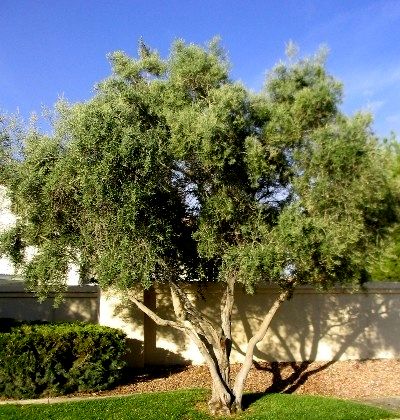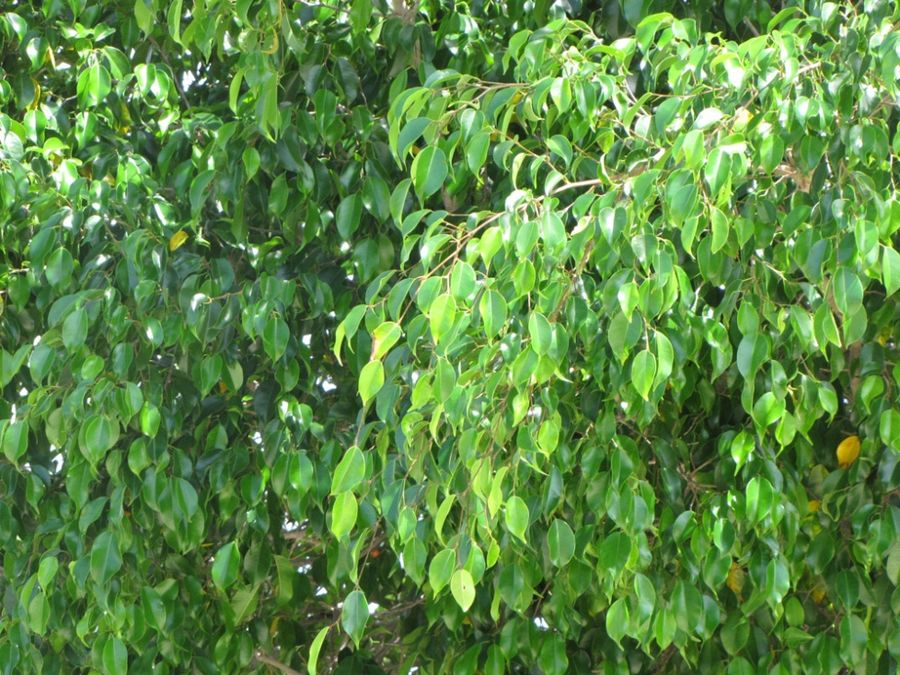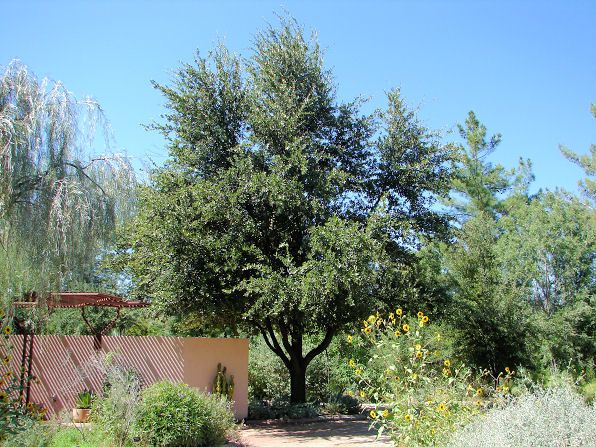
A broad, long-lived evergreen oak from the American Southeast, with dark green leaves and a dense, spreading canopy. It gives the deep shade of a traditional shade tree, has no thorns and handles both Phoenix heat and cold, which is why it appears in parks, golf courses and larger yards across the Valley.
Living with it in the Phoenix Valley
Watering
Follow the tree schedule in our Landscape Care guide. It is not a desert native and needs more water than a palo verde or mesquite to look its best. It responds well to deep watering on drip.
Pruning
Seed-grown trees vary in form, so early structural pruning sets the shape. On mature trees, lift the lower branches gradually for clearance and views while keeping as much shade as possible.
Spring leaf drop
Each spring it sheds most of its old leaves just as new growth emerges. It can look alarming for a week or two, but it is normal.
Pests
Aphids are the main pest. They distort new leaves and leave sticky honeydew and sooty mold on whatever sits below.
How our designers use it
Deep shade for larger yards
Its broad canopy shades a lawn, play area or large patio more fully than most desert trees.
Traditional and formal designs
Dark, evergreen foliage gives a classic, established look that suits Spanish Colonial and traditional homes.
Drives and walkways
Planted in a row, it frames a long drive or entry walk.
Good to know
Around the pool
Spring leaf drop and fall acorns add up to real cleanup, and roots spread wide and shallow under irrigation. We keep it well back from pools and paving.
Acorns
Acorns that fall into gravel or decomposed granite will sprout if not raked up.
Pets
The ASPCA lists oak as toxic to horses; acorns and leaves are the concern.