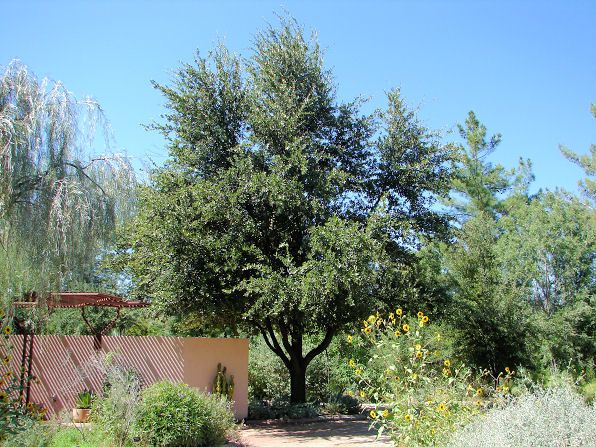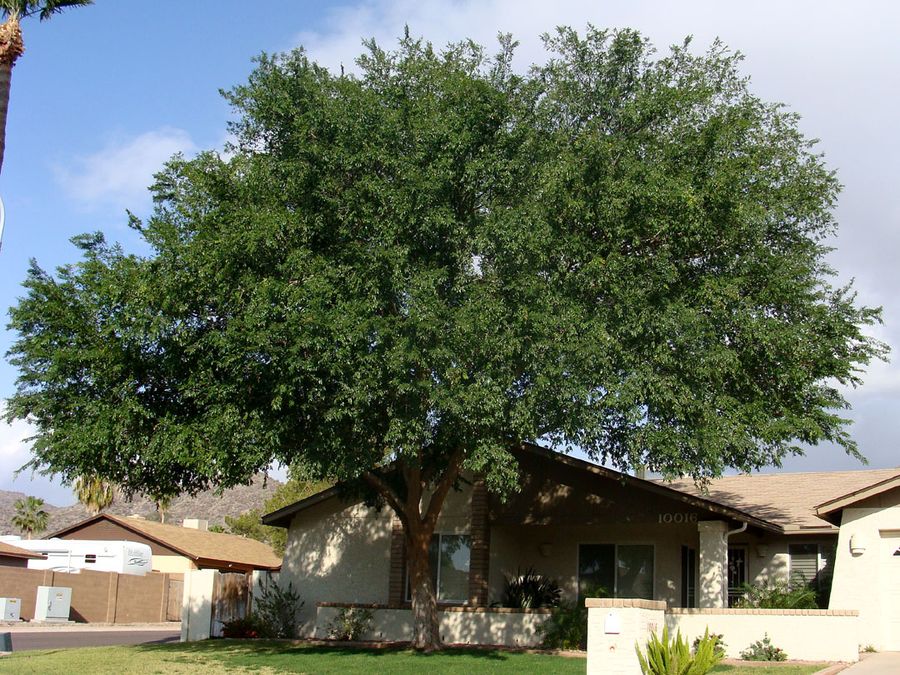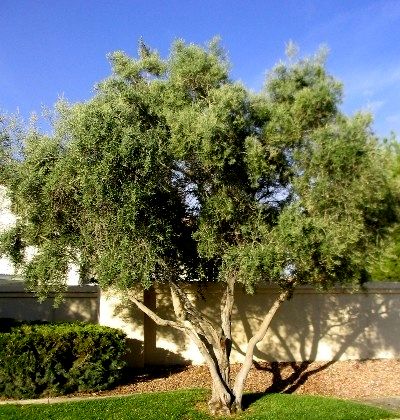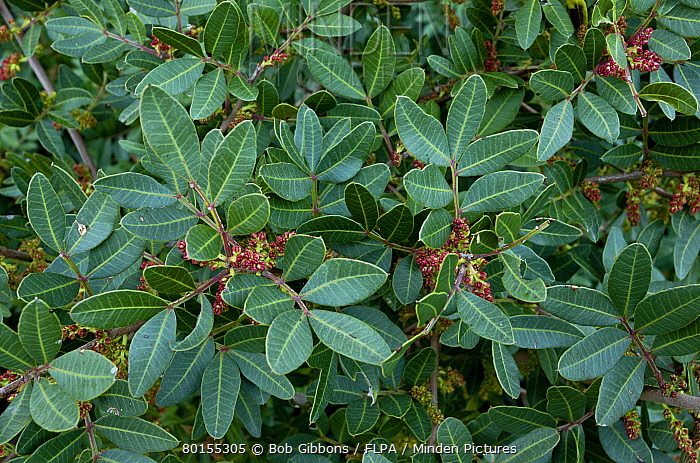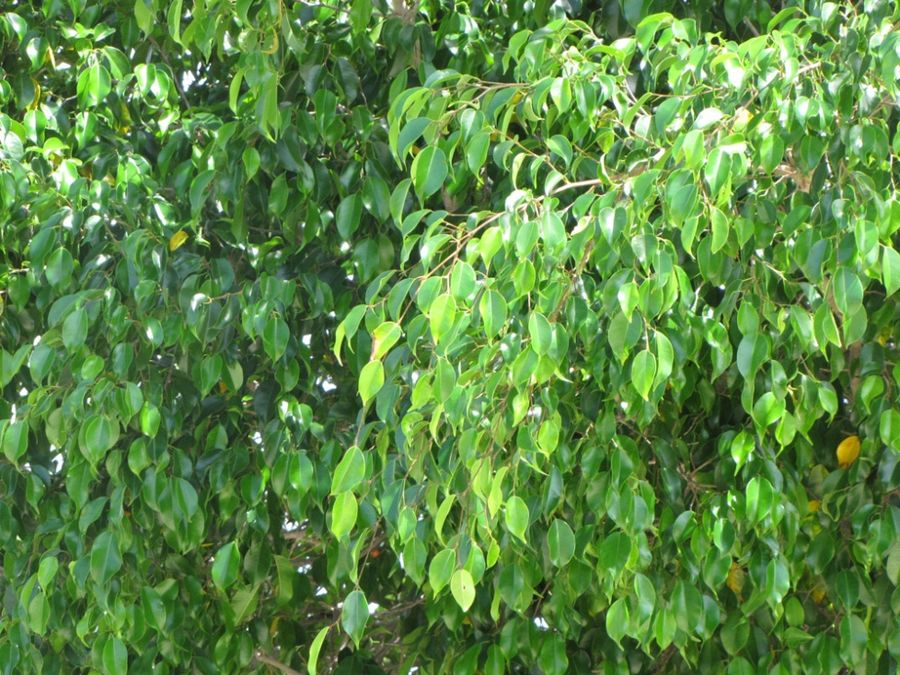
A lush evergreen with dense, glossy leaves and a soft, weeping habit. It brings a deep green, tropical look that few trees can match in the low desert, as long as it has frost protection and room for its roots.
Living with it in the Phoenix Valley
Watering
Follow the tree schedule in our Landscape Care guide. Ficus wants steadier moisture than a desert tree and does poorly if the soil dries out completely. Deep watering also pushes roots down rather than across the surface, which matters near paving.
Pruning
It takes shaping well and can be kept as a hedge, screen or formal canopy. Avoid heavy summer pruning, which exposes bark to sunburn. After a freeze, wait until spring growth shows what is actually dead before cutting; brown leaves don’t always mean dead wood.
Cold
Hard freezes can burn the outer canopy and cost a season of growth, though trees usually recover. An east- or north-facing wall or an enclosed courtyard gives the best winter protection.
Heat/sunburn
Full sun combined with 115°F heat can scorch leaves and stems, especially on western exposures. Morning sun with afternoon relief is ideal.
How our designers use it
Courtyards and entries
Its dense, glossy canopy suits sheltered courtyards and entry gardens, where walls hold winter warmth and block afternoon sun.
Large containers
In a large pot it adds a tropical note to a patio while keeping its roots contained and easy to move to shelter.
Evergreen screening
Sheared or left natural, it makes a thick green screen against a wall or between neighbors.
Good to know
Around the pool
Leaves, small figs and twigs make steady litter, and the figs can stain paving. Its surface roots can damage decking, plumbing and pool shells, so we keep in-ground ficus well away from the pool and use containers closer in.
Pets
The ASPCA lists ficus (weeping fig) as toxic to dogs, cats and horses.