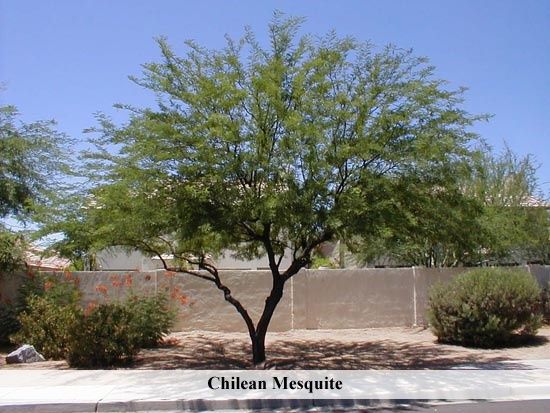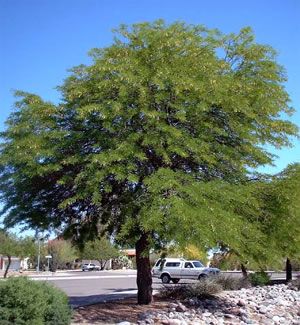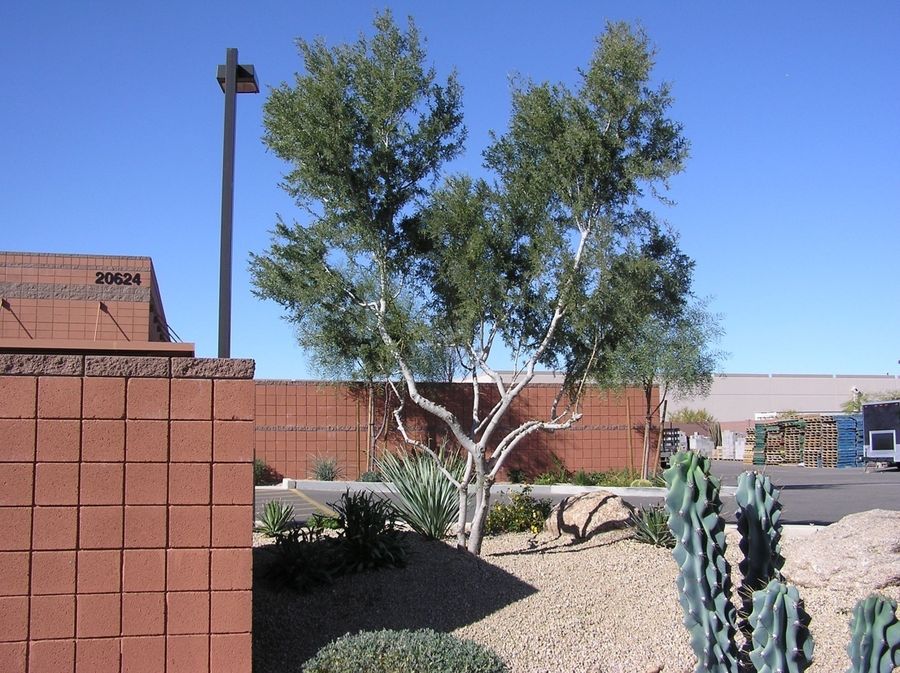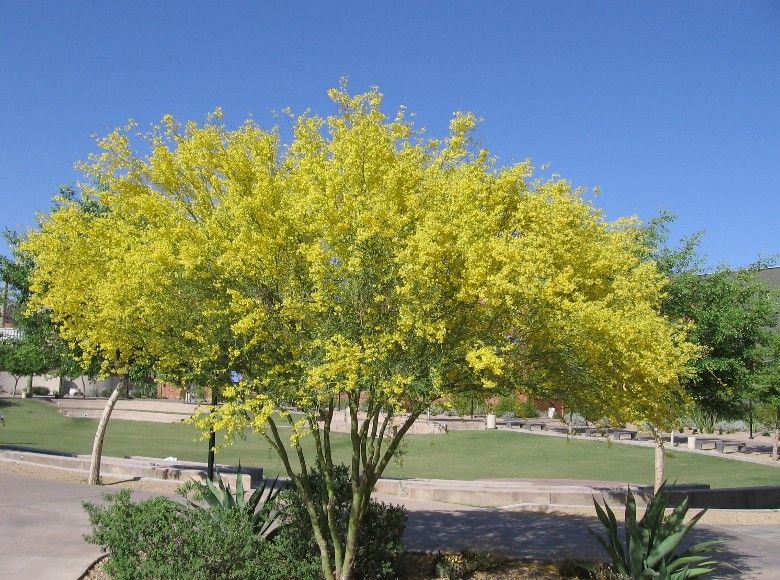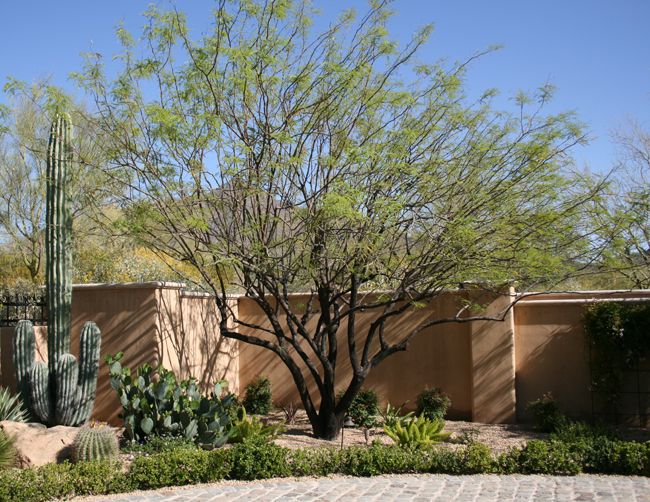
The native mesquite of the Sonoran Desert, with soft gray-green leaves, dark rugged bark and a wide, often multi-trunk crown. It is tougher and more cold-hardy than the South American mesquites. People choose it for an authentic desert look and filtered summer shade.
Living with it in the Phoenix Valley
Watering
Follow the tree schedule in our Landscape Care guide while it establishes. Mature trees can get by on very little and look fuller with an occasional deep summer soak. Keep it out of frequently watered lawn, where fast top growth outpaces its roots.
Pruning
Thin lightly in the warm season and avoid hedging or heading back. Removing more than about a fifth of the canopy at once can cause sunburn and set the tree back. Shaping a young tree to a few strong trunks gives the classic mesquite silhouette.
Pests
Generally sturdy. Desert mistletoe can move in over time; cutting out infected branches is the practical control. Spider mites may appear in the dusty weeks of May and June.
Winter
It is truly deciduous. Expect bare branches from the first hard frost until spring, which lets in welcome winter sun.
How our designers use it
Native and natural-area designs
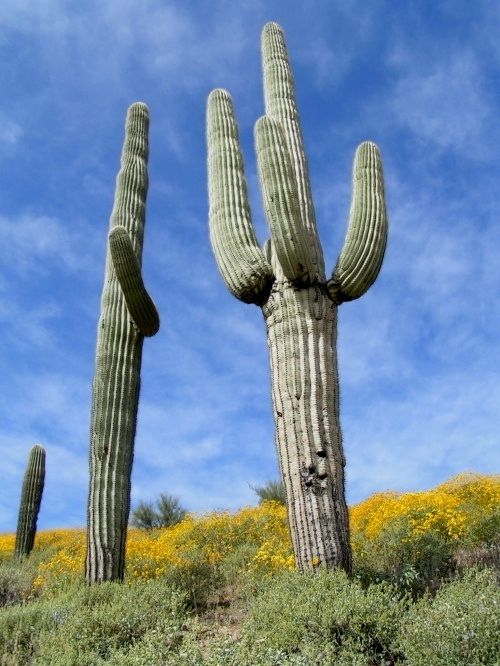
It is the anchor tree for a Sonoran look, alongside saguaros, palo verdes and native shrubs, and it fits easily against open desert.
Winter sun, summer shade
Placed on the south or west side of a patio, it shades in summer and lets the sun through after it drops its leaves.
Wildlife gardens
Its flowers feed native bees, and birds use it for food and cover.
Good to know
Around the pool
Thorns, a full winter leaf drop and summer seed pods make it a poor choice right at the water’s edge. We place it well back from the pool and away from paths.
Allergies
Mesquite pollen is allergenic for some people, and the leaves can irritate sensitive skin.