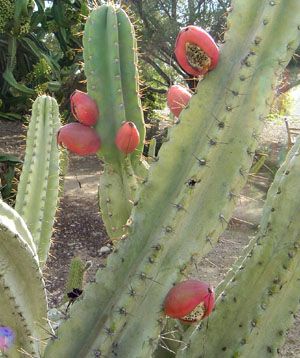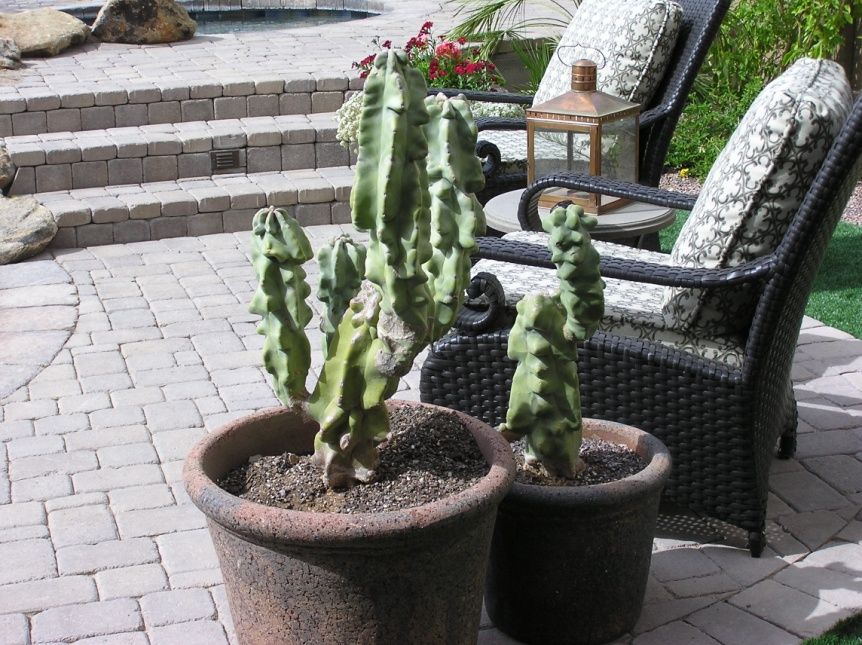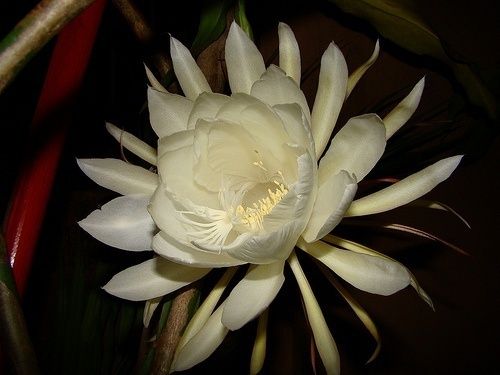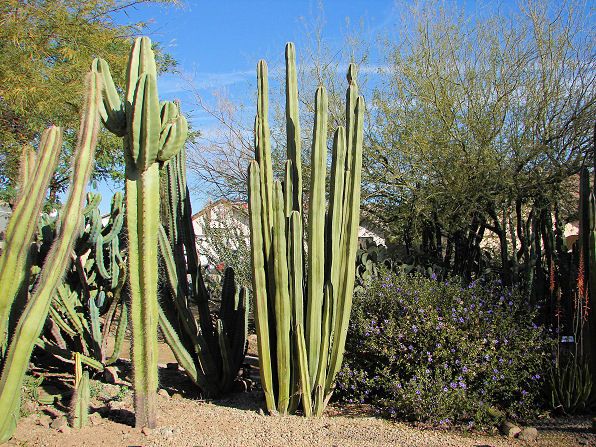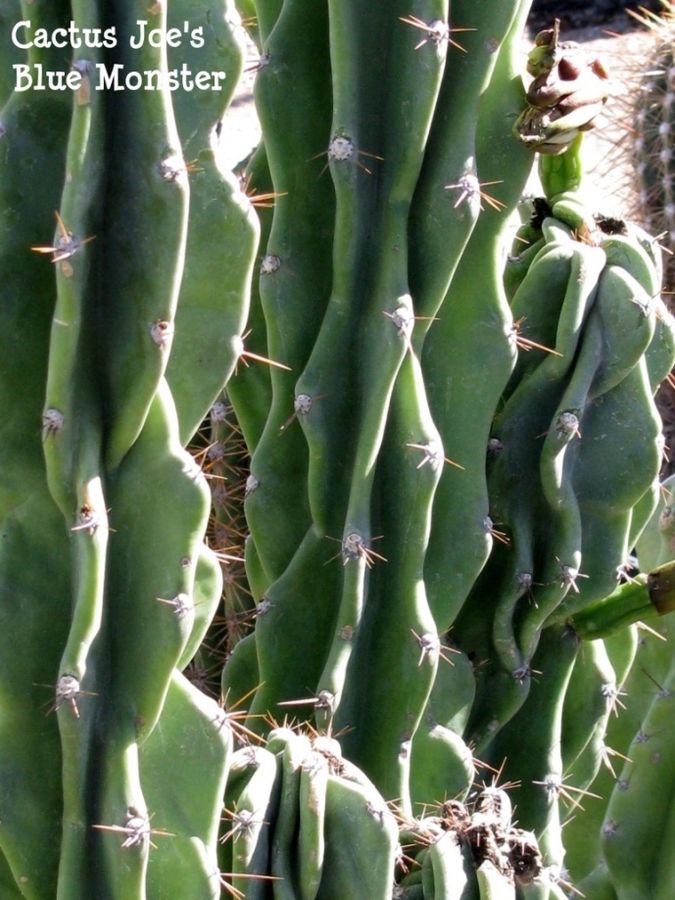
A twisted, knobby form of the Peruvian cereus, with irregular, lumpy blue-green stems that make every plant one of a kind. It grows into a large, sculptural cactus and blooms with big white flowers at night.
Living with it in the Phoenix Valley
Watering
Follow the cactus guidance in our Landscape Care guide. It is very drought tolerant once established. Well-drained soil is essential, since cool, wet weather in heavy soil can cause root and stem rot.
Pruning
Rarely needed. Thin an awkward or crossing branch if it is crowding a space. Cut pieces root easily once the cut end has callused.
Cold
Cover the growing tips of young plants on frosty nights for their first few years.
Pests
Scale and mealybugs can appear in the folds of the stems. A strong spray of water usually takes care of them.
How our designers use it
Sculpture
Our designers treat it as living sculpture, set against a plain wall or in open gravel where its shape reads clearly.
Patios and large pots
It makes a striking container plant on a large patio or courtyard.
Contrast
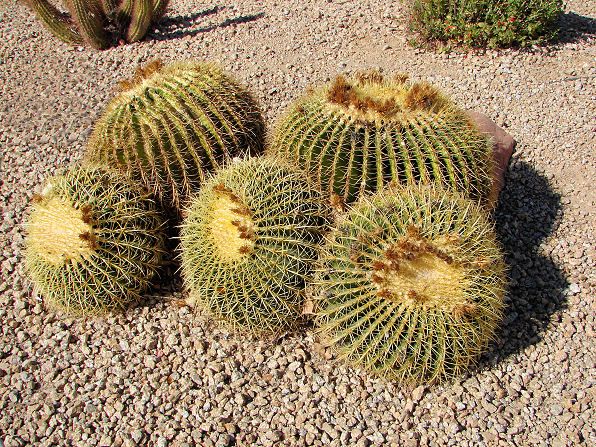
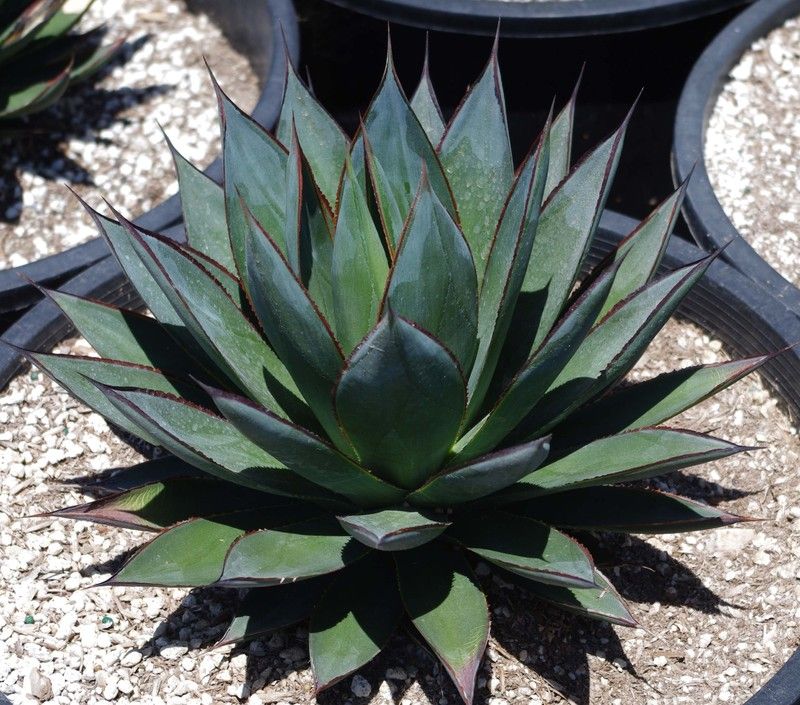
Its lumpy form plays well against smooth, rounded plants such as barrels and blue agaves.
Good to know
Around the pool
The spines are few, but the irregular branches can reach out at odd angles. Keep it a few feet back from the pool edge and paths.
Frost
Frost damage scars the tender tips. Young plants benefit most from protection.