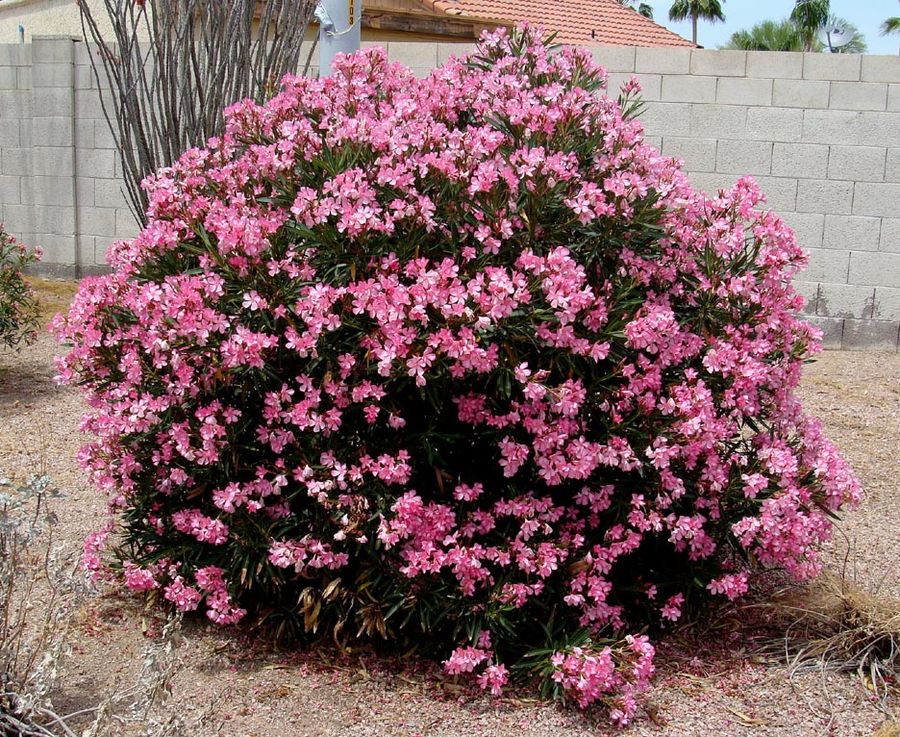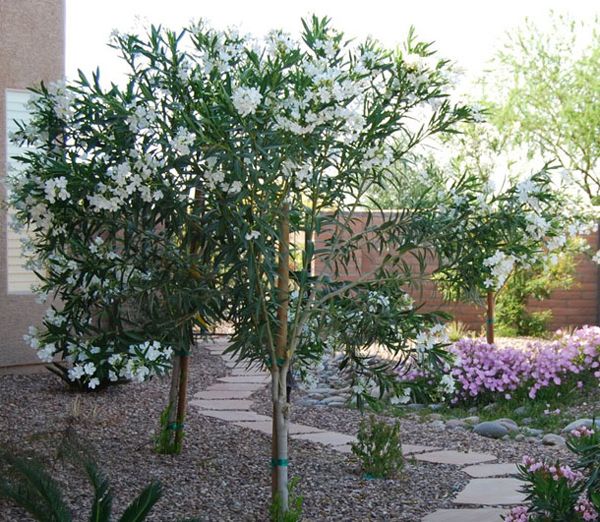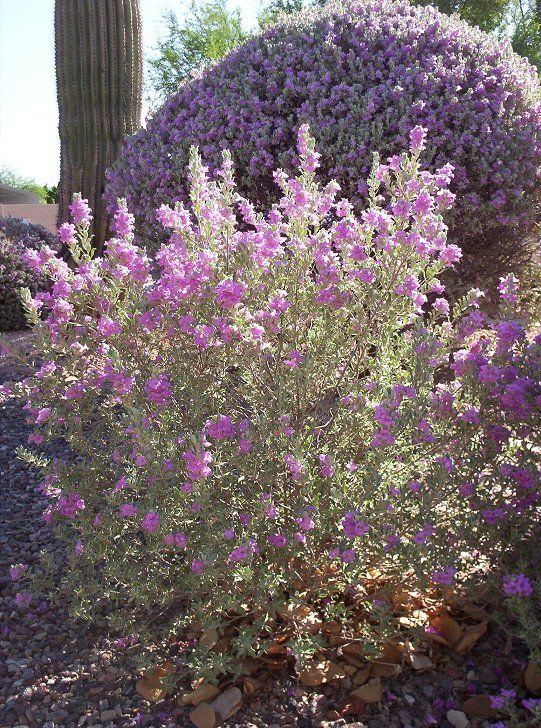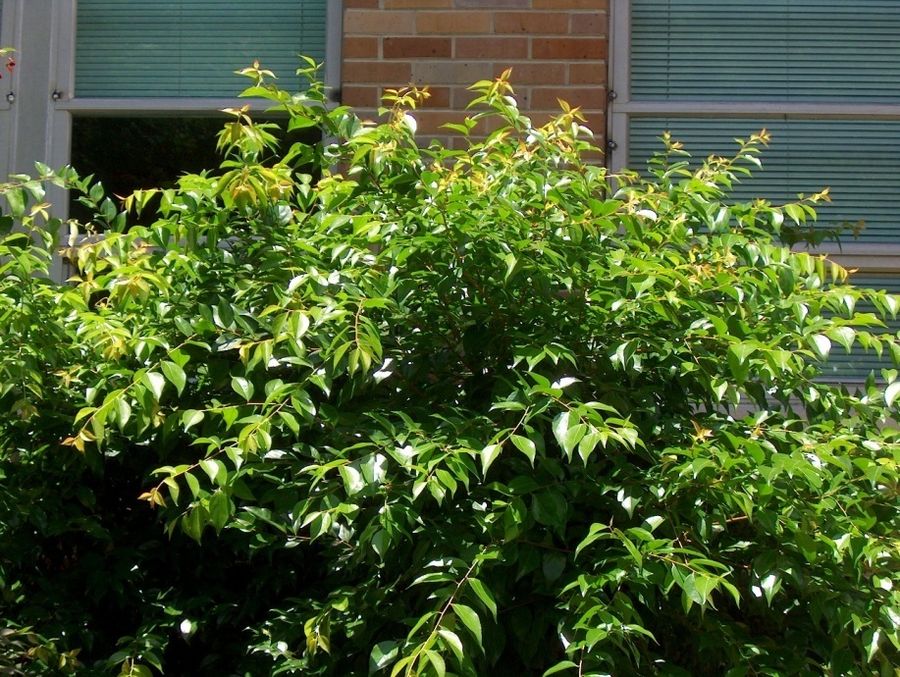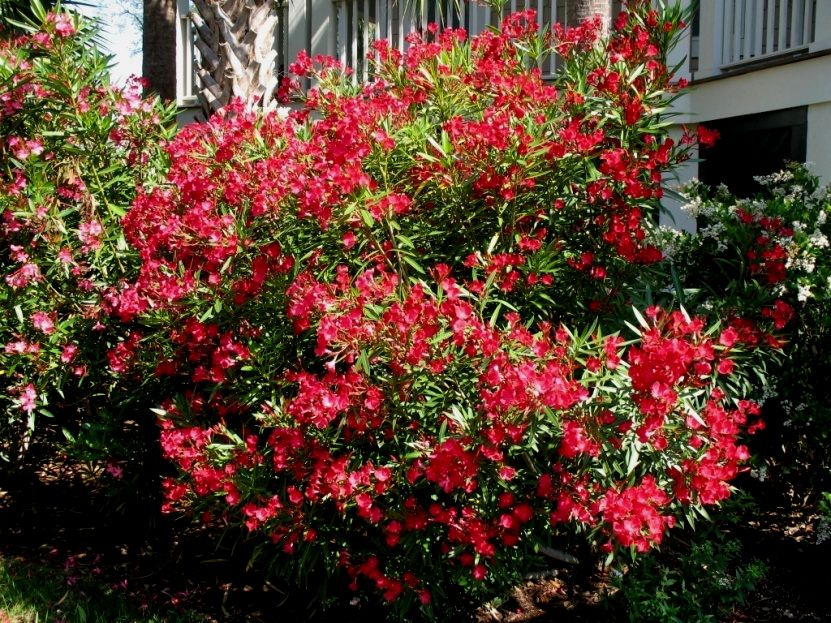
A compact form of oleander with deep green leaves and red flowers from spring well into fall. It brings the toughness and long bloom of the classic oleander in a size that suits beds, low screens and foundation plantings.
Living with it in the Phoenix Valley
Watering
Follow the shrub schedule in our Landscape Care guide while it establishes. Once settled, it gets by on little water and handles heat, wind and reflected sun well. Deep watering, rather than light sprinkles, keeps it fuller and blooming longer.
Pruning
Shape it in late winter, before the spring flush of growth. Cut a few of the oldest stems to the base every year or two to keep it dense and full of flowers, rather than shearing the outside into a tight ball. Wear gloves, bag the clippings and never burn them; the smoke is irritating.
Leaf scorch
Oleander leaf scorch is a bacterial disease spread by sharpshooter insects in the Phoenix area. Leaves yellow and brown at the edges, often starting on one branch in summer, and the plant keeps declining. There is no cure, so infected plants are best removed. Rule out underwatering first, since the early signs look similar.
Cold
Usually fine through a Phoenix winter. A hard freeze can brown the tips; wait until spring to trim the damage.
How our designers use it
Low screens and hedges
Its size suits property-line hedges, equipment screens and the front of a wall, where full-size oleander would soon outgrow the space.
Color in hot spots
It keeps flowering beside driveways, west walls and other places with reflected heat that wear out softer shrubs.
Foundation planting
A row along the house adds evergreen structure and months of color without much water.
Good to know
Toxicity
All parts of oleander are poisonous if eaten. We generally avoid it near play areas and where young children spend time.
Pets
Oleander is toxic to dogs, cats and horses. Keep that in mind if pets tend to chew on plants.
Around the pool
Spent flowers and an occasional leaf drop through the season. Litter is light, but plant it a few feet back from the edge.