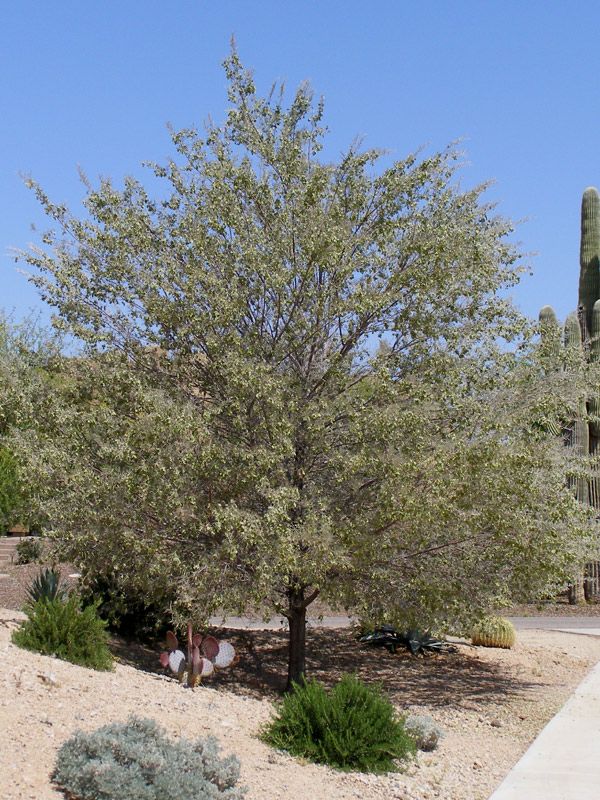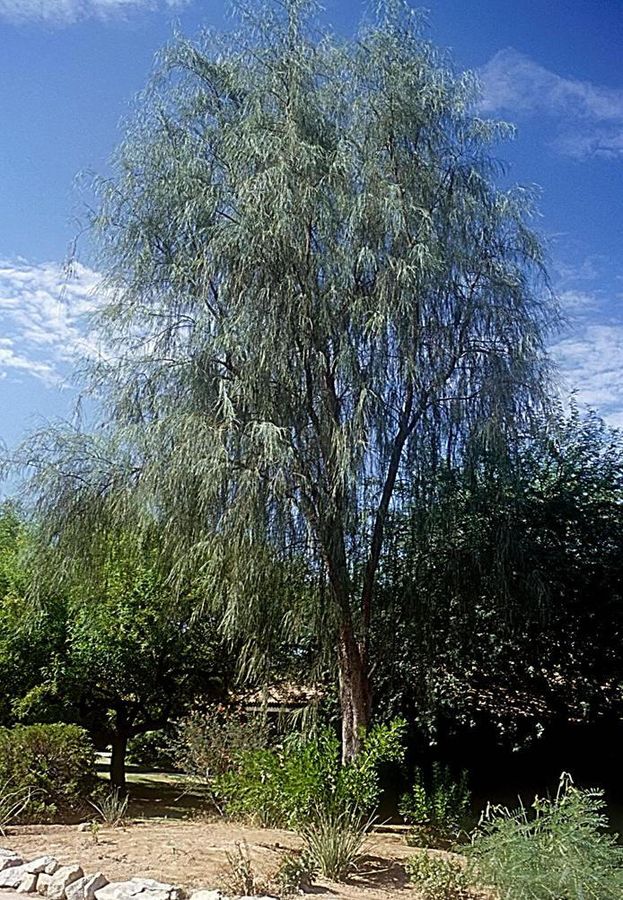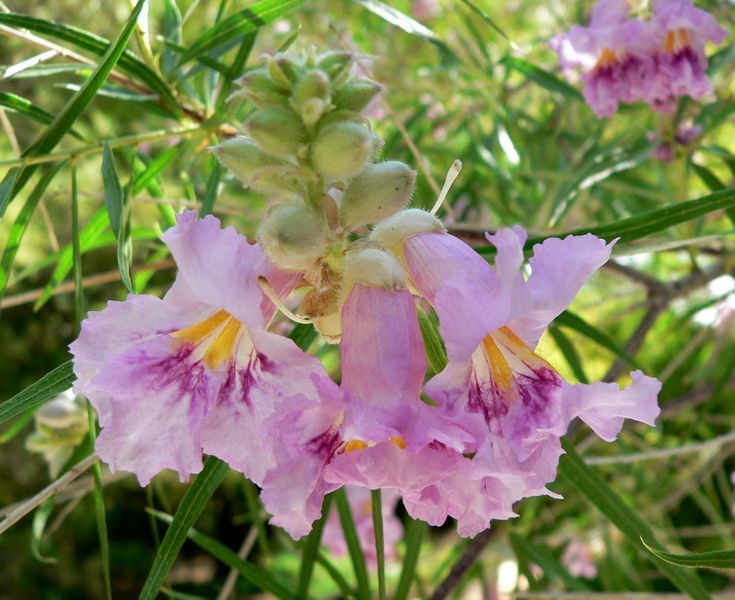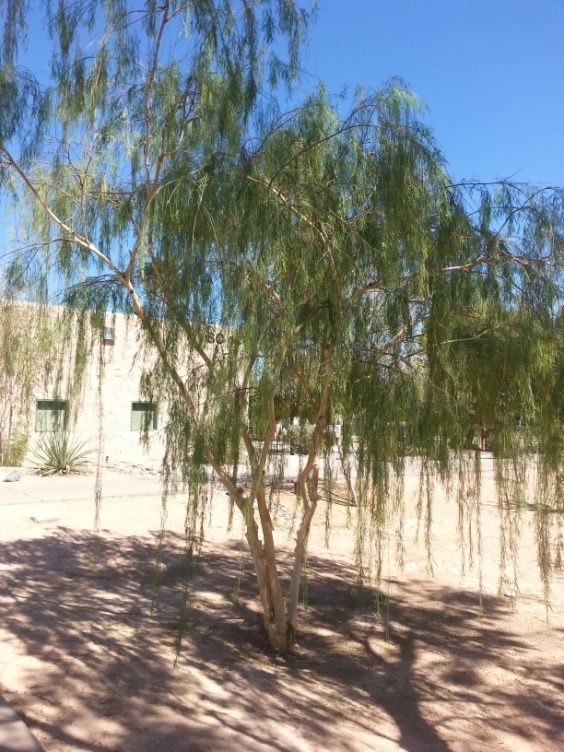
A slender Sonoran tree with white, papery peeling bark and a thin, airy canopy. It stays narrow and casts only light shade. People choose it for its sculptural trunks in courtyards, entries and other tight spaces.
Living with it in the Phoenix Valley
Watering
Follow the tree schedule in our Landscape Care guide while it establishes. Water deeply rather than often. Once settled it is very drought-tolerant, and it does poorly in wet soil, near lawn or under dense trees.
Pruning
Very little once its shape has formed, and it does not respond well to heavy cutting. On young trees, remove only gangly or crossing limbs. Its thin branches may need loose staking for the first season or two.
Cold
It is one of the more frost-sensitive desert trees. In a hard freeze, protect young trees and wrap the trunk. Plant it in a warm spot, such as a south- or west-facing courtyard.
How our designers use it
Courtyards and entries
Its narrow, upright form fits spaces too tight for a spreading tree, and the white bark reads well against stucco or dark walls.
Shadow and night lighting
We like it near a wall where its lacy canopy casts shadow patterns, and an uplight at night makes the pale trunks glow.
Light shade for plants below
The canopy is open enough that sun-loving perennials and succulents still do well underneath. Planted in a group of three, it reads as a small grove.
Good to know
Around the pool
No thorns, but it drops leaves in cold or dry spells and sheds seed pods in summer. It works near a pool deck if it isn’t hanging over the water.