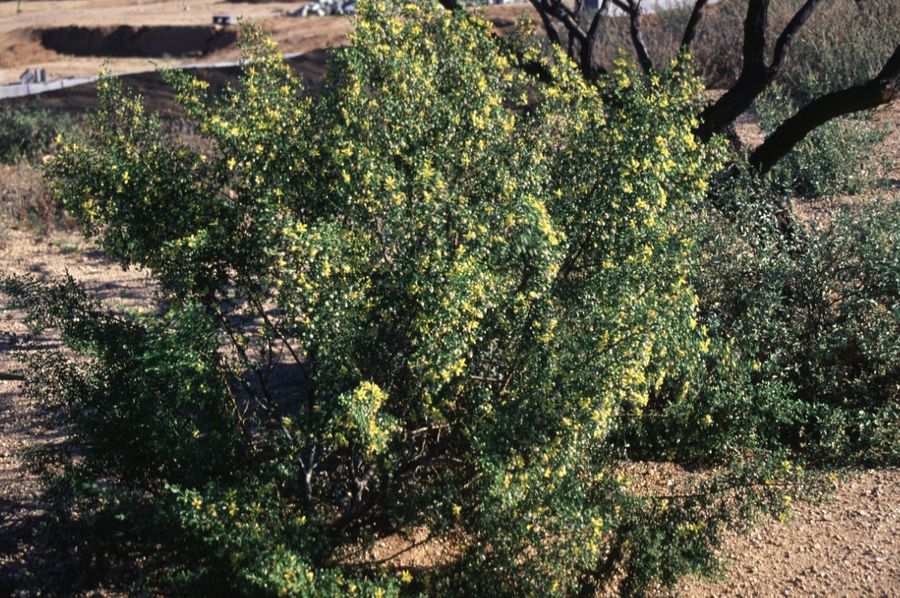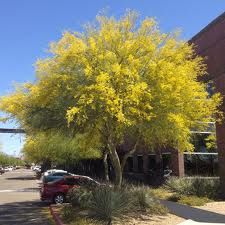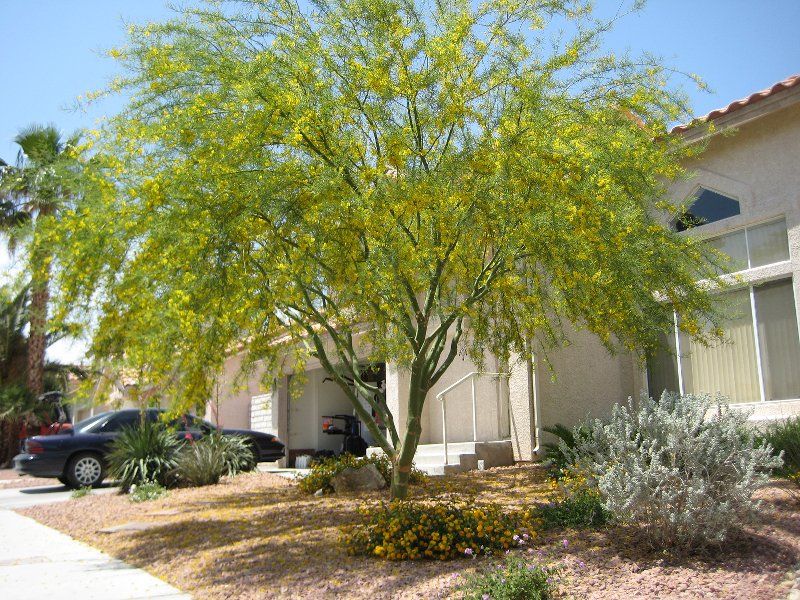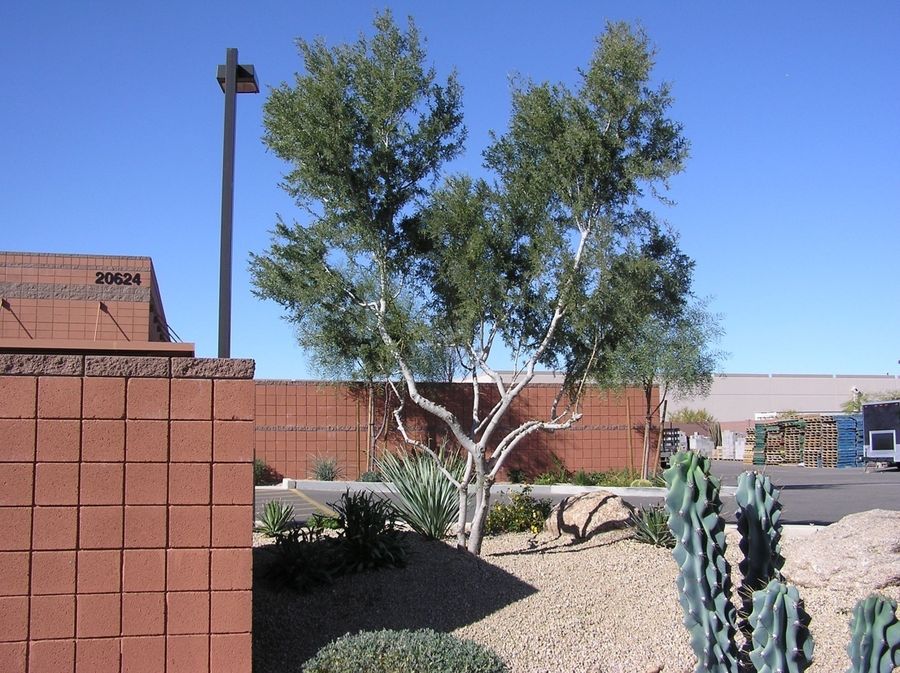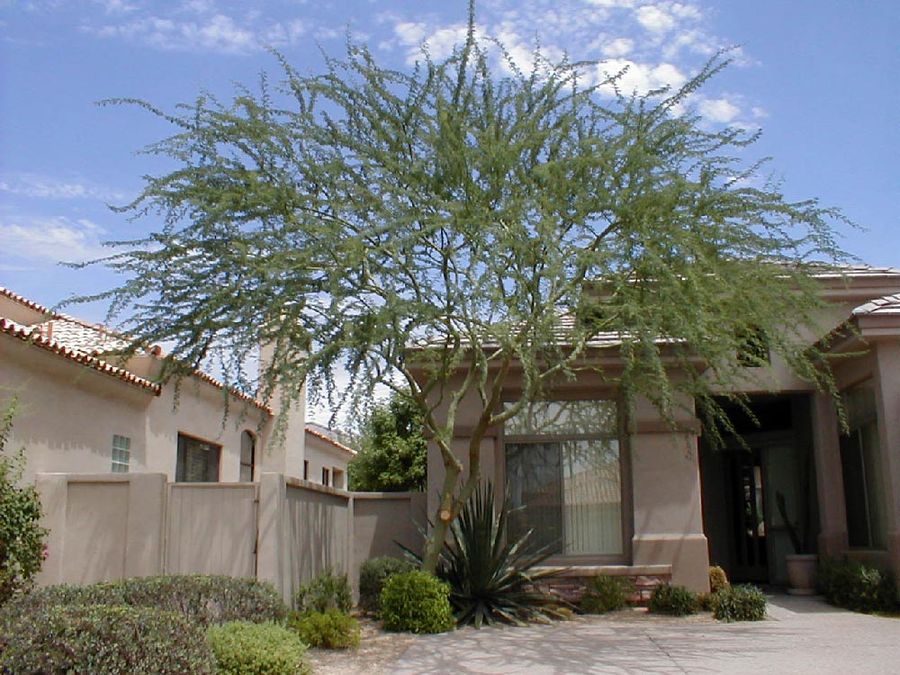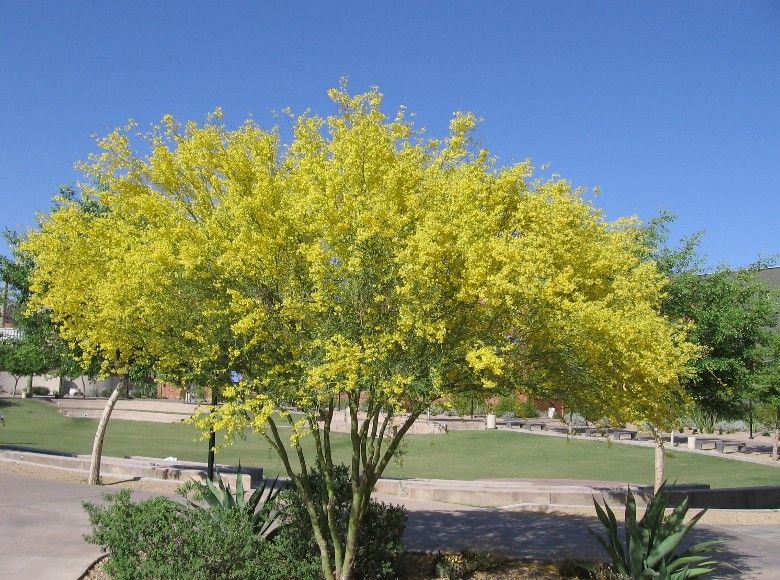
The small, slow-growing palo verde of the rocky foothills around Phoenix, with yellow-green bark and a sculptural, often multi-trunked form. Once established it can live largely on rainfall, which makes it a natural fit for native and transition landscapes.
Living with it in the Phoenix Valley
Watering
Follow the tree schedule in our Landscape Care guide while it establishes, and be careful not to overwater a newly planted tree. Once mature, it needs very little. Occasional deep water in a dry summer keeps it fuller, but frequent water works against it.
Pruning
Thin rather than shear, and do it in the warm season. Never remove more than about a quarter of the canopy in summer; sunburned bark invites wood-boring insects. Keep branch tips trimmed back from paths.
Patience
It grows slowly, so plant the largest size you are comfortable spending on the project if you want shade or presence soon.
How our designers use it
A sculptural focal point
The twisting, multi-trunk form reads as a living sculpture at an entry or in a gravel courtyard.
Blending into native desert
It ties a home’s landscape into surrounding open desert, where it already grows naturally.
A nurse tree for cactus
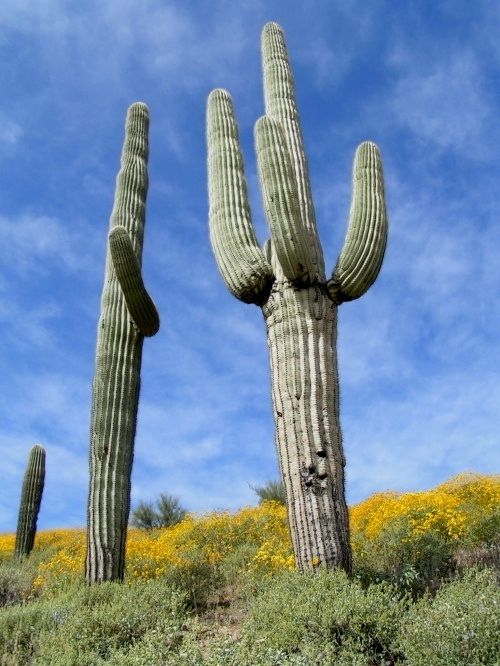
In the wild it shelters young saguaros, and it does the same for cactus and succulents in a planted garden.
Good to know
Around the pool
Spiny branch tips and seasonal flower and leaf drop make it a poor match for a pool edge. We place it farther out, where its form can be seen without anyone brushing against it.
Thorns
Keep it away from walkways, play areas and seating, or plan on regular tip pruning.