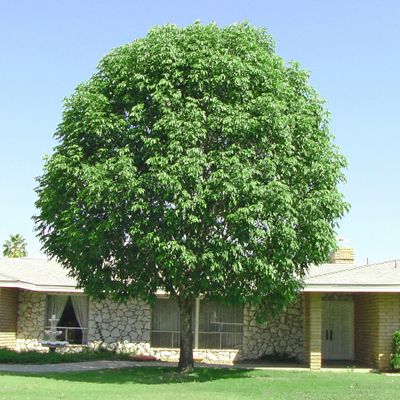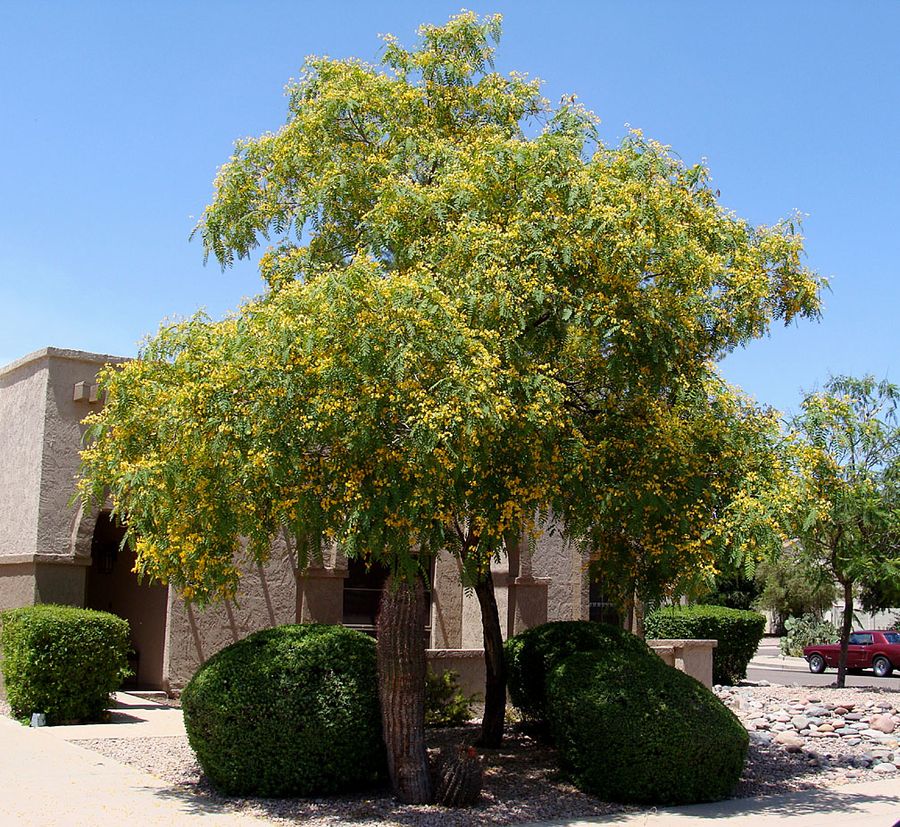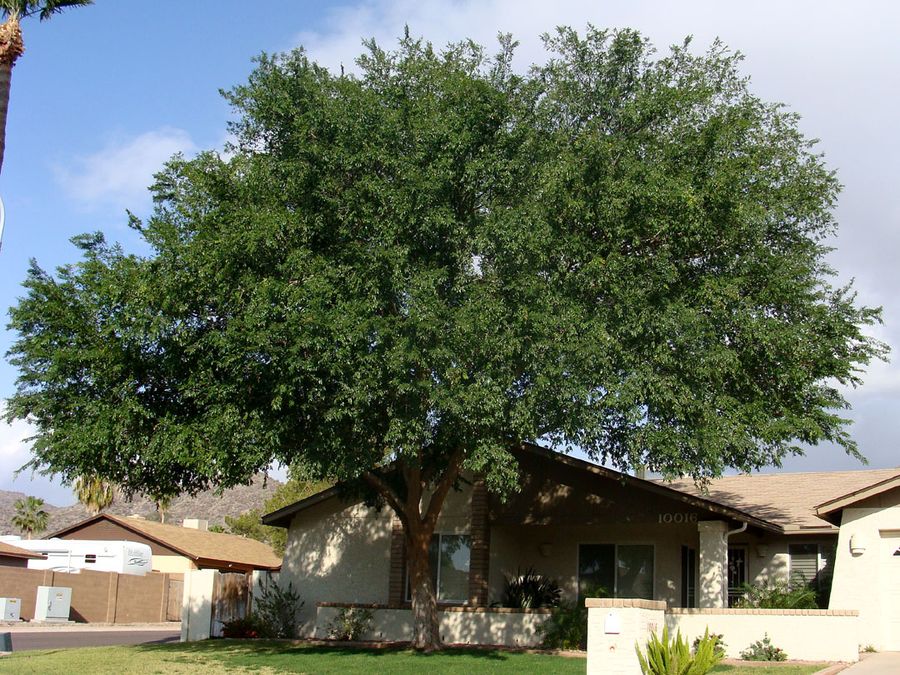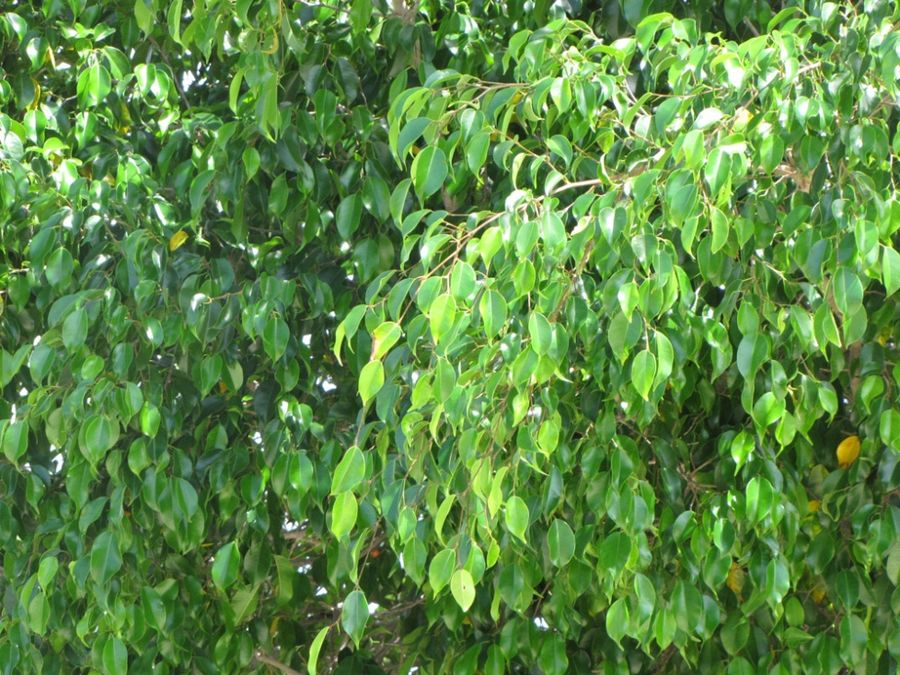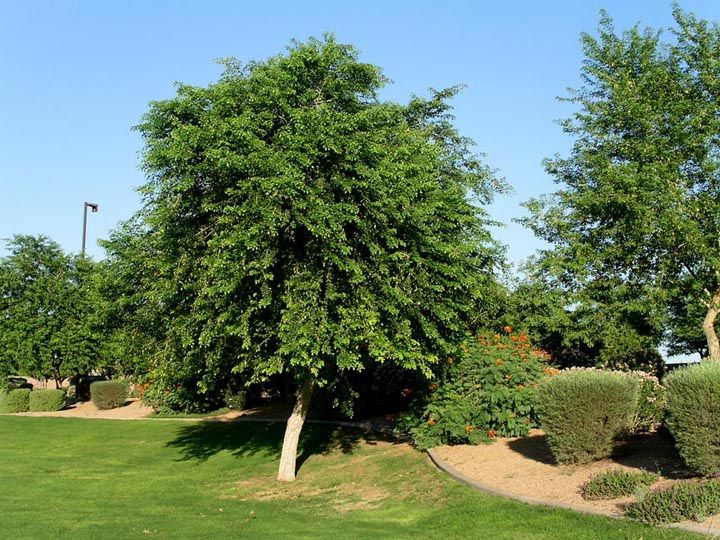
A fast-growing shade tree from India with light, rounded, glossy leaves and a full, lush canopy. It handles Phoenix summer heat well, but it grows very large and its roots need plenty of room.
Living with it in the Phoenix Valley
Watering
Follow the tree schedule in our Landscape Care guide. Always water deeply and slowly. Shallow, frequent watering pulls the roots toward the surface, where they lift paving and send up suckers.
Pruning
Young trees grown from cuttings often need staking and training for a few years to build a strong trunk. As it grows, thin the canopy so it doesn’t become top-heavy in monsoon winds.
Cold
Young trees can be badly damaged in the low 20s and may die back to the roots, though they often regrow. Colder pockets of the East Valley see more damage.
Feeding
In alkaline, caliche soils it can turn yellow between the veins from iron chlorosis. An iron chelate treatment, as used on citrus, usually corrects it.
How our designers use it
Large open spaces
It suits big lots, parks and open areas where its size and roots won’t meet a house, pool or wall.
Quick, lush shade
Where fast shade over a wide area matters most, it fills in quickly.
Choosing an alternative
For most residential yards, we generally recommend a tree with gentler roots, such as Live Oak, Evergreen Elm or Chinese Pistache.
Good to know
Around the pool
We avoid planting it near pools. Its roots can damage decking, plumbing and pool shells, and it drops leaves, flowers and seed pods through much of the year.
Roots
Roots can travel well beyond the canopy, crack patios, walls and driveways, and send up suckers some distance from the trunk. Cutting major roots often makes suckering worse.
Size
It quickly outgrows a typical backyard. Plan for a tree that may eventually reach 50′ or more.