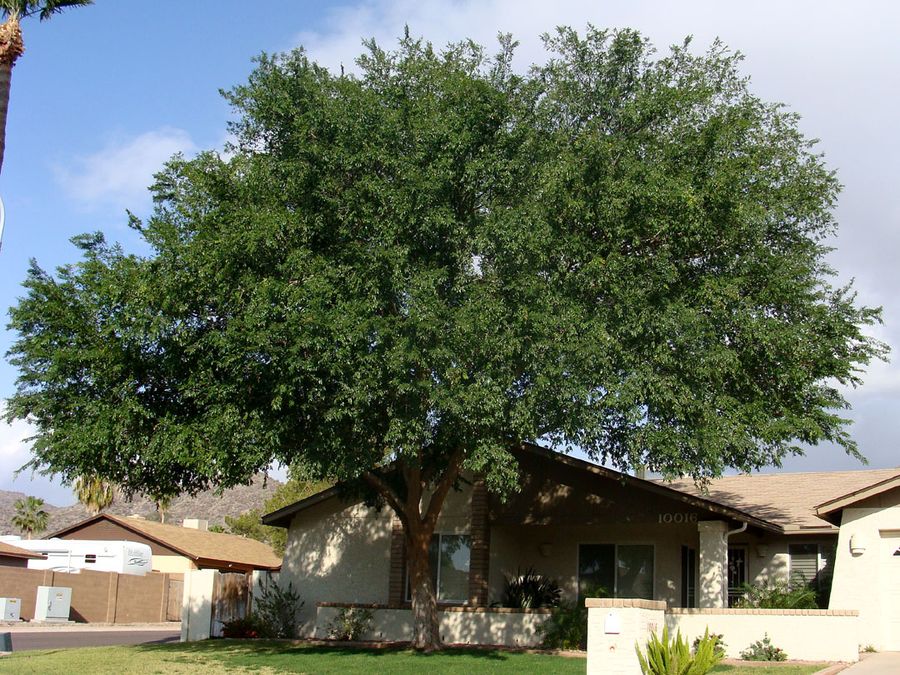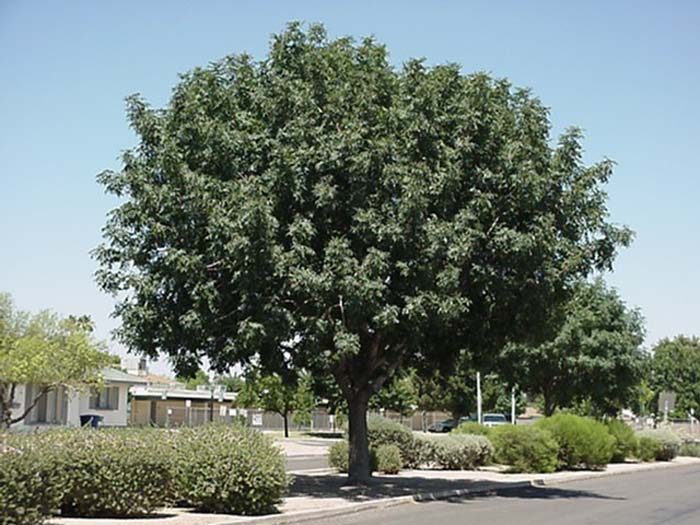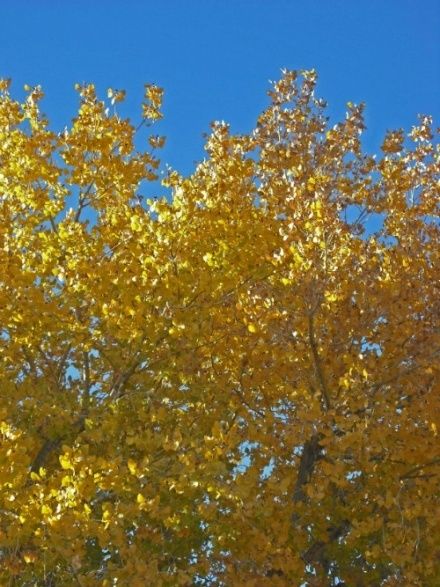
Arizona’s native streamside tree: fast, tall and broad, with bright green leaves that turn gold in late fall. It gives big shade quickly, but it needs a great deal of water and room, and it belongs on large properties rather than typical home lots.
Living with it in the Phoenix Valley
Watering
Follow the tree schedule in our Landscape Care guide. Cottonwood is the exception to most desert-tree advice: it needs far more water than a typical drip system delivers. Trees that outgrow their water supply begin to die back and drop limbs.
Pruning
Prune in winter while it is dormant. Remove dead wood regularly, since mature trees shed branches. Root suckers are common; remove them with clean cuts, as each wound is an entry point for disease.
Cotton
Female trees release masses of cottony seed in spring. Male “cottonless” selections avoid this, though most of those sold are hybrids rather than true Fremont cottonwood.
Disease and lifespan
Planted cottonwoods are prone to heart rot, cankers, Texas root rot and mistletoe. Without a large, steady water supply, a cottonwood in a home landscape often lasts only 12 to 15 years.
How our designers use it
Large lots and water features
We consider it only for acreage or the edge of a pond or lake, where its size and water needs make sense.
Fast screening
Few trees fill a skyline faster, which makes it useful as a background screen on a big site.
Native fall color
Its gold autumn foliage is one of the stronger fall displays among Southwest natives.
Good to know
Around the pool
We avoid it near pools. It drops leaves, catkins, twigs and, on female trees, cotton, and its roots go looking for water.
Roots and hardscape
The roots spread widely, lift sidewalks, patios and foundations, and can invade sewer and septic lines. Plant it well away from structures and utilities.