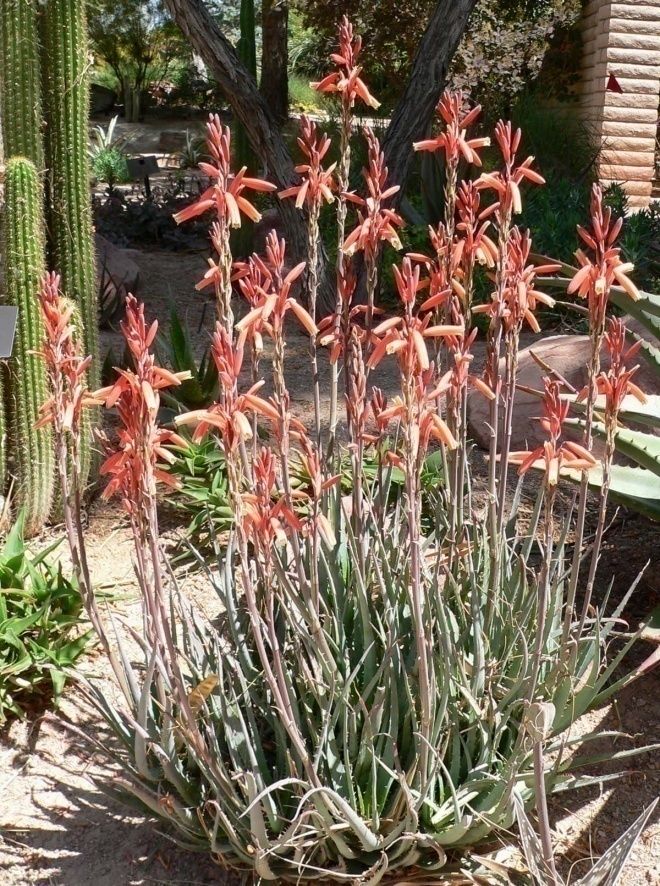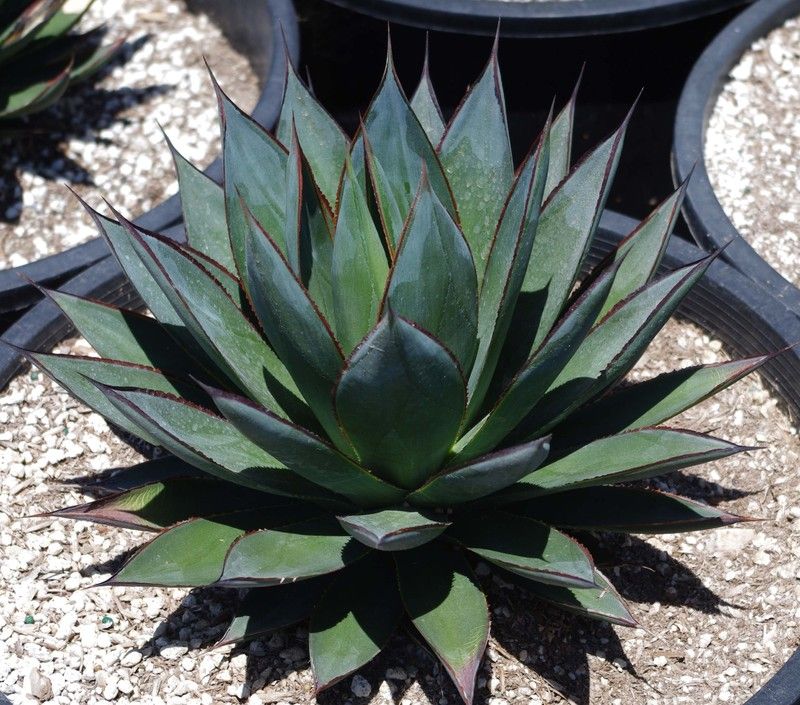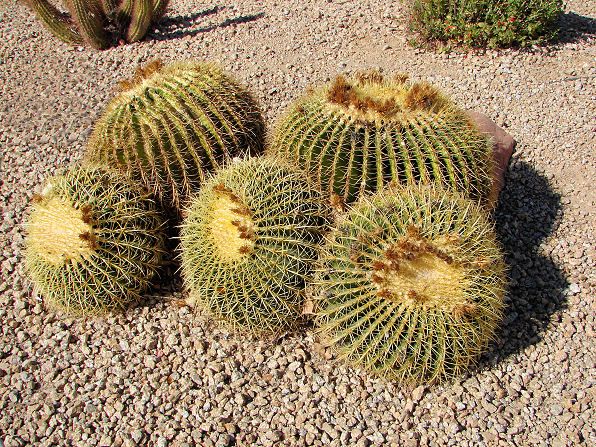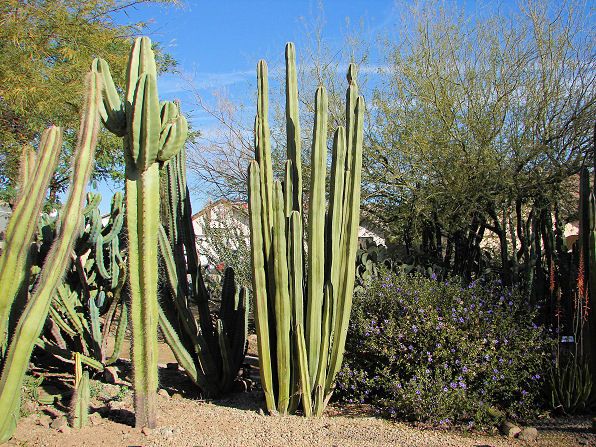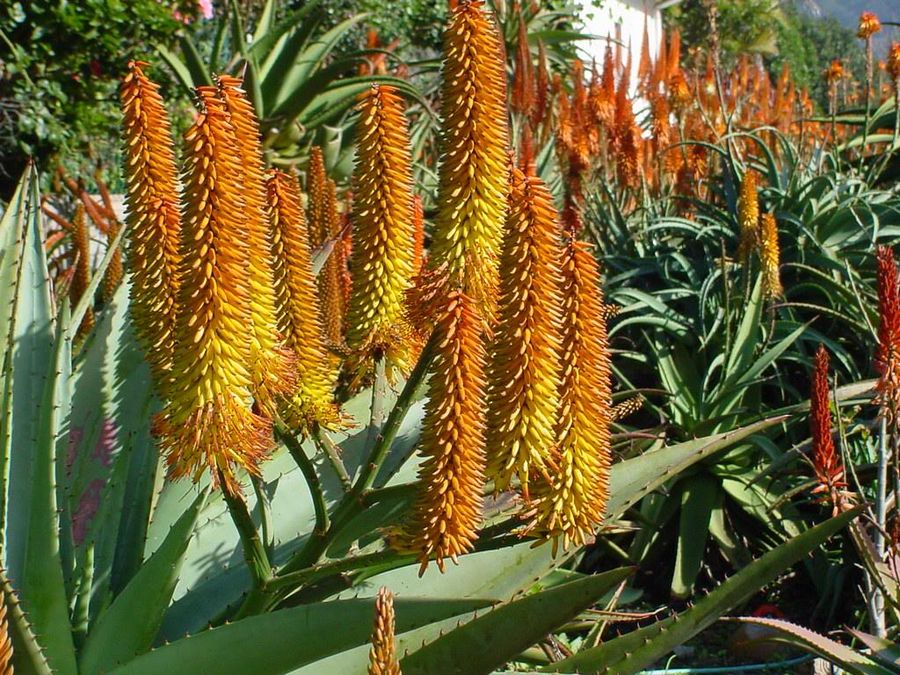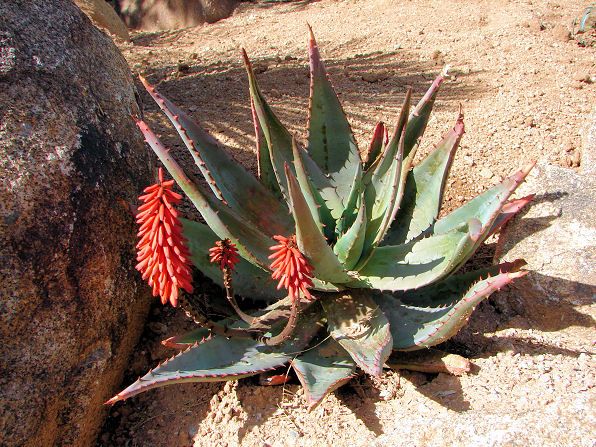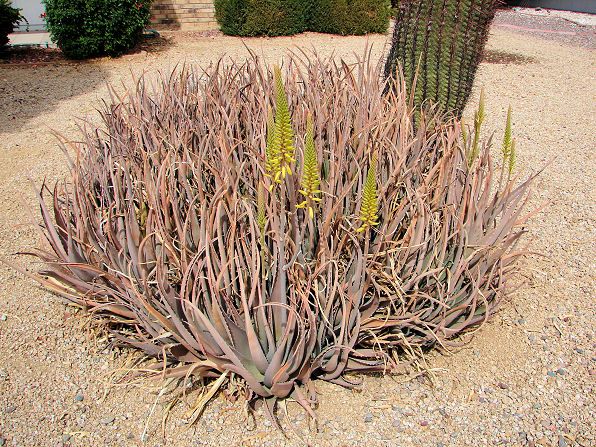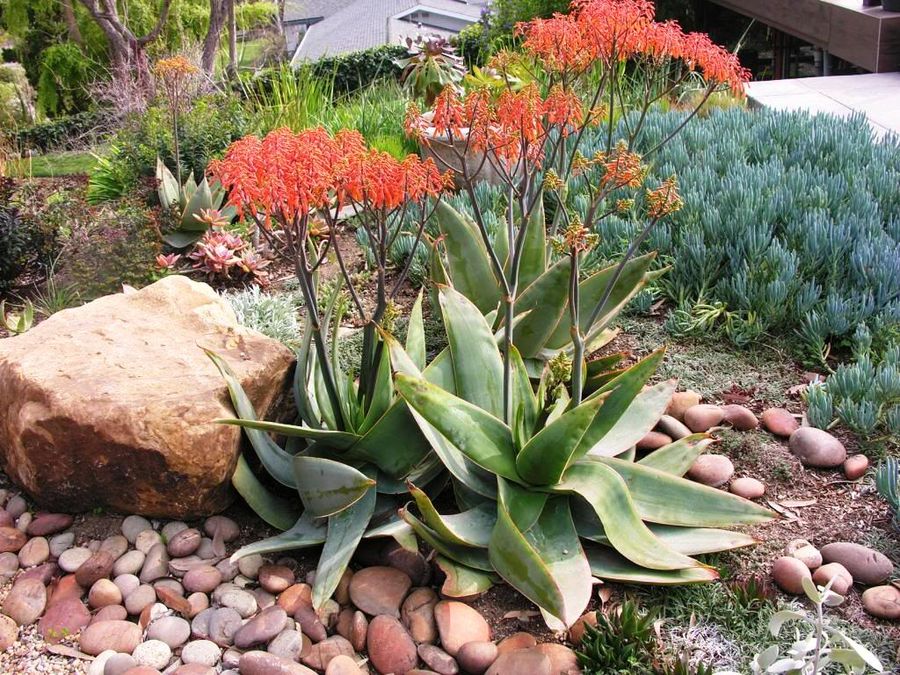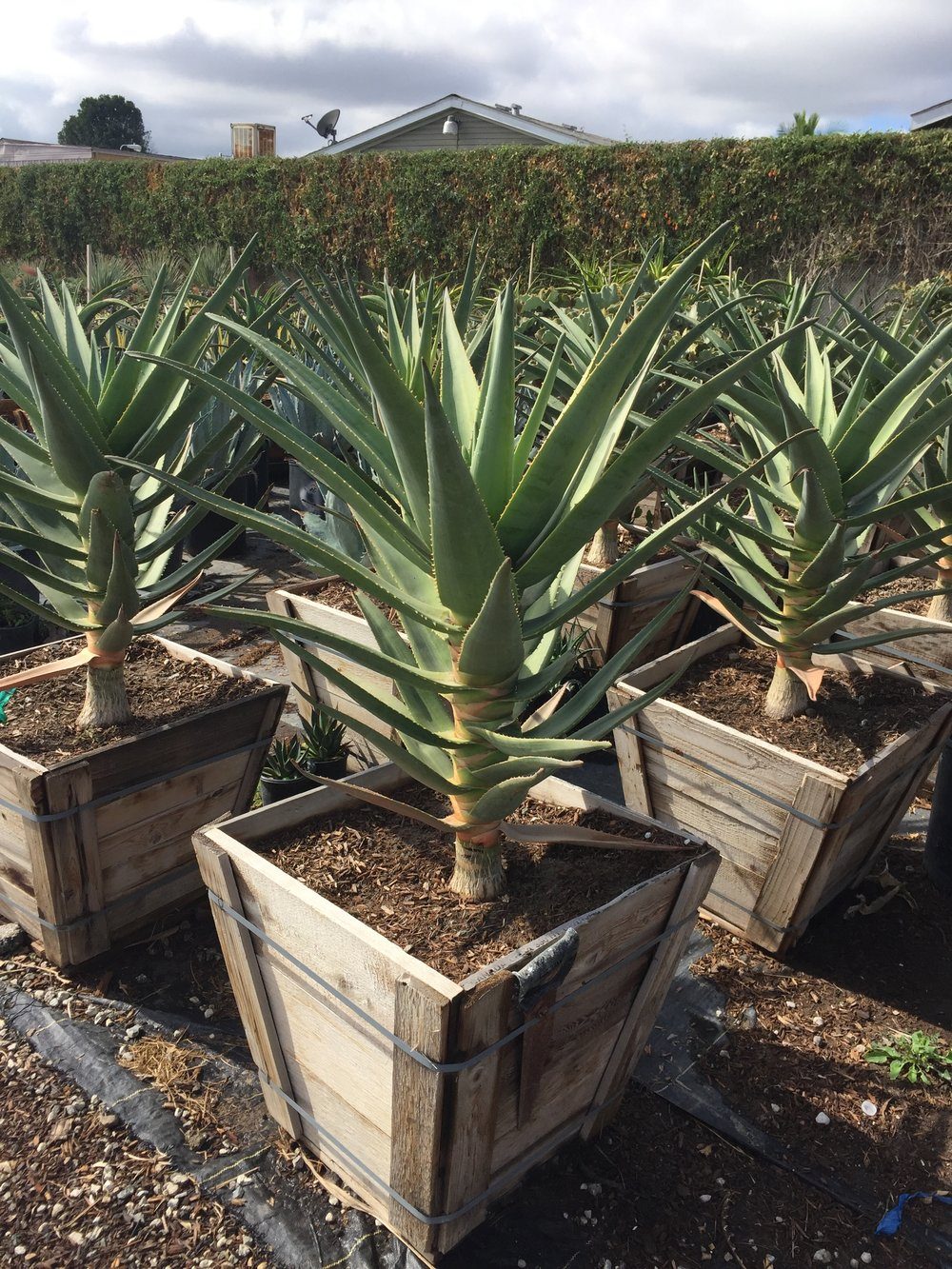
A tree aloe, a hybrid of two African tree aloes, that grows a thick trunk topped by branching rosettes of long green leaves. It grows faster than most aloes and becomes a sculptural tree over time.
Living with it in the Phoenix Valley
Watering
Follow the shrub, groundcover and succulent schedule in our Landscape Care guide. Keep it on the dry side in winter; cold, wet roots are the biggest risk. Good drainage is essential.
Pruning
Little needed. Remove dead lower leaves to keep the trunk clean.
Cold
Protect it from frost, especially while young. Cover it on freeze nights and keep the soil dry through cold spells.
Heat and sunburn
In Phoenix it does best with morning sun and some relief in the afternoon. Hot west walls and reflected heat can scorch the leaves.
How our designers use it
Sculptural focal point
One plant, given room, becomes the centerpiece of a courtyard or entry garden.
Modern architecture
Its clean, branching silhouette suits contemporary homes and reads well against plain stucco walls and with night lighting.
Good to know
Around the pool
Litter is light, mostly old leaves. Plant it far enough back that the eventual trunk and canopy won’t crowd the deck or shed into the water.
Size over time
It starts small but can become a 20′ tree. Place it where it can grow without crowding the house, walls or overhead lines.