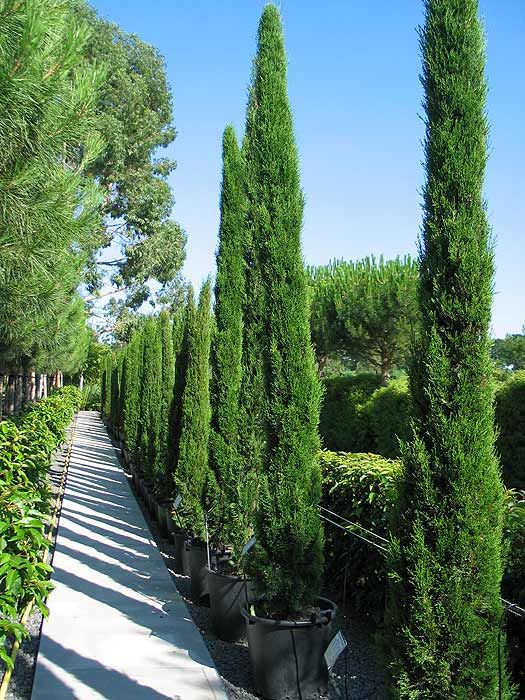
A tall, pencil-thin evergreen from the Mediterranean that adds strong vertical lines to a landscape. It handles Phoenix heat and alkaline soil well, and a row of them reads instantly as formal, Tuscan or Mediterranean.
Living with it in the Phoenix Valley
Watering
Follow the shrub schedule in our Landscape Care guide. Established trees need less than you might expect, but steady deep water through summer keeps the foliage full and green. Soggy soil is a bigger risk than dry soil; drooping foliage can be a sign of too much water.
Pruning
It holds its column shape naturally. Trim only stray or wayward shoots. Avoid topping it to control height; that leaves a flat, awkward top that never recovers. If it will outgrow the space, choose a different plant.
Pests
Spider mites are the main problem here, especially in hot, dry stretches. They turn foliage brown from the inside out. Check the plants in late spring and summer, and treat early; a mite problem left alone can kill a tree.
Placement
Give it room above. It is often planted against a single-story wall or under an eave, where it soon runs out of space.
How our designers use it
Vertical accents
A pair at an entry, or a single tree at the end of a view, gives the eye a strong vertical line against low desert plantings and flat rooflines.
Formal rows and screens
Planted in a line, they form a tall, narrow screen along a property edge or drive without eating up much ground.
Mediterranean courtyards
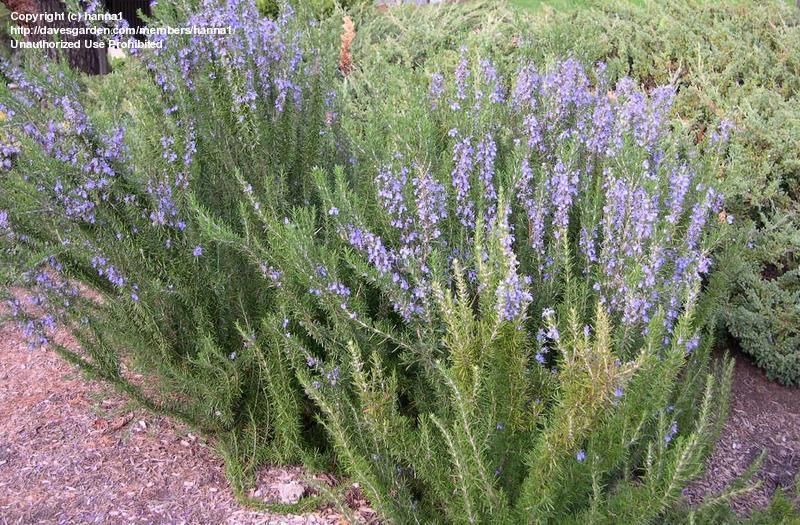
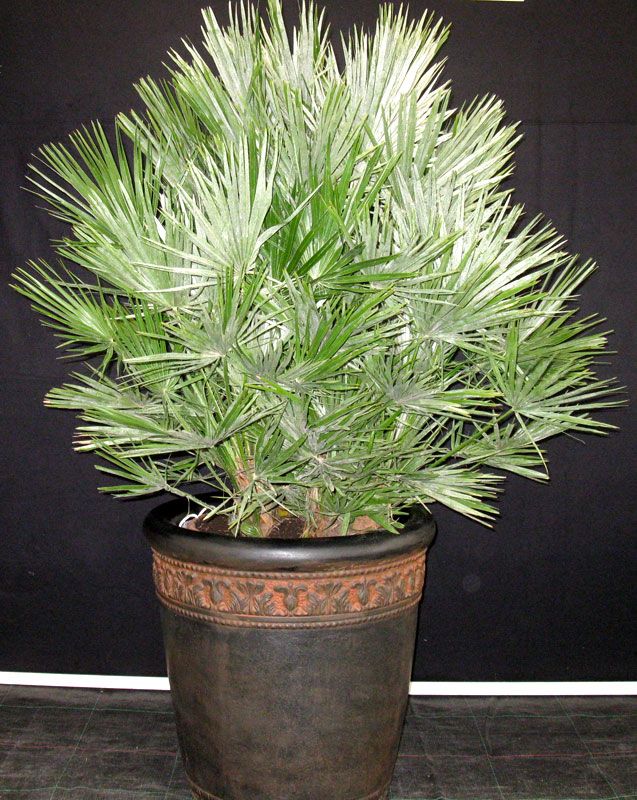
They pair naturally with olive, rosemary, palms and stucco walls for a Tuscan or Mediterranean look.
Good to know
Around the pool
Litter is light, mostly small cones and some browned inner foliage. It works near a pool as a backdrop, but keep it far enough back that roots and cones stay out of the deck and water.
Scale
It grows far taller than most people expect. On a small lot or beside a one-story home, it can look out of proportion within a decade.