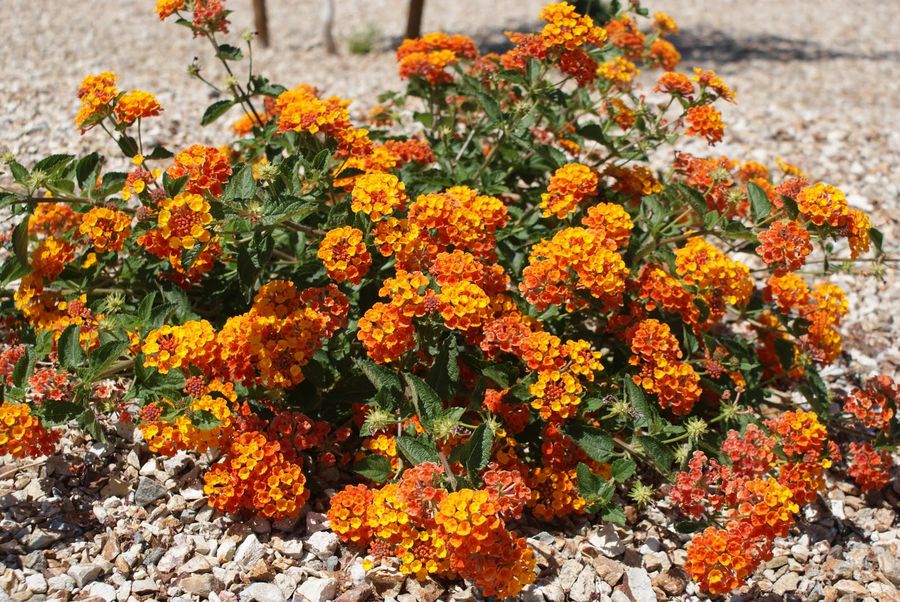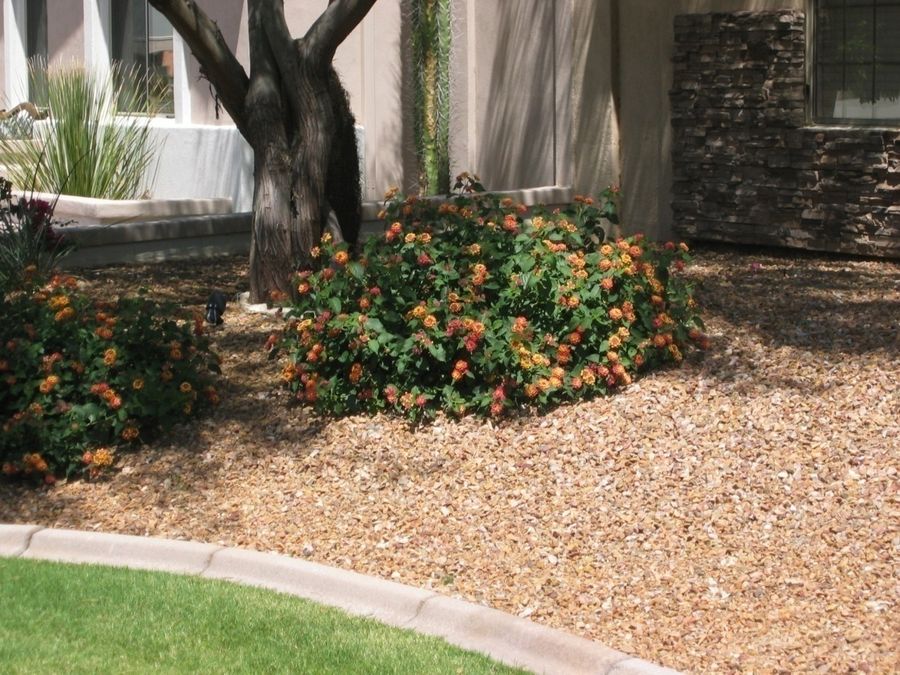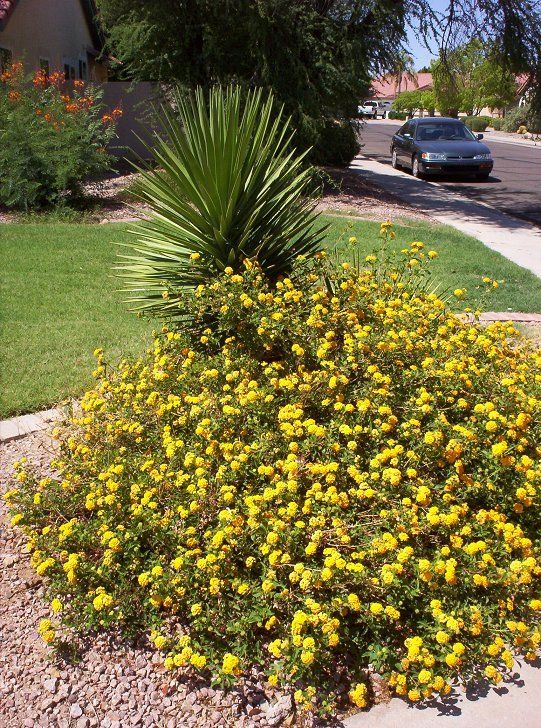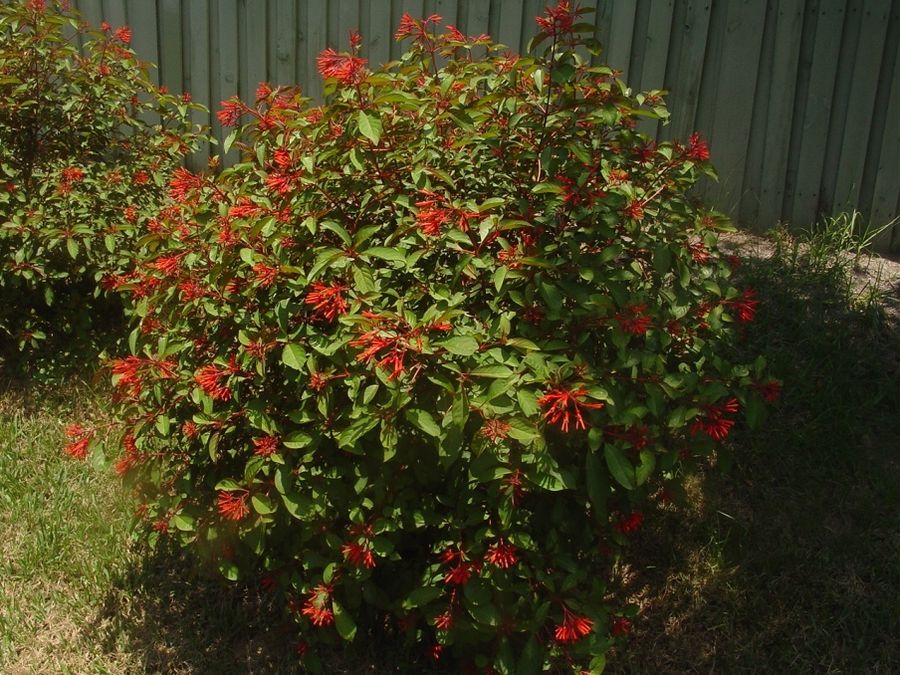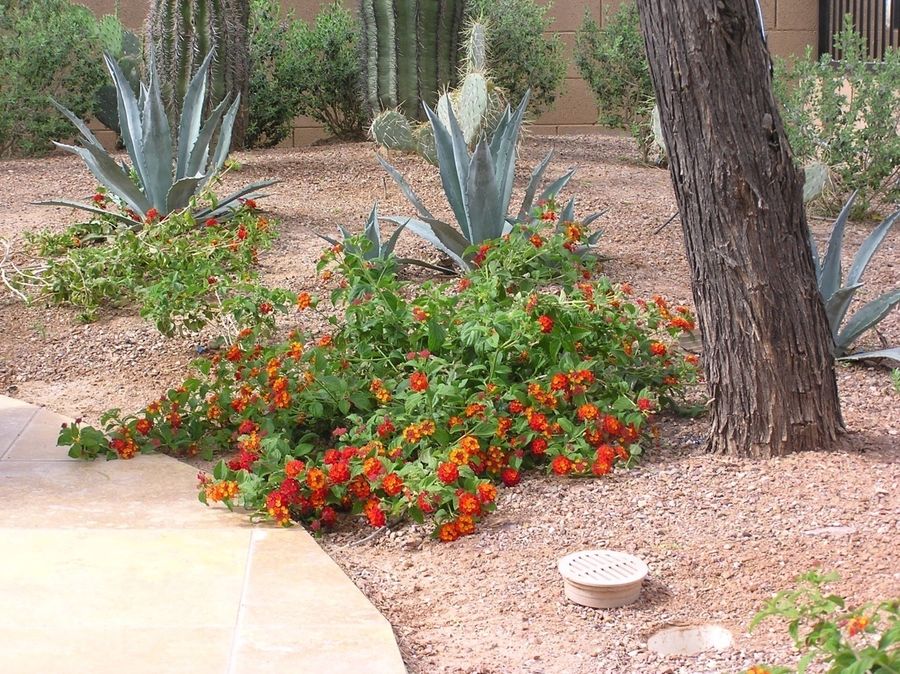
A mounding lantana with flower clusters that open yellow-orange and deepen to rich red. It handles summer heat with ease and gives a long season of warm color from spring through fall.
Living with it in the Phoenix Valley
Watering
Follow the shrub schedule in our Landscape Care guide. It blooms most heavily with regular water in summer and needs much less in winter. Constantly wet soil leads to weak, floppy growth.
Pruning
Let any frost-damaged stems stand through winter to protect the plant. After the last frost, cut it back hard for fresh growth and a heavy bloom. Light trimming during summer keeps it compact.
Cold
In a mild winter it stays leafy. After a hard freeze it can look bare until spring, then regrows quickly from the base.
Pests
Whiteflies can appear in late summer and early fall. A strong spray of water usually keeps them in check.
How our designers use it
Hot color in mass
Planted in drifts, it carries strong red-orange color through the hottest months, when many other shrubs slow down.
Against succulents
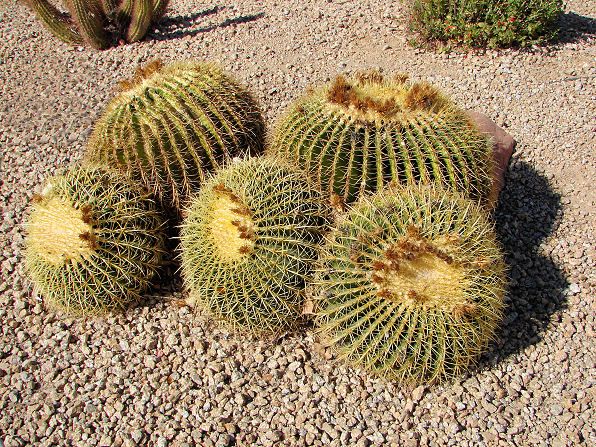
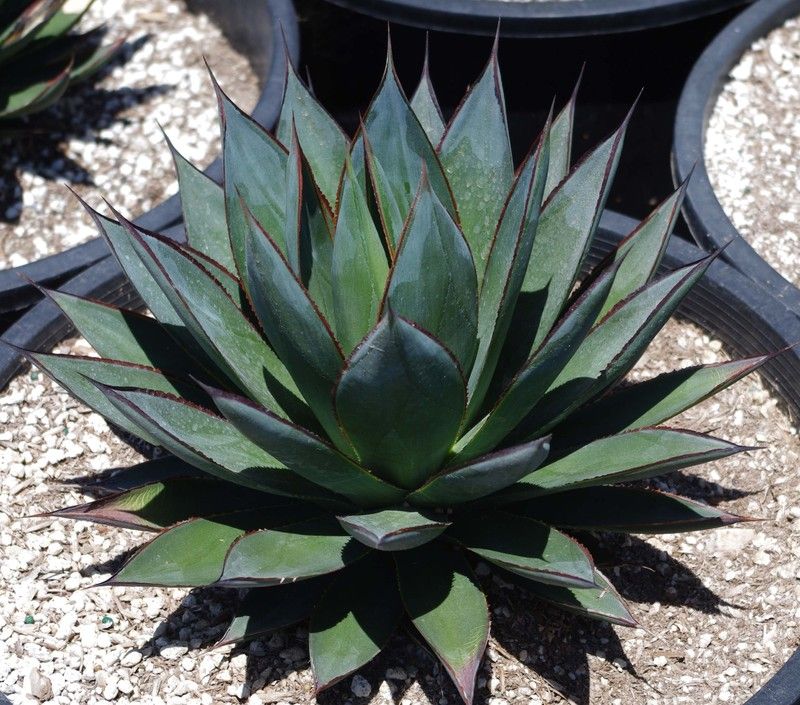
Its warm tones contrast with the blue-gray of agaves and the gold of barrel cactus.
Low borders
It makes an informal, flowering edge along walks and driveways that handles reflected heat.
Good to know
Around the pool
No thorns, but bees and butterflies are drawn to the flowers, and any berries can drop. Keep it a few feet back from the water and seating.
Pets and children
The ASPCA lists lantana as toxic to dogs, cats and horses. The unripe berries are also poisonous if eaten.