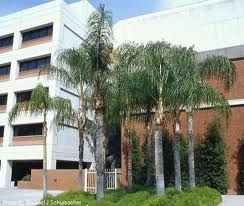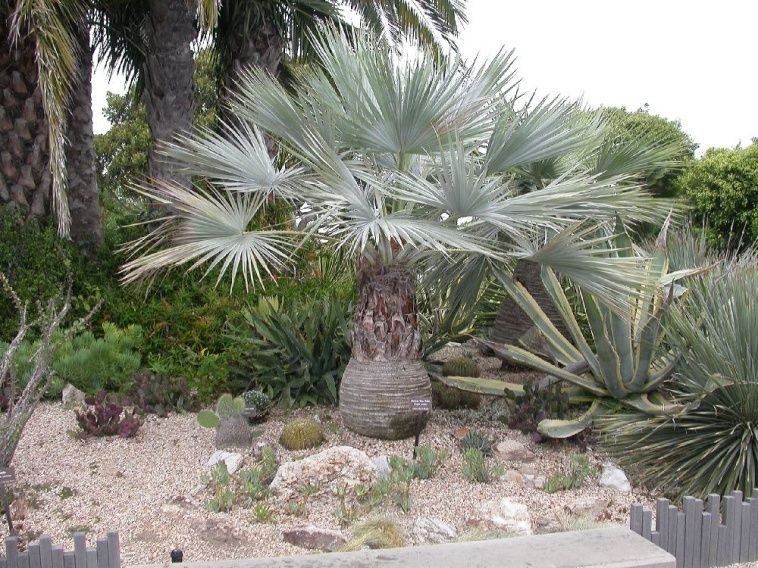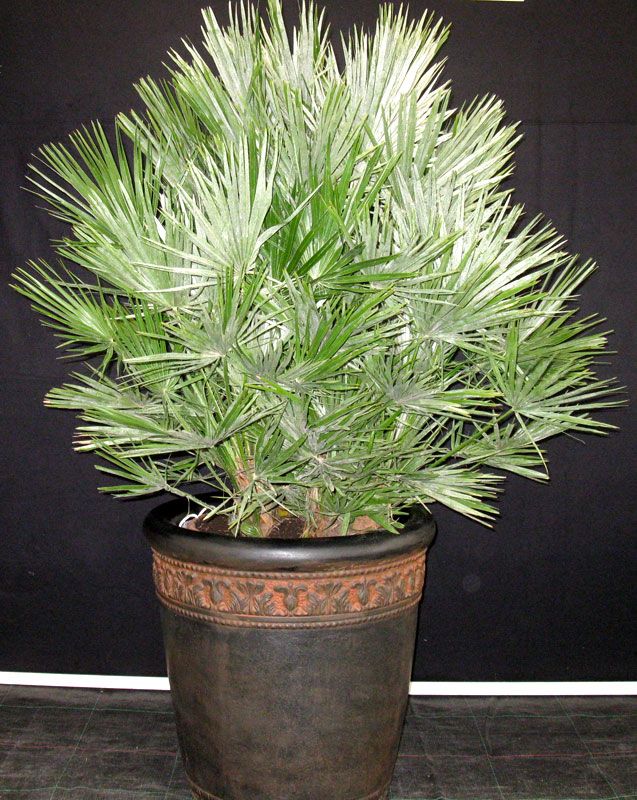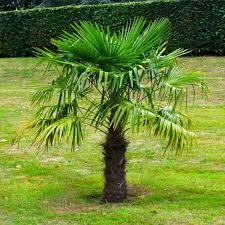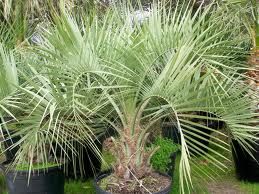
A slow, stout-trunked palm from South America with gray-green fronds that arch down toward the ground. It is one of the more cold-hardy feather palms, and it fills out into a handsome, sculptural shape as it ages.
Living with it in the Phoenix Valley
Watering
Follow the tree schedule in our Landscape Care guide. This is not a true desert palm, so it looks best with steady deep watering through the summer. Good drainage matters as much as the water itself.
Pruning
Remove only fronds that are fully brown. Cutting the flower stalks after bloom cuts down on fruit drop if the mess is a concern. Avoid stripping green fronds, which slows an already slow palm.
Feeding
In our alkaline soils, older fronds can yellow from magnesium shortage. A palm fertilizer with magnesium, or a light dose of Epsom salts, usually corrects it.
How our designers use it
A softer accent
The arching, blue-gray crown reads as tropical without the scale of a date palm, so it suits courtyards and mid-sized yards.
Oasis and transition zones
It bridges a lush pool garden and drier desert plantings, sitting comfortably beside agaves and bold-leaf shrubs.
Cold-prone sites
Its cold tolerance makes it a dependable choice for low spots and foothill lots that run a few degrees colder.
Good to know
Around the pool
Fruit falls in quantity in summer and can stain decking. Frond stems carry spines along their edges. Plant it back from the water’s edge and from busy walkways.