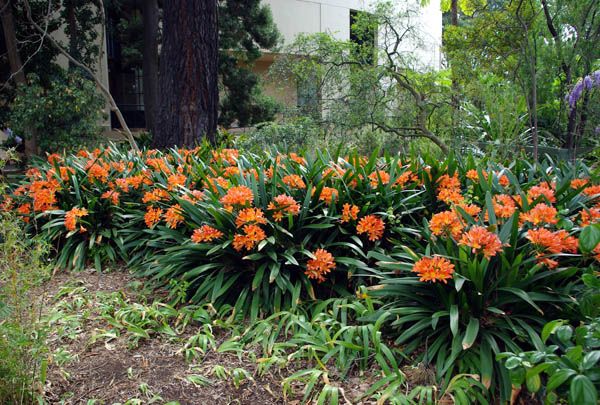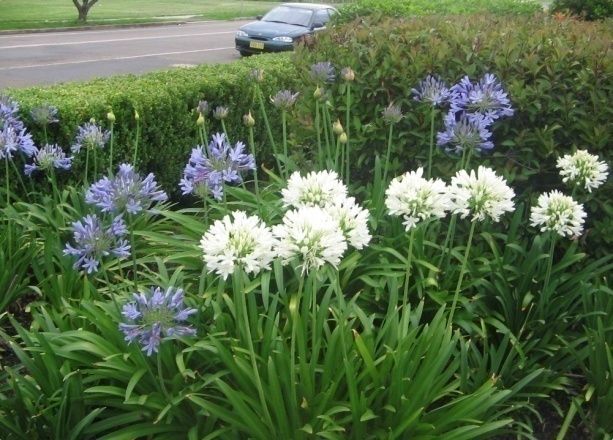
A clumping evergreen perennial with long, strap-like leaves and tall stems topped by round heads of blue or white flowers in late spring and summer. In Phoenix it is a shade plant, valued for bringing a cool, lush look to courtyards, entries and pool areas.
Living with it in the Phoenix Valley
Watering
Follow the shrub schedule in our Landscape Care guide. It needs regular water through the hot months to keep its leaves full and to bloom well. Organic mulch over the root zone helps hold moisture.
Pruning
Cut spent flower stalks down to the base after blooming, and pull away yellowed leaves as they appear. That’s all it needs.
Feeding
It blooms best in soil rich in organic matter. A light feeding in early spring, early summer and fall keeps it vigorous.
Heat/sunburn
Afternoon sun burns the leaves in a Phoenix summer. East and north exposures, or the shade of a tree or covered patio, keep it looking its best.
How our designers use it
Shaded entries and courtyards
Its tidy clumps and summer flowers bring color to spots that get little direct sun.
Near the pool
Clean foliage and no thorns make it an easy choice for planters along a shaded pool deck or patio.
Containers
It grows well in large pots, which makes it simple to place blooms exactly where you want them in a shaded space.
Good to know
Around the pool
Little litter beyond spent flower stalks, and no thorns. Give it a shaded spot; hot, reflected deck heat scorches the leaves.
Sap
The sap can irritate skin, and the plant shouldn’t be eaten. Wear gloves when dividing clumps.