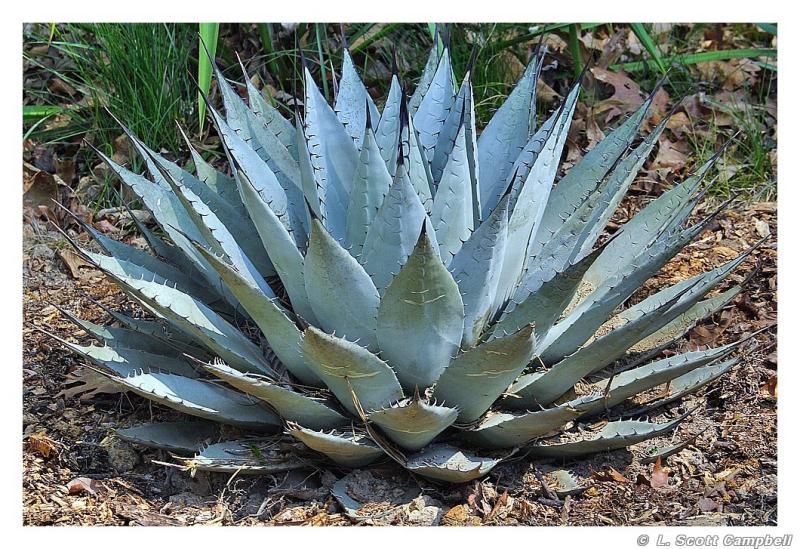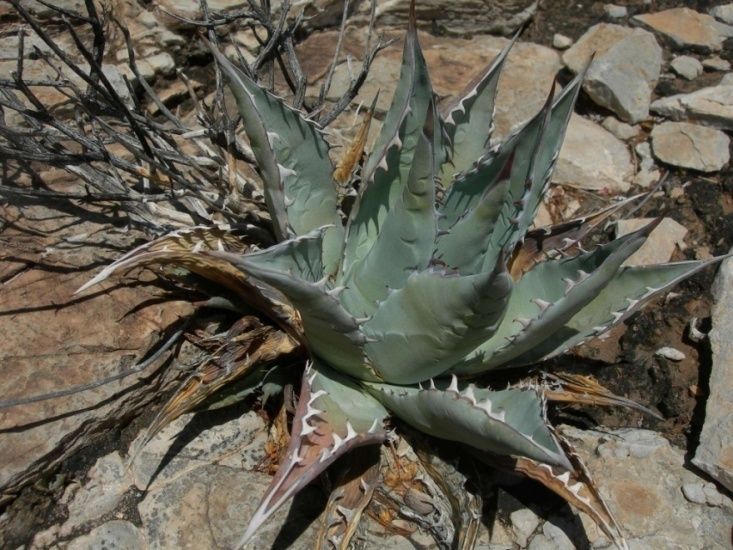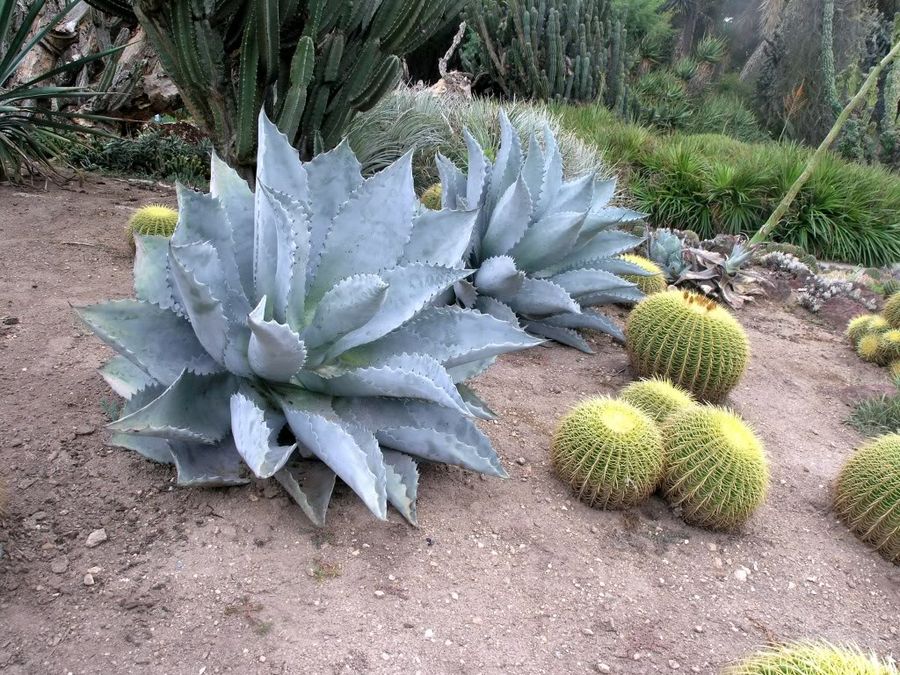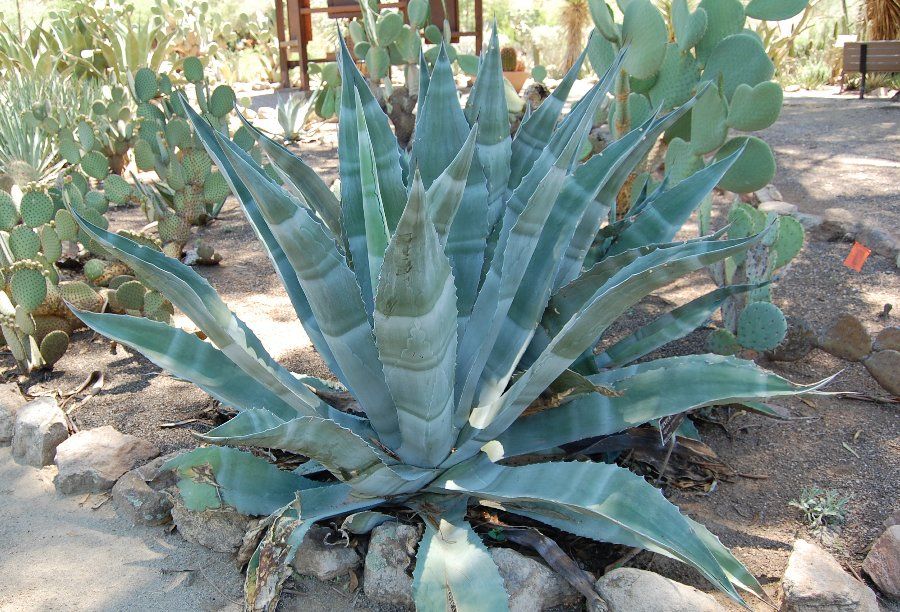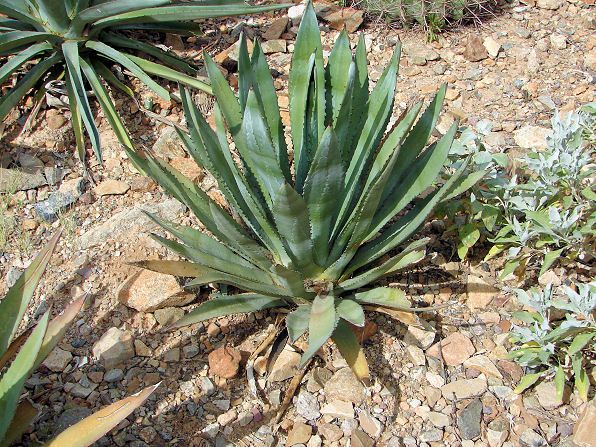
A medium agave native to central Arizona and northern Sonora, with blue-gray leaves that often carry faint pale bands. The Hohokam grew it for food, and the few wild stands that remain sit near ancient village sites. It is tough, slow and tidy, and it offsets freely into a small colony.
Living with it in the Phoenix Valley
Watering
Follow the shrub, groundcover and succulent schedule in our Landscape Care guide. Young plants want a little extra while they root in. Once established it needs only occasional water in the hottest, driest weeks. Fast-draining soil matters more than frequent water.
Pruning
Very little. Cut off dead lower leaves close to the trunk, and remove the flower stalk once the rosette that made it has died back.
Flowering and bulbils
After many years a rosette sends up a stalk 10–13′ tall, then dies. The stalk rarely sets seed. Instead it grows hundreds of small plantlets (bulbils) by the monsoon, which can be twisted off and planted. Pups at the base carry the clump on.
How our designers use it
A native with a story
It is one of the few agaves tied directly to Arizona’s first farmers, which gives it a place in native and heritage gardens.
Grouped with other low-water agaves
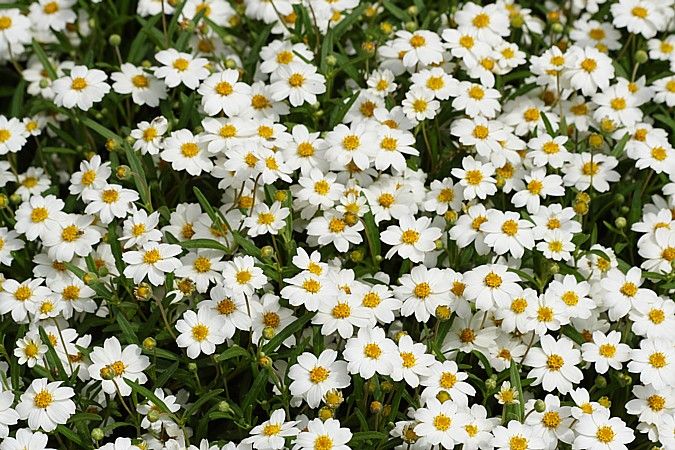
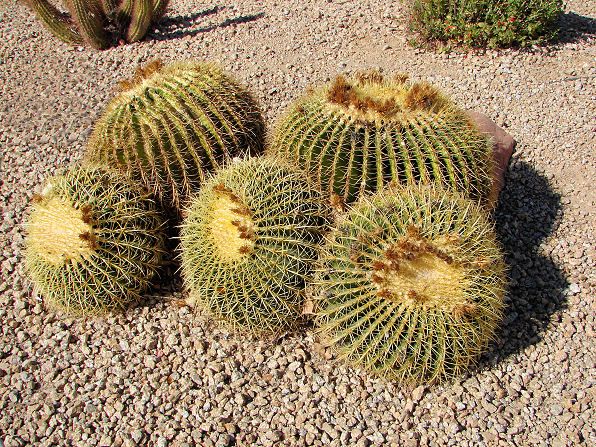
Its moderate size and steady blue-gray color sit well with Parry’s agave, golden barrels and low native wildflowers.
Raised beds and containers
It stays in scale for planters and raised beds, where its form reads clearly.
Good to know
Around the pool
Each leaf ends in a sharp spine, and pups often grow tight against the mother plant. Keep it a few feet back from pool decks, paths and seating.
After it blooms
The flowering rosette dies, but pups and bulbils replace it. Plan for that gap in a prominent spot.