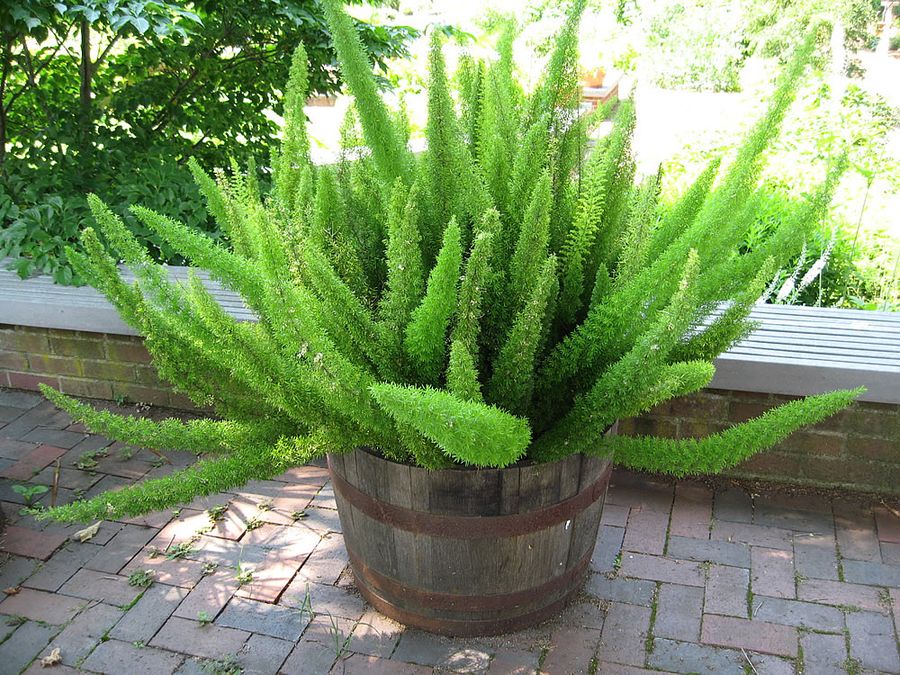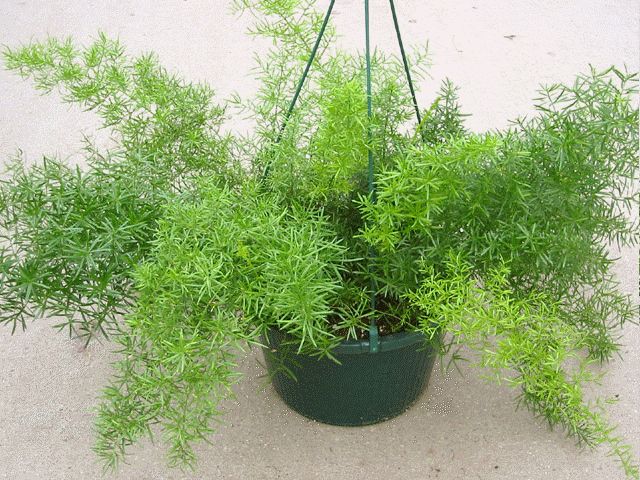
Not a true fern but a relative of asparagus, with long, arching stems of bright green, needle-like foliage. It is tough and adaptable in shady Phoenix spots, and its fountain-like form works in beds, containers and hanging baskets.
Living with it in the Phoenix Valley
Watering
Follow the shrub schedule in our Landscape Care guide. It needs regular water from spring through fall. Its fleshy, water-storing roots carry it through short dry spells, especially in winter.
Pruning
Remove dead or yellowed stems at the base as they appear. Every few years, cut the whole plant to the ground in spring to renew it.
Heat/sunburn
Western afternoon sun yellows and burns it. Morning sun or bright shade keeps it green.
Weeds
Bermuda grass can work its way into the clump and is hard to remove once it does, so keep it out from the start.
How our designers use it
Containers and baskets
Its cascading stems spill over the edges of pots, raised planters and hanging baskets.
Shaded beds
The soft, arching texture fills the ground plane under trees and along north walls.
Softening edges
The fountain-like stems soften the hard lines of walls, steps and planters.
Good to know
Pets
The ASPCA lists asparagus fern as toxic to dogs and cats. Eating the berries can cause stomach upset, and repeated contact with the foliage can irritate skin.
Around the pool
The stems carry small spines and the red berries drop. Keep it back from bare-foot traffic on the deck.
Spreading
Birds spread the seeds, and it is listed as invasive in Florida. Pull seedlings that come up away from the planting.