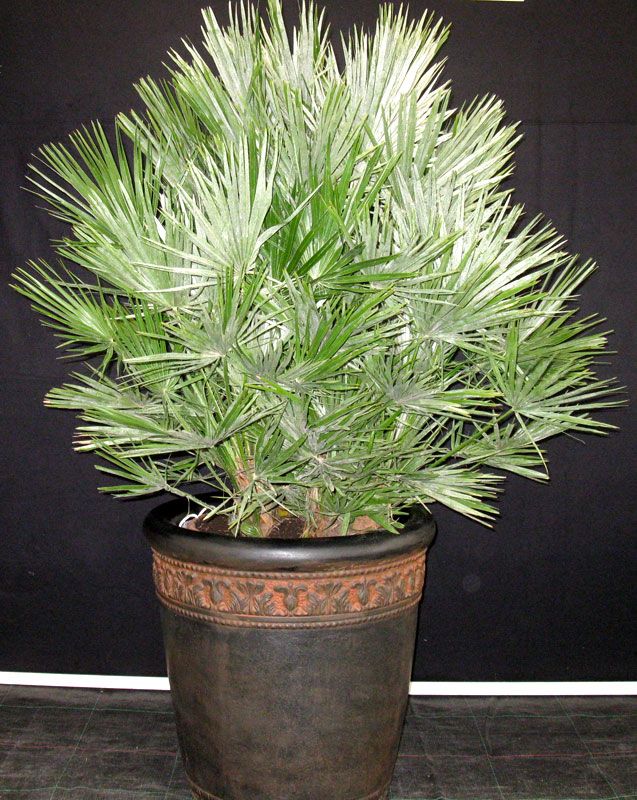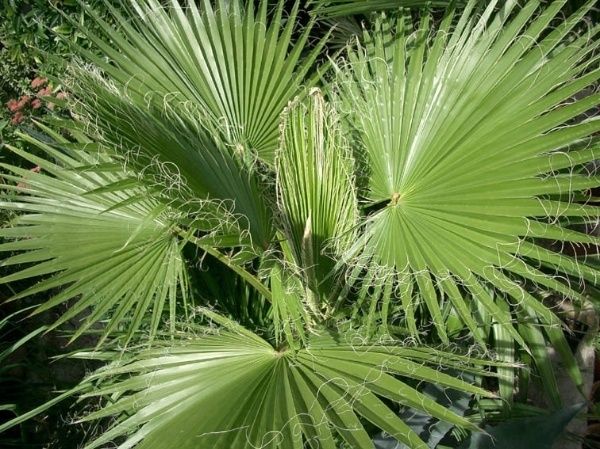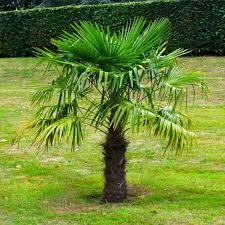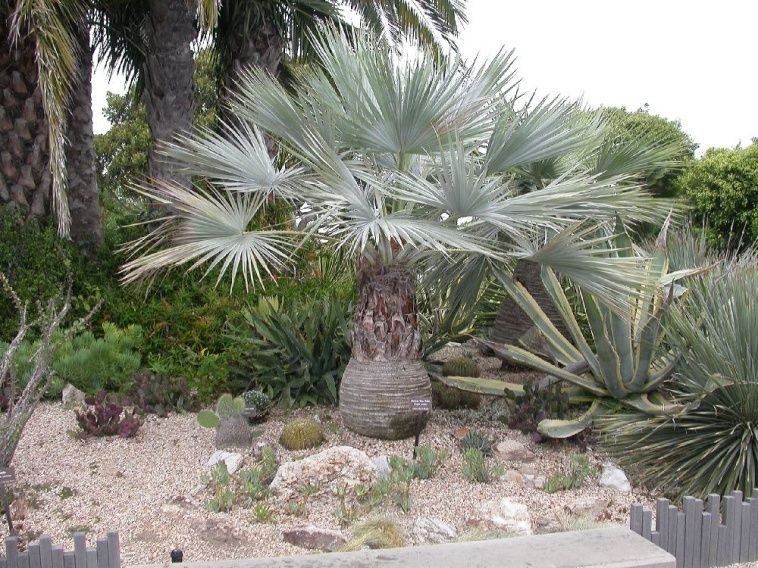
A slow, sturdy fan palm with striking silver-blue fronds, native to rocky canyons of Baja California and Sonora. It uses little water, handles cold better than most palms, and its color stands out against desert-modern architecture.
Living with it in the Phoenix Valley
Watering
Follow the tree schedule in our Landscape Care guide while it establishes. After that it needs only occasional deep watering, a little more in the hottest months. Good drainage matters; it dislikes soggy soil.
Pruning
Remove only dead fronds and spent flower stalks, and do it conservatively. Because it grows so slowly, an over-pruned palm takes years to recover. Wear gloves for the spiny stems.
Feeding
In very alkaline soils it can show yellowing that a palm fertilizer with magnesium helps correct.
Buying size
Its slow growth is a reason to start with a larger boxed specimen if you want presence right away.
How our designers use it
Color accent
The silver-blue fronds contrast with green plants, dark stone and white stucco, and glow under landscape lighting.
Desert-modern focal point
A single specimen or a staggered group gives a clean, architectural silhouette near an entry or pool.
Low-water oasis
It delivers a palm-oasis feel with far less water than tropical palms.
Good to know
Around the pool
Litter is low, but the frond stems carry stout spines, and the long flower stalks drop seed in fall. Keep it a few feet back from deck edges and walkways.