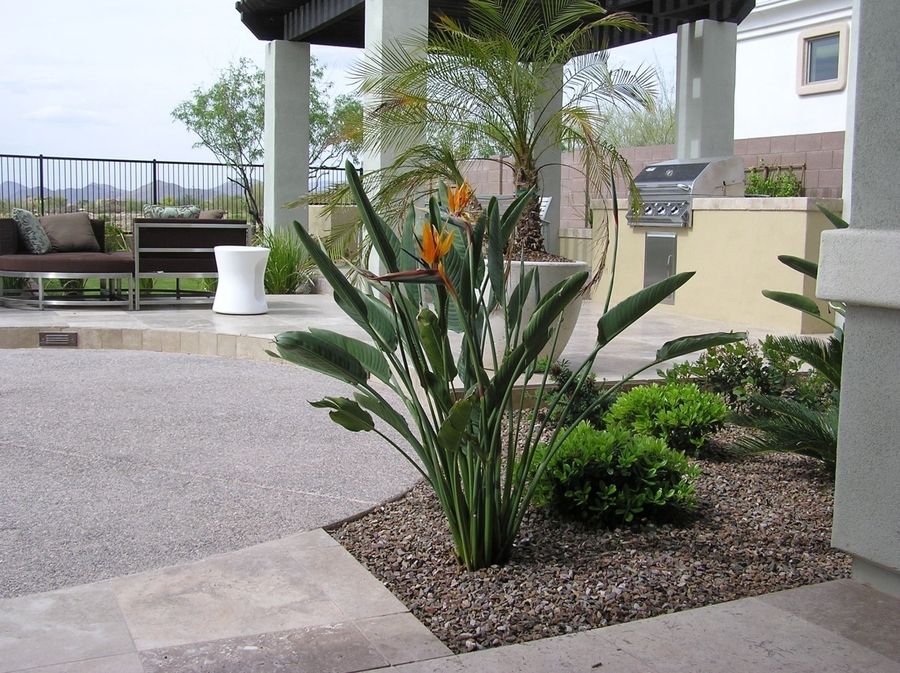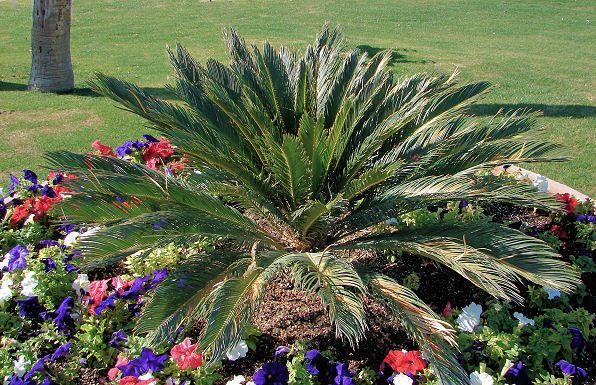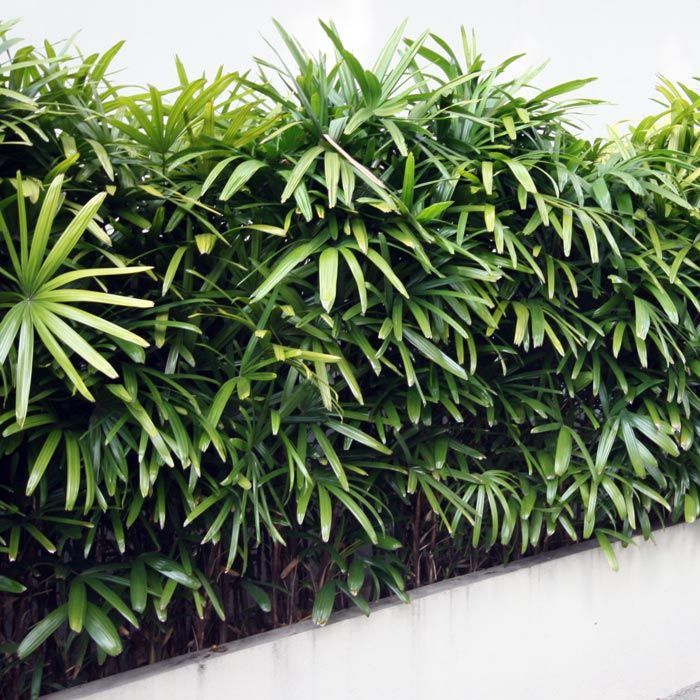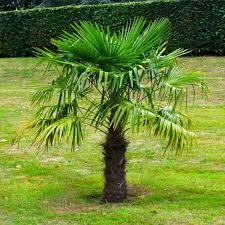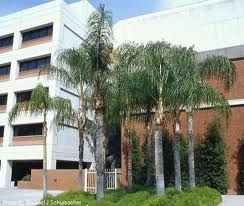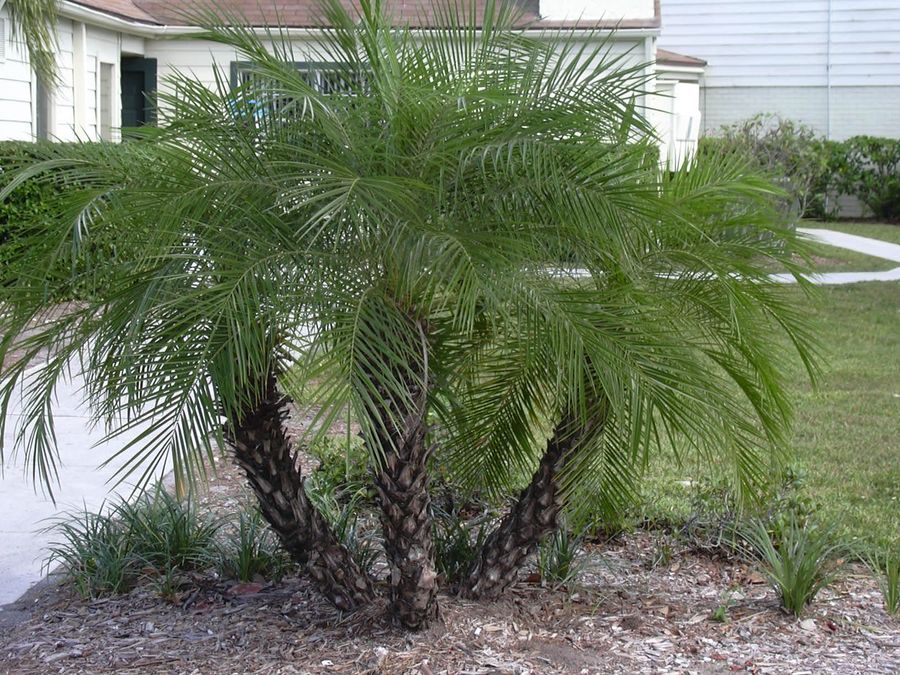
A small, fine-textured palm with a soft crown of arching, feathery fronds, grown with a single trunk or in multi-trunk clumps. Its modest size makes it one of the few palms that fits a courtyard, a planter or the edge of a pool.
Living with it in the Phoenix Valley
Watering
Follow the tree schedule in our Landscape Care guide. It wants more regular moisture than desert palms, but soggy soil leads to root and bud rot, so good drainage is essential. Potted palms dry out quickly in summer.
Pruning
Remove old, browning fronds at the base as needed. Wear gloves: the lowest leaflets are modified into stiff, needle-sharp spines.
Cold
Cover it on freeze nights, especially when young. A sheltered spot near a wall or under an overhang reduces frost burn on the fronds.
Feeding
In alkaline soil, older fronds can yellow and spot from magnesium or potassium shortage. Feed with a palm fertilizer during the warm season, more often in containers.
How our designers use it
Poolside and patios
It stays small and drops little, so it is one of the palms we are comfortable placing near the water, as long as the spiny frond bases sit away from where people walk.
Containers and raised planters
A single or multi-trunk palm in a large pot brings a tropical note to an entry or covered patio.
Groupings
Clusters of three, underplanted with shade-tolerant groundcover, make a lush layer beneath taller palms or trees.
Good to know
Around the pool
Litter is minimal, but the spines at the base of each frond are long and very sharp. Keep it a step back from walkways, pool steps and play areas.
Frost
A hard freeze can brown the whole crown. Palms usually push new fronds by late spring, but young plants can be lost without cover.